
Skip to content
Holt Systems

Feedlot diesel monitoring: spot the missing litres by morning

We fit level sensors on your fuel tanks and check litres drawn against tonnes fed, so a loss shows in a day.

  • WatchesEach fuel tank and the bowser door
  • ChecksLitres drawn against tonnes fed
  • Sends byStarlink or 4G from the mill

Litres per tonne fed, by day

Dashboard view

Thursday
3.7 L/t
Tank 1 level
7,785 L
Sensor check-in
On time
2.4 3.1 3.7 Daily email above this MonWedFriSun L per tonne
Illustrative figures, not measured on any site. A usual 2.5 L per tonne, 2.4 m vertical tank.

1,000 L

Siphoned from a farm storage unit near Yelarbon in April 2026, with police urging farmers to watch fuel levels.

Source: Queensland Country Life

7,500 L

Allegedly pumped from a Moranbah mine over about five weeks, then stored in pods for resale.

Source: Queensland Country Life

2,400+ L

Reported stolen from Riverina properties near Griffith.

Source: Area News (Griffith)

The tank is down 190 L and the feed trucks ran fine

Feedlot diesel monitoring starts with one fact: fuel use follows feeding. The trucks, loaders and scrapers burn about the same litres for each tonne they move.

So when the tank drops more than the tonnes explain, fuel went somewhere else. A weekly dip tells you the total. It can't tell you the night.

  • A leak is a slow loss while the tank sits idle.
  • An unrecorded ute is a steady extra draw, day after day.

What Thursday cost

  • A usual 2.5 L per tonne, and 161 t fed on Thursday.
  • A 2.4 m vertical tank holds about 4.5 L per mm of depth.
  • Diesel at $2.00 a litre, for illustration only.
Fuel Thursday should have used (161 t at 2.5 L)about 402 L
Fuel the tank actually lost590 L
Unexplained fuel, and the drop in the tankabout 188 L, 42 mm

About 188 L is missing, worth about $376 at the assumed price. The level record shows when it left.

How feedlot diesel monitoring works from the tank to your phone

Feedlot diesel monitoring layout and daily litres against tonnes fed Top: a feedlot yard plan with the fuel store and its tank beside the feed mill, a workshop, a feed road running to four pens, and the alert path from a tank level sensor over LoRaWAN to a site gateway, then Starlink or 4G to an SMS to the manager. Bottom: a five day chart of litres drawn as bars and tonnes fed as a line. Monday, Tuesday, Wednesday and Friday show about 400 litres for about 160 tonnes. Thursday is flagged in red at 590 litres for 161 tonnes, 3.7 litres per tonne against a usual 2.5. Feedlot yard Fuel store and bowser Feed mill Workshop Level sensor on tank top Feed road to pens Pens Level sensor Site gateway SMS to manager LoRaWAN Starlink or 4G Daily litres against tonnes fed 600 L 0 L 200 t 0 t Mon Tue Wed Thu Fri Thu: 3.7 L per tonne (usual 2.5) Litres Tonnes fed Flagged day
Plan of the feedlot yard: the fuel store beside the feed mill, the feed road to the pens, and the alert path from the tank sensor by radio to the gateway and out by Starlink or 4G as a text. Below it, five days of litres drawn against tonnes fed, with Thursday flagged.
  1. 1

    Sensors read each tank

    A level sensor on top of each tank reads the fuel depth every 5 to 15 minutes. A door sensor watches the bowser cabinet.

  2. 2

    Radio to the mill

    Readings travel by LoRaWAN (long range wide area network) radio to a gateway mounted high near the feed mill.

  3. 3

    Starlink or 4G sends it out

    The gateway sends the readings out by Starlink or 4G, so the tank doesn't need mobile coverage.

  4. 4

    Litres checked against tonnes

    You give us daily tonnes fed. We divide litres drawn by tonnes and flag a day well above your usual.

What we fit at the fuel store

  • Tank level sensor

    Sits on a centre-top fitting, clear of baffles and the fill pipe, and reads fuel depth.

    Reads every 5 to 15 min

  • Bowser cabinet contact

    Tells you when the bowser cabinet is opened out of hours.

    Alerts on any opening

  • Gateway at the mill

    Mounted high, picks up every sensor on the yard by radio.

    Sites tested before we commit

  • Starlink or 4G backhaul

    Sends the readings and texts out without mobile coverage at the tank.

    Starlink or 4G, your pick

What lands on your phone when fuel goes missing

Fuel store alerts
  1. 1:12 am

    Fuel store tank 1 dropped 188 L in 20 min, outside work hours. Level 8,187 L. Check the tank and bowser.

  2. 6:30 am

    Fuel store bowser cabinet opened at 1:05 am. Tank 1 still 188 L down since 1:10 am.

  3. Fri 7:00 am

    Fuel store tank 1 daily check: 3.7 L per tonne fed yesterday, usual 2.5. Today 2.5, back to normal.

Messages go to the people you nominate, by SMS to any phone.

Messages go to the people you nominate, by SMS to any phone and by email, with the reading and the time in every alert.

Today versus with feedlot diesel monitoring

TopicTodayWith monitoring
Finding a lossA weekly dip or a late delivery checkA text within minutes, with the time and litres
Slow leaksHidden in the week's totalShows as a slow fall while the tank sits idle
ReorderSomeone checks the gauge when passingA text at 20 per cent or days of supply

On a feedlot fuel store

Feed trucks, loaders, tractors and scrapers fill from one fuel store, usually beside the mill and workshop. We walk the yard, map the tanks and bowsers, and test the radio from each tank to the gateway.

We check every tank against a dip when we commission it. For diesel off the yard, see diesel tank monitoring.

Fuel and feed go together. Track grain with feedlot silo level monitoring, and see who's coming and going with a feedlot gate alarm. For the pen water, see feedlot pump monitoring.
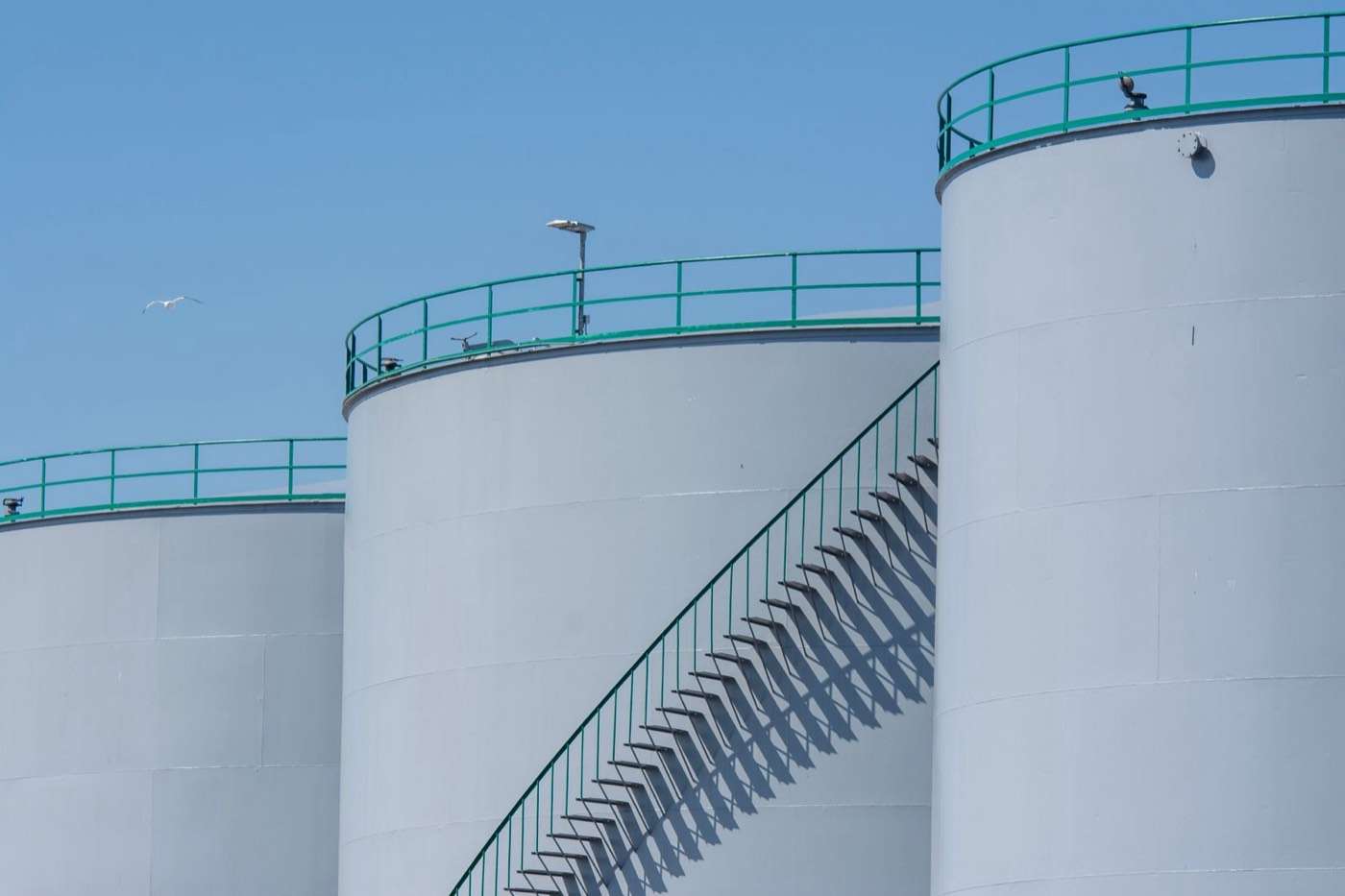
Large white bulk fuel storage tanks with stairs
Illustrative photo. Photo: Pexels

What it costs

We set a fixed price after a short scoping call or a site visit. It depends on how many tanks, how far they are from the gateway, and how the readings get out. Ongoing support is a plan after handover.

Price a feedlot fuel tank alert

The fixed price covers

  • Level sensors on each tank and the bowser door contact
  • Gateway and Starlink or 4G backhaul
  • Installation and electrical work under QLD Electrical Contractor Licence 1513082
  • Alert set-up, calibration against a dip and the daily litres per tonne check
  • Ongoing support: keeping it running, fixing faults, replacing batteries and sensors, and tuning alerts

What this won't do

  • Readings come every few minutes, so you hear about a theft soon after. It doesn't stop one.
  • Ultrasonic readings are indicative. Foam, condensation and fill turbulence affect them, so we check against a dip.
  • It isn't a fuel dispensing control, overfill protection or certified leak detection.
  • It sits alongside AS 1940 bunding, WHS manifest duties, locks and cameras. It doesn't replace them or a police report.

With you every step

How the five stages go on a feedlot fuel store.

  1. 1

    Discovery

    We walk the yard, map the tanks and power, and test the radio to the gateway position.

  2. 2

    Design

    You get a fixed price proposal: sensors, gateway, backhaul, alert rules and who gets each alert.

  3. 3

    Build and test

    We build and bench test the sensors and gateway, and set each tank's litres per millimetre before site work.

  4. 4

    Install and commission

    We fit the sensors and gateway, do the electrical work, calibrate against a dip and test the alerts.

  5. 5

    Ongoing support

    We hand over the dashboard and alert contacts, then support alert changes and sensor faults.

Why Holt Systems

We design, install and commission every system ourselves, then look after it with an ongoing support plan. Monitoring supplements the site's own control, protection, fire and safety systems; it does not replace them.

Alerts
SMS to any phone, no app
Based in
Brisbane, QLD
Electrical licence
QLD 1513082
After install
Ongoing support plans
Call
07 2150 3666

Feedlot diesel monitoring questions

Can monitoring tell me how much diesel was stolen and when?

Yes, as far as the level data allows. Each tank's level is recorded every 5 to 15 minutes, so a step drop shows a start time and a volume in litres. It shows what was lost, not who took it.

How does the litres per tonne fed comparison work?

We work out fuel drawn from the opening level, deliveries and the level now. You supply daily tonnes fed from your mill or ration records. Dividing one by the other gives litres per tonne, and a day well above your usual figure is flagged for review.

Will it replace our fuel dispensing controller or tag system?

No. A dispensing controller records who drew fuel at the pump. Level monitoring watches the tank itself, including the outlet and fill point where a siphon bypasses the pump.

What happens if the sensor or the internet connection fails?

A sensor that sends nothing for one to two hours raises an email alert, because a silent sensor isn't a safe tank. If the connection drops, readings are late and texts are delayed until it returns. We support the system and fix faults.

Does the tank need to be modified to fit a sensor?

Usually a sensor fits an existing top fitting without hot work or changes to the tank steel. Any pipework or fitting changes are done by a QBCC-licensed contractor we engage and manage. We do the electrical work ourselves.

Price a feedlot fuel tank alert

Tell us what you need to watch and where. We confirm the sensors, gateway location and alert recipients, then give you a fixed price.

Or email hello@holtsystems.com.au

Your details are handled in accordance with our privacy policy.

  1. 1

    Tell us about the site

    A few lines on the assets, distances and what you need to know about.

  2. 2

    A call to scope it

    We confirm the sensors, gateway location and alert recipients, and whether a site visit is needed.

  3. 3

    Fixed price

    You receive a defined scope and a fixed price before any work starts.