
Skip to content
Holt Systems

Mine diesel monitoring: catch the slow fuel loss the stocktake misses

We fit level sensors on your fuel farm and well-site day tanks, so a slow loss shows up as a drift on your phone, not at month end.

  • WatchesEvery fuel farm tank and day tank
  • ComparesTank level against dispensed litres
  • You getA text on a step drop or low tank
Fuel farm alerts
  1. 2:14 am

    Fuel farm T2 down 340 L in 25 min. No dispensing logged. Check the farm.

  2. 6:30 am

    T2 daily loss 410 L above dispensed litres. Dip to verify and report.

  3. Day 3, 4:50 pm

    Well 12 day tank at 18%, about 2 days of fuel. Book a fuel run.

Example alerts from this system

7,500 L

Allegedly pumped at a Moranbah mine and stored in fuel pods for onsale.

Source: Queensland Country Life

about 5 weeks

The alleged Moranbah pumping ran from 3 October to 7 November 2022.

Source: Queensland Country Life

1,000 L

Reported siphoned from a farm storage unit near Yelarbon, Qld, in April 2026.

Source: Queensland Country Life

Mine diesel monitoring for the loss that never trips an alarm

Mine diesel monitoring is for the theft that doesn't look like one. Queensland Country Life reported about 7,500 L allegedly pumped at a Moranbah mine over five weeks in 2022.

That's roughly 215 L a day, which hides inside a busy fuel farm's normal draw.

No machine fails to start. The tank and the dispensing records drift apart, and nobody sees it until the stocktake.

  • Weekly or monthly reconciliation finds a shortfall, but not when it happened.
  • A card or tag system shows who drew fuel at the pump, not litres leaving by a hose or fill point.

The same five weeks, with and without level sensors

Without monitoring

  1. Week 1Fuel starts leaving after hours. Nothing looks wrong.
  2. Week 3Dips and dockets look a bit light. Nobody knows when.
  3. Week 5The month-end stocktake shows the shortfall.

With monitoring

  1. Night 1Level drops outside work hours. Text goes to your phone.
  2. Day 2Daily email shows losses above dispensed litres.
  3. Week 1You have times and volumes to take to security.

How mine diesel monitoring works on a fuel farm and a well site

Mine diesel monitoring: fuel farm and remote well day tank Top: a mine fuel farm with two tanks, each with a level sensor on top, and a dispenser. A gateway with 4G backhaul receives the sensor readings. Middle: a graph over five weeks where the level measured by the tank sensors drifts steadily below the litres dispensed per fuel records, with the growing gap marked as unexplained loss. Bottom: a remote CSG well site with a generator, a day tank with a level sensor and a dashed low-level alert threshold, and a gateway that sends a low-level SMS to site contacts. Mine fuel farm T1 T2 Bowser Level sensors 4G Gateway 4G backhaul to dashboard Level against dispensed litres Litres Unexplained loss Week 1 Week 5 Level from tank sensors Litres dispensed per records Remote CSG well site Generator Day tank 4G Low level SMS to site contacts and dashboard Day tank sensor on top of tank Dashed line: low-level threshold
Two sites, not to scale. Top, a fuel farm with two tanks, each with a level sensor on top, and a dispenser, reporting to a gateway with 4G. Middle, a five week graph where measured level drifts below the litres dispensed, with the gap marked as unexplained loss. Bottom, a remote CSG well site with a day tank sensor and a dashed low-level threshold that sends an SMS.
  1. 1

    A sensor on every tank

    A non-contact level sensor sits on top of each tank and reads every 5 to 15 minutes.

  2. 2

    Radio to the gateway

    Sensors send by LoRaWAN (long range wide area network) radio to a gateway, which goes out by 4G or Starlink.

  3. 3

    Level against litres dispensed

    The dashboard puts measured level beside your dispensing records, so the fuel balance is checked daily.

  4. 4

    The text lands on your phone

    A step drop, a drift or a low day tank texts the people you nominate.

What we fit on the fuel farm and at the wells

Sensors on each tank, a gateway at each site, and the alert rules set to your operation.

  • Tank level sensor

    Sits on top of each fuel farm tank and well-site day tank, and reads litres.

    Reads every 5 to 15 min

  • Dispenser and hatch contact

    Texts you when a dispenser cabinet or tank hatch opens out of hours.

    Alerts on change

  • LoRaWAN gateway

    Collects every sensor by radio at the fuel farm and at each well.

    Hourly heartbeat

  • 4G backhaul

    Sends the texts out where there's mobile coverage.

    Starlink if no coverage

  • Fuel dashboard

    Shows tank level beside your dispensed litres.

    Daily drift email

What lands on your phone when the fuel goes missing

Fuel farm T2 loss above dispensed litres

Dashboard view

T2 level
31,800 L
Loss today
410 L
Well 12 day tank
18%
20 215 410 Daily drift alert MonWedFriSun L
Example only. Thresholds are set per tank at commissioning and tested with a known draw-down.

Today versus with mine diesel monitoring

TopicTodayWith monitoring
Finding a lossWeekly or monthly reconciliation, after the factA text within minutes of a step drop
Time of lossUnknown, somewhere in the periodTimestamped, with litres lost
Slow driftHides inside the normal daily drawDaily loss compared with dispensed litres
Well-site day tanksChecked on the visit runA low-level text before the generator stops

On a fuel farm and out at the wells

We walk the fuel farm, map the tanks and dispensers, and test signal at each tank and each gateway position. The same goes for each well-site day tank.

Storage still follows AS 1940 and your WHS manifest duties. For fuel tax credits, the ATO wants records of fuel lost or stolen, and level data adds timestamps.

Watching other tanks? See mine reagent tank monitoring. Running remote generators? See mining camp generator alarms. Worried about the wells? See well site cable theft alerts.
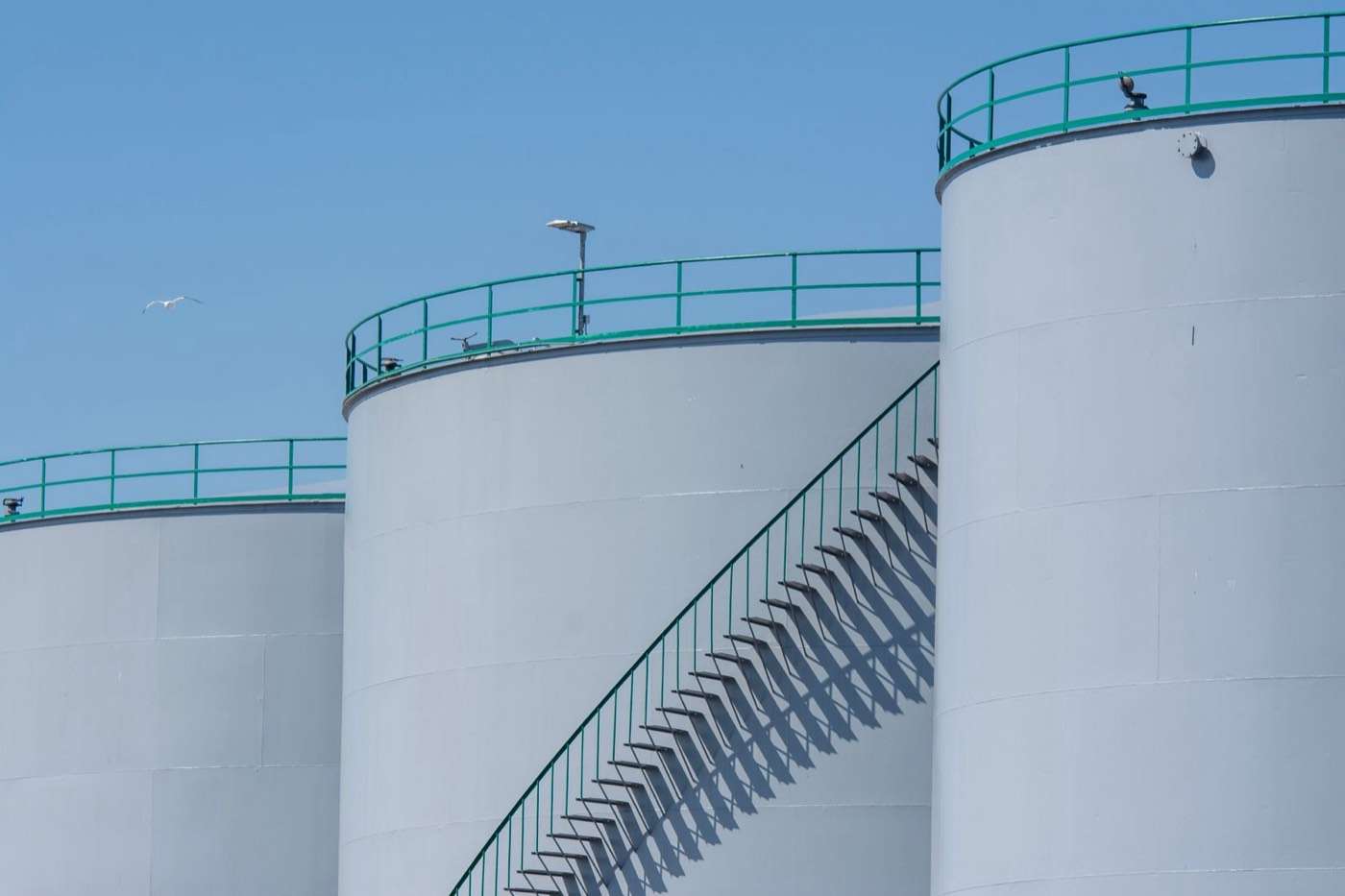
Large white bulk fuel storage tanks with stairs
Illustrative photo. Photo: Pexels

What it costs

We set a fixed price after a short scoping call or site visit. It depends on how many tanks you have, how far they are from the gateway, and how the texts get out. After handover you can add an ongoing support plan.

Price a fuel farm alert

The fixed price covers

  • Level sensors for each tank you want watched
  • Gateway and 4G or Starlink backhaul
  • Installation and electrical work under QLD Electrical Contractor Licence 1513082
  • Alert set-up, calibration to your dip or strapping chart, and a known draw-down test
  • An ongoing support plan: we keep it running, fix faults, replace batteries and sensors, and tune alerts

What this monitoring won't do

  • It shows litres lost, not who took them. A loss is seen soon after it starts, not prevented.
  • Non-contact readings are indicative. Dip to verify before acting.
  • It's not a dispensing control, a fuel management system, or a certified overfill or leak detection system.
  • No coverage means no text. It supplements bunding, venting, locks and cameras, and theft still goes to police.

With you every step

How the five stages go on a fuel farm and its remote well sites.

  1. 1

    Discovery

    We walk the fuel farm and the wells, map tanks, dispensers and power, and test signal at each tank and gateway position.

  2. 2

    Design

    You get a fixed price proposal with sensor positions, gateway locations, backhaul and alert rules for each tank.

  3. 3

    Build and test

    We build and test the sensors, gateways and alert rules before anything goes to site.

  4. 4

    Install and commission

    We fit the sensors, do the electrical work, calibrate each tank to a dip or strapping chart and test with a known draw-down.

  5. 5

    Ongoing support

    You get the dashboard, contact list and thresholds, and we stay on for support, changes and faults.

Why Holt Systems

We design, install and commission every system ourselves, then look after it with an ongoing support plan. Monitoring supplements the site's own control, protection, fire and safety systems; it does not replace them.

Alerts
SMS to any phone, no app
Based in
Brisbane, QLD
Electrical licence
QLD 1513082
After install
Ongoing support plans
Call
07 2150 3666

Mine diesel monitoring questions

Can it replace our fuel management system?

No. A dispensing controller records who drew fuel at the pump and stays in place. Level monitoring adds an independent series of what left the tank, so the two can be compared. It is not an authorised fuel management system.

Will it show theft from a vehicle tank?

Only indirectly. The sensor sees litres leaving the fuel farm tank, not where they went. If dispensed litres in your records are lower than the level drop, the difference is the loss to investigate. Locks, cameras and access control still matter.

Does it work at a well site with no mobile coverage?

It works if the day tank is within LoRaWAN range of a gateway and the gateway has a backhaul. We use 4G where coverage exists and Starlink where it doesn't. Range depends on terrain and buildings, so we test each position first.

How accurate is the litres reading?

Non-contact level readings are indicative. Foam, condensation, temperature and fill pipe turbulence affect them. We calibrate each tank to a dip or strapping chart, and you should still dip to verify before acting on a drift.

Can the sensors go in a classified hazardous area?

That depends on the sensor's manufacturer rating and your site risk assessment. We confirm suitability for each location before the proposal. Diesel is a combustible liquid, but we don't assume there's no ignition risk near vapours.

Who looks after the electrical work?

Our licensed electricians do gateway power, solar or battery supplies and earthing under QLD Electrical Contractor Licence 1513082. Any tank fitting changes are done by a QBCC-licensed contractor we engage and manage.

Sources

  1. Men charged with fuel theft at Moranbah, Queensland Country Life
  2. Fuel tax credit business records, Australian Taxation Office
  3. Flammable and combustible liquids, WorkSafe Queensland

Price a fuel farm alert

Tell us what you need to watch and where. We confirm the sensors, gateway location and alert recipients, then give you a fixed price.

Or email hello@holtsystems.com.au

Your details are handled in accordance with our privacy policy.

  1. 1

    Tell us about the site

    A few lines on the assets, distances and what you need to know about.

  2. 2

    A call to scope it

    We confirm the sensors, gateway location and alert recipients, and whether a site visit is needed.

  3. 3

    Fixed price

    You receive a defined scope and a fixed price before any work starts.