
Skip to content
Holt Systems

Filling machine control retrofit for sound but obsolete fillers

A filler built to last decades often outlives its controls by many years. A control retrofit replaces the obsolete electronics and keeps the machine in production.

Request a site assessment
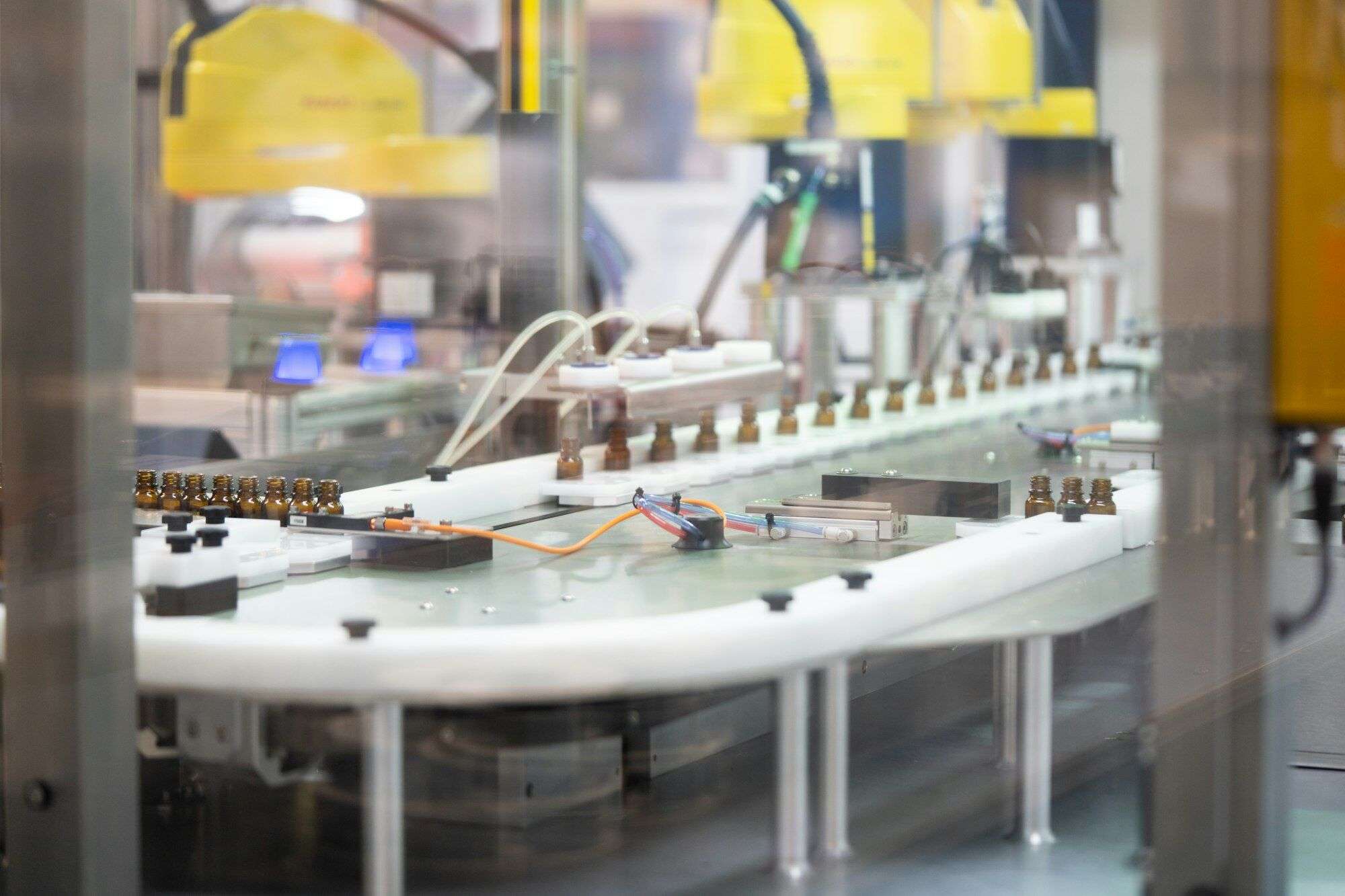
Automated bottle filling machine with filling nozzles above small bottles on an indexing conveyor

A filling machine control retrofit replaces the programmable logic controller (PLC), drives and operator interface on a filler whose mechanical parts remain in good condition. Rotary piston fillers, cup fillers, cappers and monoblocks are often built to run for decades. Their controls are usually the first part to become unsupportable, and when they fail, a mechanically sound machine stops.

The signs a filler’s controls are the weak point

Food manufacturers usually recognise the situation from a combination of signs:

  • The PLC, drive or touchscreen is no longer sold, and spares come from second-hand sources at increasing prices
  • Only one person, or an overseas supplier, can change the program
  • The operator screen has failed, been replaced with a different model, or is held together with workarounds
  • Intermittent faults that cannot be traced because the drawings no longer match the machine
  • Changeovers rely on settings written on paper rather than stored recipes

Any one of these can be managed. Together they mean the line depends on a machine that cannot be reliably repaired if its controller fails. ABB’s research found that unplanned downtime costs a typical Australian industrial business about $349,000 per hour. Even at a fraction of that figure, a filler waiting for a used controller is expensive.

Why the controls age faster than the machine

Stainless frames, cams, pistons and valves are designed for long service and can be rebuilt. Electronics follow the manufacturers’ product cycles, typically measured in years rather than decades. Older fillers also use proprietary controllers, drives and touchscreens selected by the original equipment manufacturer (OEM), sometimes with programs that cannot be read or changed without the OEM’s tools.

What a filling machine control retrofit replaces

The retrofit replaces the electronics and keeps everything that touches the product.

Filling machine control retrofit: what changes and what stays Operator interface New touchscreen with recipes andalarms PLC New supported controller andprogram Drives Replaced or retained as assessed Filler Existing mechanics, valves andtooling Sensors and machine status returned to the PLC
Filling machine control retrofit: what changes and what stays

How the retrofit is carried out

  1. 1

    Capture

    The existing program, settings, sequence timing and every fault message are recorded before anything is changed.

  2. 2

    Rebuild

    The control program is written on a current platform in IEC 61131-3 languages, reproducing the existing behaviour and documenting it fully.

  3. 3

    Test off-site

    The new panel and program are tested with simulated inputs for every product, recipe and fault condition.

  4. 4

    Cut over

    The new controls are installed during a planned shutdown, and the machine is run on each product before release to production.

Once a filler has current controls, closed-loop fill-weight control becomes a straightforward addition. The approach for liquid lines is described in sauce filling machine accuracy.

The commercial case

The case for a controls retrofit rests mainly on risk: the cost of an extended outage on a critical filler, weighed against a planned project at a fixed price. Secondary benefits include faster changeovers with stored recipes, quicker fault-finding with clear alarms, and a machine the site can support itself.

Alternatives

  • Hold spares. Buying used controllers and drives buys time, but spares age on the shelf and do not solve documentation or programming access.
  • A new filler. The right choice when the mechanics are worn. Where they are sound, a new machine costs far more and brings its own commissioning risk.
  • The original manufacturer’s upgrade. Worth asking about, though older models are often no longer supported and the upgrade may still use proprietary components.
  • A large systems integrator. Suited to whole-line projects. A single filler retrofit rarely justifies their overheads.

How a project runs

Every project follows the same five stages. For a filler retrofit, the old program is understood fully before anything is changed, and cutover is planned around production.

  1. 1

    Site assessment

    We back up the existing program, record the machine's sequence and settings, trace its wiring and confirm which drives, sensors and valves can be retained.

  2. 2

    Proposal

    A defined scope, fixed price and program, with a cutover plan that keeps the existing controls available as a fallback where practical.

  3. 3

    Off-site build and test

    The new panel and program are built and tested off-site against the recorded behaviour of the existing machine, including every recipe and fault.

  4. 4

    Installation and commissioning

    Cutover is completed during a planned shutdown. The machine is run through each product before it is released to production.

  5. 5

    Handover and support

    Operators are shown the new interface, and you receive drawings, the program, recipe records and local support.

Why Holt Systems

Controls retrofits are one of our core services. The aim is a machine that runs as it always has, on a control system that can be supported.

Electrical, instrumentation and controls work is carried out under QLD Electrical Contractor Licence 1513082. Installations are completed to AS/NZS 3000 (the Wiring Rules), machine safety functions are designed with reference to AS/NZS 4024, and PLC programs are written in IEC 61131-3 languages and fully documented.

Manufacturer independent
We work across Siemens, Allen-Bradley (Rockwell Automation), Schneider Electric and Omron, and specify hardware on technical merit and local support availability.
Scoped to the requirement
Work is scoped to the specific machine, line or plant area, without the overheads of a large integrator, and quoted at a fixed price.
Reduced shutdown duration
Off-site build and testing means shutdown time is spent on installation and commissioning rather than fault-finding.
Single point of accountability
One accountable lead from site assessment through design, installation and handover.

Filler control retrofit questions

What if we do not have the original program or drawings?

The program can usually be read from the machine's controller and the wiring traced on site. Where the controller is locked or unreadable, the machine's behaviour is recorded in detail during the site assessment and the program is rebuilt from that record.

Will the machine run the same way afterwards?

Yes, unless you ask for changes. The new program reproduces the existing sequence and settings first. Improvements, such as recipes or fill-weight feedback, are agreed separately and added once the base behaviour is proven.

Can we keep our existing drives and servo motors?

Where they are reliable and supported, yes. Drives that are obsolete or unreliable are replaced with current equivalents, and servo motors can sometimes be retained with a new compatible drive.

How long will the filler be out of production?

Because the work is tested off-site, the shutdown is typically a few days for a single filler. The actual duration depends on the machine and is set out in the proposal.

Can fill-weight control be added at the same time?

Yes. A retrofit is a good opportunity to add checkweigher feedback, as the new controller and drives make automatic dose correction straightforward.

Will the retrofit meet machine safety requirements?

Safety functions such as guard switches and emergency stops are reviewed with reference to AS/NZS 4024 and implemented in dedicated safety circuits or a safety controller as part of the retrofit.

Request a site assessment

Provide a brief outline of your site and requirements, and we will contact you to discuss the scope and arrange a site visit.

Or email hello@holtsystems.com.au

Your details are handled in accordance with our privacy policy.