
Skip to content
Holt Systems

Sauce filling machine accuracy, controlled at every head

Sauce changes viscosity with temperature, batch and particulates, and every change moves the fill weight. Closed-loop control corrects each filling head automatically.

Request a site assessment
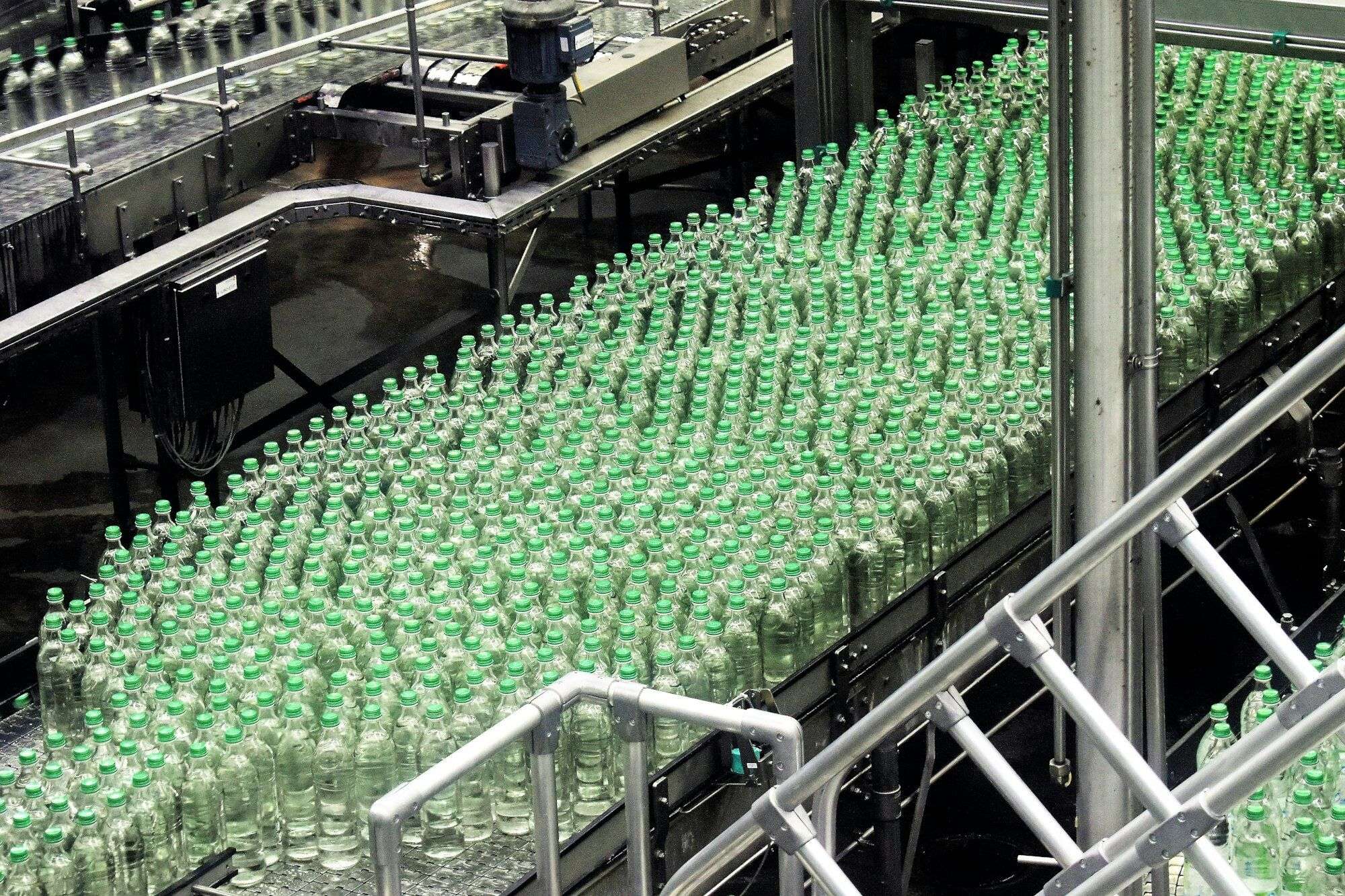
Glass bottles travelling on the conveyors of an automated bottle filling line

Sauce filling machine accuracy is harder to hold than most liquid fills suggest. Sauces and dressings change viscosity with temperature, with each batch and with particulate content, and every change alters how much product a filling head delivers. Lines manage this by setting the target above declared quantity and adjusting heads by hand, which means overfill on most packs and frequent intervention by operators.

How overfill builds up on a liquid line

The typical pattern on a multi-head sauce filler is:

  • Fill weights that differ between heads, so the target is set to keep the lightest head above declared quantity
  • Weights that drift as product temperature changes between the start of a batch and the end
  • A step change in fill weight at each new batch or after a hold in the balance tank
  • Operators adjusting heads after periodic check-weighs, with adjustments that vary between shifts

Because the target is set by the lightest-filling head, every other head overfills. On a line filling tens of thousands of bottles a day, a few grams per bottle becomes a significant volume of product.

Why liquid fill weights drift

Most sauce fillers are volumetric. A piston filler draws a set volume and dispenses it; a flowmeter filler opens a valve until a set volume has passed. Declared quantity is by weight or by volume at a reference temperature, so any change in density or in how completely the product is drawn and dispensed changes the result.

Viscosity is the main driver. Thicker product fills piston cylinders less completely at speed and clings to nozzles and valves. Temperature affects both viscosity and density. Particulates add random variation. Wear in piston seals and valves adds slow drift that differs from head to head.

Improving sauce filling machine accuracy

Closed-loop control uses the checkweigher downstream of the filler as the measurement and the filler’s head adjustments as the control. Each container’s weight is matched to the head that filled it, and each head is corrected individually.

Sauce filling machine accuracy: per-head closed-loop control Checkweigher Weighs every container in-line Controller Tracks weight by head andcalculates trims Filler heads Servo pistons or flowmetersadjusted per head Each container traced back to its filling head
Sauce filling machine accuracy: per-head closed-loop control

How it works

  1. 1

    Track

    The controller follows each container from the filler to the checkweigher, so every weight is tied to the head that filled it.

  2. 2

    Average

    A rolling average is kept for each head, filtering out the random variation caused by particulates and splashing.

  3. 3

    Trim

    When a head average moves away from target, its piston stroke or flowmeter setpoint is adjusted by a small, limited amount.

  4. 4

    Alarm

    A head that needs repeated correction is flagged, pointing maintenance to a worn seal or valve before it affects compliance.

With every head held close to the same average, the target can be set for the line rather than for its worst head. Packaged goods sold by measure are regulated under the Average Quantity System, administered by the National Measurement Institute: the average of a sample must not be less than the declared quantity. Holding averages stable is therefore both a cost and a compliance measure.

The value of reducing overfill

The benefit depends on line speed, current overfill and product value.

Overfill cost calculator

Enter your own figures. The calculation runs in your browser and nothing is sent to us.

Overfill per year
28,800 kg
Cost of overfill per year
$172,800

Other approaches

  • More frequent manual checks. Reduces drift but adds labour, and adjustments still vary by operator.
  • Temperature control of the product. Worthwhile where batch temperatures vary widely, and complementary to fill-weight control, but it does not address head-to-head variation.
  • A new filler with integrated weighing. Appropriate at the end of a filler’s life. Where the filler is sound, feedback control achieves much of the benefit for a fraction of the cost.
  • A large systems integrator. Suited to new lines. For a single filler and checkweigher, the overheads are rarely justified.

How a project runs

Every project follows the same five stages. On a liquid filling line, each stage is planned around production runs, changeovers and cleaning cycles.

  1. 1

    Site assessment

    We review the filler type and drive, number of heads, checkweigher and its outputs, and analyse fill-weight data by head where it is available.

  2. 2

    Proposal

    A defined scope covering per-head adjustment, controls and integration, a fixed price, a program and the projected reduction in overfill.

  3. 3

    Off-site build and test

    Control logic and communications are built and tested off-site, using recorded fill weights to tune the correction strategy.

  4. 4

    Installation and commissioning

    Installation is completed during a planned production break, with existing manual adjustment retained until closed-loop control is proven.

  5. 5

    Handover and support

    Targets are agreed with your quality team, operators are shown the new controls, and you receive documentation, backups and local support.

Why Holt Systems

Fill-weight control on liquid fillers is part of the same core service we provide for powders, adapted to the behaviour of sauces and dressings.

Electrical, instrumentation and controls work is carried out under QLD Electrical Contractor Licence 1513082. Installations are completed to AS/NZS 3000 (the Wiring Rules), machine safety functions are designed with reference to AS/NZS 4024, and PLC programs are written in IEC 61131-3 languages and fully documented.

Manufacturer independent
We work across Siemens, Allen-Bradley (Rockwell Automation), Schneider Electric and Omron, and specify hardware on technical merit and local support availability.
Scoped to the requirement
Work is scoped to the specific machine, line or plant area, without the overheads of a large integrator, and quoted at a fixed price.
Reduced shutdown duration
Off-site build and testing means shutdown time is spent on installation and commissioning rather than fault-finding.
Single point of accountability
One accountable lead from site assessment through design, installation and handover.

Liquid filling accuracy questions

Which filler types can be controlled?

Servo-driven piston fillers and flowmeter or mass-flow fillers are the most straightforward, as each head's dose can be adjusted electronically. Mechanically adjusted piston fillers can often be retrofitted with servo drives so each head can be trimmed.

Can each head be corrected individually?

Yes, provided the checkweigher can identify which head filled each container. This is usually done by tracking container position from the filler to the checkweigher, so each head's average is corrected independently.

What about products with particulates?

Particulates such as herbs, seeds or vegetable pieces increase the natural variation between fills. The control strategy accounts for that variation so that the controller does not chase random differences between individual packs.

Do we need to change our checkweigher?

Not usually. Most checkweighers can send each weight over a network or serial connection. Where yours cannot, an upgrade or replacement is identified at the site assessment and included in the fixed price.

Does this help with trade measurement requirements?

It supports them by holding average fill weights stable and recording every weight. Compliance with the Average Quantity System remains the packer's responsibility, and we do not provide legal advice.

How does the system handle changeovers and cleaning?

Each product has a recipe with its own target and adjustment limits. After cleaning or a product change, correction resumes from the stored starting point for that product.

Request a site assessment

Provide a brief outline of your site and requirements, and we will contact you to discuss the scope and arrange a site visit.

Or email hello@holtsystems.com.au

Your details are handled in accordance with our privacy policy.