
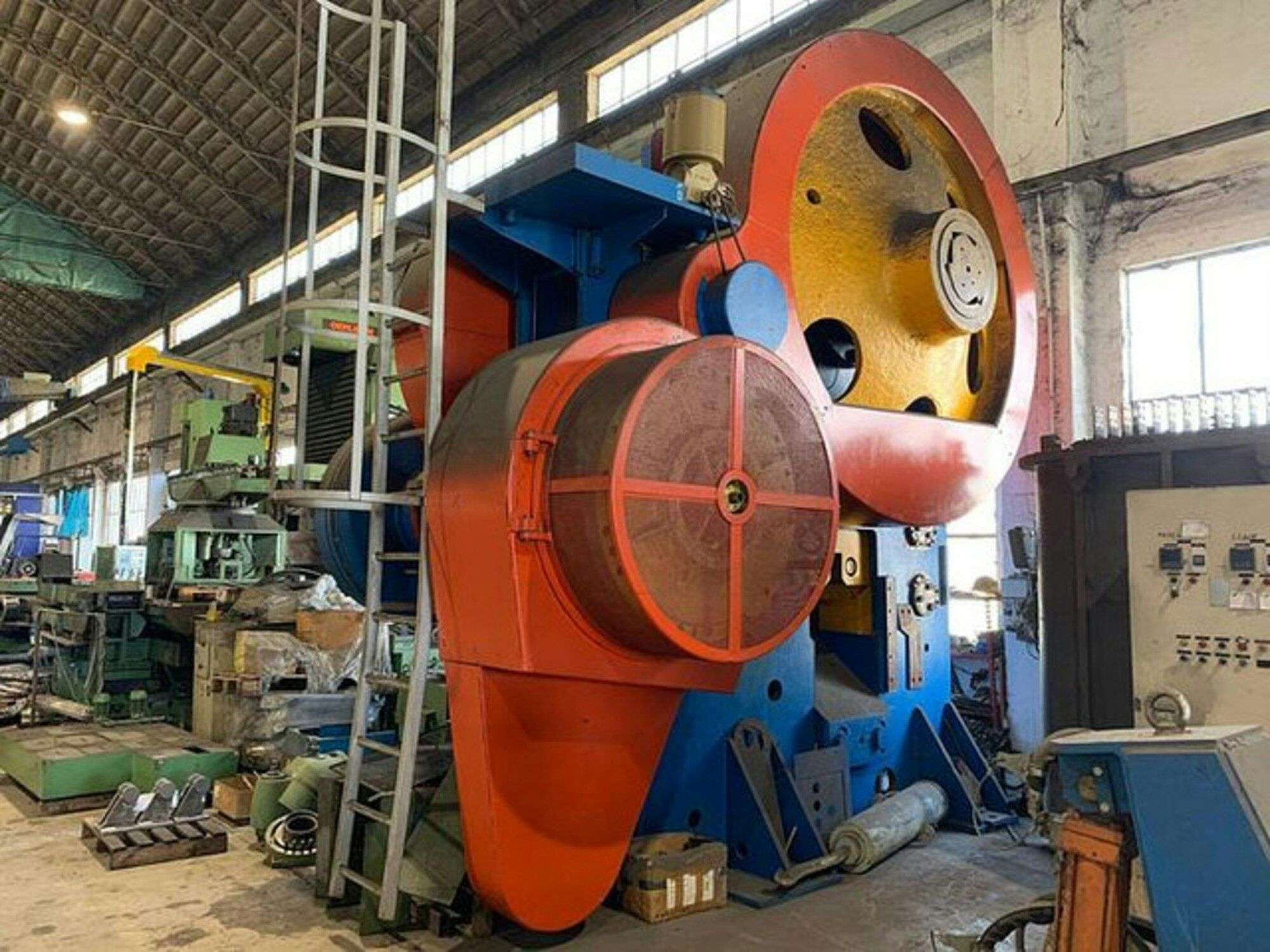
A machine control retrofit replaces the controls on a production machine while keeping its mechanical parts in service. In general manufacturing, the machines that matter most are often the oldest: presses, saws, extruders, mixers, winders and special-purpose machines built for one job and still doing it well. Their relay logic, early programmable logic controllers (PLCs) and operator panels are typically the first parts to fail and the hardest to replace.
Signs that the controls have become the problem
The situation is usually recognised from a combination of signs:
- Relay logic that has been modified so many times that nobody is confident of how it works
- An obsolete PLC with no spares, or a program that cannot be read without old software and an old laptop
- A failing operator panel (HMI) with dead pixels or touch areas, or one replaced with a model that does not quite match
- Intermittent faults that take hours to trace because drawings do not match the machine
- Dependence on one person who knows the machine’s quirks
When a machine like this is the only one that makes a particular part, an extended failure stops more than the machine. ABB’s survey found that unplanned downtime costs a typical Australian industrial business about $349,000 per hour. The figure for a single machine is smaller, but the principle is the same.
Why the controls age before the machine
Mechanical components can be rebuilt, reground and replaced with standard parts. Electronics cannot. Relays and timers wear, contacts become unreliable, and every modification adds complexity without documentation. Early PLCs and HMIs depend on manufacturers’ product lines, which move on in years rather than decades, and their programming tools stop running on current computers.
What a machine control retrofit includes
A retrofit replaces the control system and brings the safety circuits up to date, while keeping the machine’s mechanics, hydraulics and pneumatics.
How the retrofit is carried out
- 1
Record
The machine is observed in every mode, the existing program is backed up and the wiring is traced, so its full behaviour is known before anything changes.
- 2
Design
New controls are designed, with the machine safety functions reviewed with reference to AS/NZS 4024 and implemented in dedicated safety circuits.
- 3
Build and test
The panel and program are built and tested off-site, written in IEC 61131-3 languages and documented in full.
- 4
Install
The new controls are installed in a planned shutdown and the machine is proven on production before handover.
Where a site has several machines on the same obsolete platform, the work can be planned as a staged program. Sites running Siemens or Allen-Bradley PLCs should also see S7-300 to S7-1500 migration and SLC 500 and PLC-5 migration.
The commercial case
The case rests mainly on avoided outage risk, with additional benefits from faster fault-finding, consistent settings and a machine that the site can support itself.
Alternatives
- Repair as it fails. Lowest immediate cost, but each repair is slower as parts and knowledge decline.
- A new machine. Right when the mechanics are worn. Where they are sound, a new machine costs far more and needs its own commissioning and training.
- The original manufacturer. Worth asking where the maker still supports the model. Many older and special-purpose machines no longer have that support.
- A large systems integrator. Suited to whole-line projects. A single machine rarely justifies their overheads.