
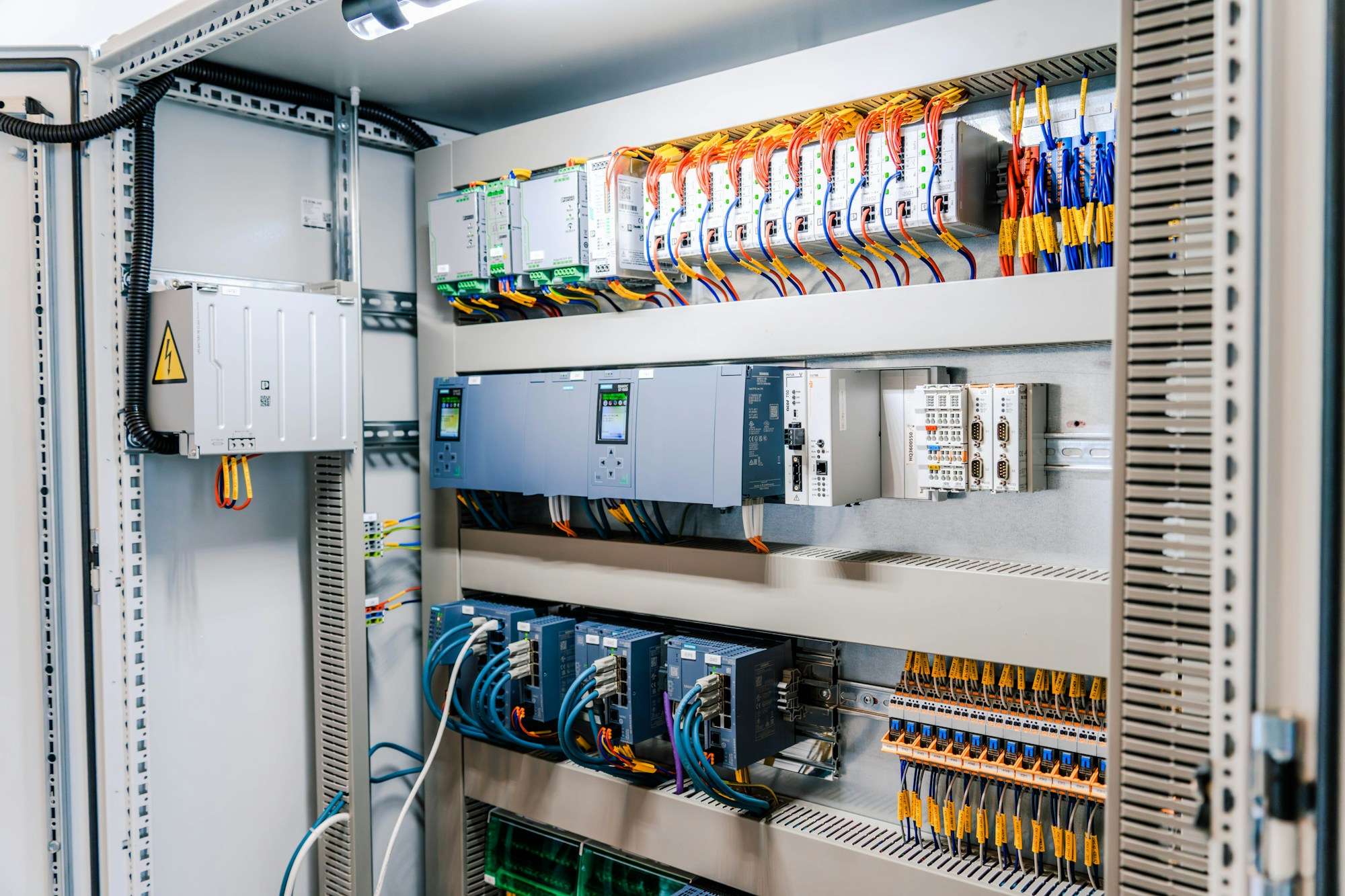
SLC 500 migration, and the related PLC-5 migration, move Allen-Bradley control systems onto Rockwell Automation’s current Logix platforms: CompactLogix or ControlLogix, programmed in Studio 5000. Both older platforms were widely installed in quarries, food plants, water infrastructure and manufacturing, and many still run critical plant decades later.
Where the platforms stand
Rockwell publishes lifecycle status for its products. The SLC 500 platform is in the Active Mature phase, meaning it is still supported while newer platforms exist, and some SLC 500 controllers and I/O modules have already been discontinued. The PLC-5 is further along: Rockwell has issued a lifecycle notice for PLC-5 controllers and 1771 I/O modules, and reports that RSLogix 5, the PLC-5 programming software, was scheduled to reach its final lifecycle phase on 31 December 2025.
For sites still running these systems, the practical effects are familiar:
- Processors and modules are increasingly sourced second-hand, at higher prices and with uncertain history
- Programming software and the old computers that run it become harder to maintain
- DH+ and Remote I/O networks need interface hardware that is no longer common
- Fewer technicians are familiar with the platforms each year
Why migration is usually left too late
An SLC 500 or PLC-5 that has run for twenty years gives little reason to touch it, and migrations are often seen as risky. The risk is real if a migration is rushed. It is much smaller when the logic is converted and tested off-site and existing wiring is retained. The larger risk is a processor failure that forces a migration with production stopped.
How SLC 500 migration is carried out
The logic is converted and tested before the plant is touched, and I/O conversion systems are used where they shorten the shutdown.
The migration steps
- 1
Document
The program, rack layouts and networks are backed up, and every input, output, interlock and sequence is documented.
- 2
Convert
Logic is translated into Studio 5000. Addressing, indirect references, messaging and timing differences are reworked and reviewed by hand.
- 3
Test
The converted program is tested off-site against the original behaviour with simulated I/O, including faults and abnormal sequences.
- 4
Cut over
New hardware is installed during a planned shutdown, using wiring conversion systems where suitable, with the original processor kept as a fallback.
Siemens sites are in a similar position with the S7-300, covered in S7-300 to S7-1500 migration. For individual machines rather than plant-wide systems, see machine control retrofits.
The commercial case
The value of a migration is mainly the removal of outage risk, together with a platform that can be maintained and expanded. ABB’s research found that unplanned downtime costs a typical Australian industrial business about $349,000 per hour, and that 69% experience unplanned outages at least monthly.
Alternatives
- Stockpile spares. Reasonable in the short term, but spares age and programming support continues to decline.
- Repair and exchange services. Useful for individual modules. They do not address the platform’s long-term position.
- Migrate to another manufacturer. Possible and sometimes the right choice. For most Allen-Bradley sites, Logix offers the most direct path and the least retraining.
- A large systems integrator. Suited to large multi-site programs. For one or a few processors, a scoped migration avoids those overheads.