
Skip to content
Holt Systems

Silo temperature monitoring system: prove how you held their grain

We fit temperature cables to each handling silo, text the shift supervisor when one heats, and keep a record for every customer.

  • MeasuresGrain temperature at each silo height
  • AlertSMS to the shift supervisor
  • KeepsA time-stamped record per silo
Silo temperature monitoring system on a grain handling site Plan view of a bulk grain handling site. Four concrete silos in a row each have temperature cables feeding a roof node. The nodes send readings by radio to one gateway on the control room above the silos. Below the silos a conveyor gallery links the intake pit on the left to a loadout on the right. The gateway sends data by 4G or Starlink to alerts for the shift supervisor and the on-call manager, and to a customer record log of readings, alerts and acknowledgements. Handling site, plan view Control room Site gateway Radio link Silo 1 Silo 2 Silo 3 Silo 4 Loadout Conveyor gallery Intake pit Roof node on each silo Cable sensor point 4G or Starlink Alerts by SMS or email Shift supervisor SMS first On-call manager If unacknowledged Customer record log Readings, alerts, acknowledgements
Plan view of a handling site: four concrete silos with temperature cables feeding roof nodes, one gateway on the control room above, a conveyor gallery below, and alerts and a customer record at the end.

Under 23 °C

GRDC says keep stored grain under 23 °C in summer and under 15 °C in winter, with monthly checks and records.

Source: GRDC, 2024

Nil

GRDC says live insects in a load fail the nil live stored grain insects delivery standard.

Source: GRDC (Qld DAF authors), 2021

Their grain is in your silo and you can't show how you held it

A silo temperature monitoring system matters more when the grain isn't yours. A customer rings in March and asks how their wheat was held. You've got a recollection, not a record.

Most handling silos get checked on rounds, by hand probe or at a reader in the control room. A reading on a screen does nothing at 2 am on a Sunday.

Cottonseed is worse. Overseas guidance from the National Cotton Council of America describes self-heating that can start at one small wet spot. The rate of rise matters more than the level.

  • Live insects in a load fail the delivery standard.
  • Warm grain loses quality, and the customer wears the loss.

How a silo temperature monitoring system covers your whole site

  1. 1

    Cables hang in each silo

    Multi-point cables hang from the roof and read grain temperature at several heights, clear of the fill stream and the outlet cone.

  2. 2

    A roof node on every silo

    A sealed LoRaWAN node sends each reading by radio. It sits in an enclosure on the roof, out of the dust.

  3. 3

    One gateway on the control room

    It collects every silo and sends the lot over Starlink or 4G. No cable runs across the site.

  4. 4

    Alerts and a record

    The supervisor and on-call manager get the SMS. Every reading, alert and acknowledgement is kept by silo and time.

Silo alerts
  1. Mon 6:50 am

    Silo 3 cable 2 sensor 5 acknowledged by shift supervisor. Aeration running, reading 25 °C.

  2. Wed 7:00 am

    Silo 3 cable 2 sensor 5 back to 22 °C. Profile is even.

Rounds and a reader versus a record that trends itself

TopicTodayWith monitoring
A pocket heats at 2 amSits on a screen until someone looksSMS to the shift supervisor
Nobody answersNobody knows it was missedEscalates to the on-call manager
Customer asks in MarchA recollection and a diary entryReadings and acknowledgements by silo
Aeration workingFans run, result unknownEmail if the profile didn't cool

What we put on each silo and the control room

We settle cable counts and positions at the site visit.

  • Multi-point temperature cables

    Hang from the roof and give each silo a temperature profile through the grain.

    A sensor every 1 to 3 m

  • Sealed LoRaWAN roof node

    Sits on the roof of each silo and sends the readings by radio.

    Reads every 15 to 60 min

  • Aeration fan run sensor

    Logs when each fan runs, wired in under our electrical contractor licence 1513082.

    Fan run time logged

  • Control room gateway

    Collects every silo on the site and passes the readings on.

    Mains power, battery backup

  • Starlink or 4G backhaul

    Gets the readings from the control room to the dashboard.

    Silent for 3 h raises an alert

What the supervisor sees when a silo heats

Silo alerts
  1. Sun 3:05 am

    Silo 3 cable 2 sensor 5 at 26 °C, 3.4 °C above its neighbours for 12 h. Probe around that depth.

  2. Sun 3:35 am

    Silo 3 cable 2 sensor 5 not acknowledged. Escalated to on-call manager.

  3. Mon 6:50 am

    Silo 3 cable 2 sensor 5 acknowledged by shift supervisor. Aeration running, reading 25 °C.

  4. Wed 7:00 am

    Silo 3 cable 2 sensor 5 back to 22 °C. Profile is even.

Messages go to the people you nominate, by SMS to any phone.

Silo 3, cable 2, sensor 5

Dashboard view

Sensor 5
26 °C
Neighbour sensors
22.6 °C
Silo 3 mean
23 °C
21 23.5 26 Alert at 25 °C FriSat pmSun pmMon pmWed °C
Example readings for illustration.

Silo temperature monitoring around a working handling site

We plan the install between intake, loadout and silo turnover, with cables fitted from the roof while the silo is empty or low. Add grain aeration fan monitoring to see if the fans cooled the grain.

Gin with cottonseed in the store? The same logic runs with rate of rise rules. See cottonseed temperature monitoring and cottonseed bunker temperature monitoring.

Modules in the yard are a different job. Have a look at gin yard module fire monitoring.
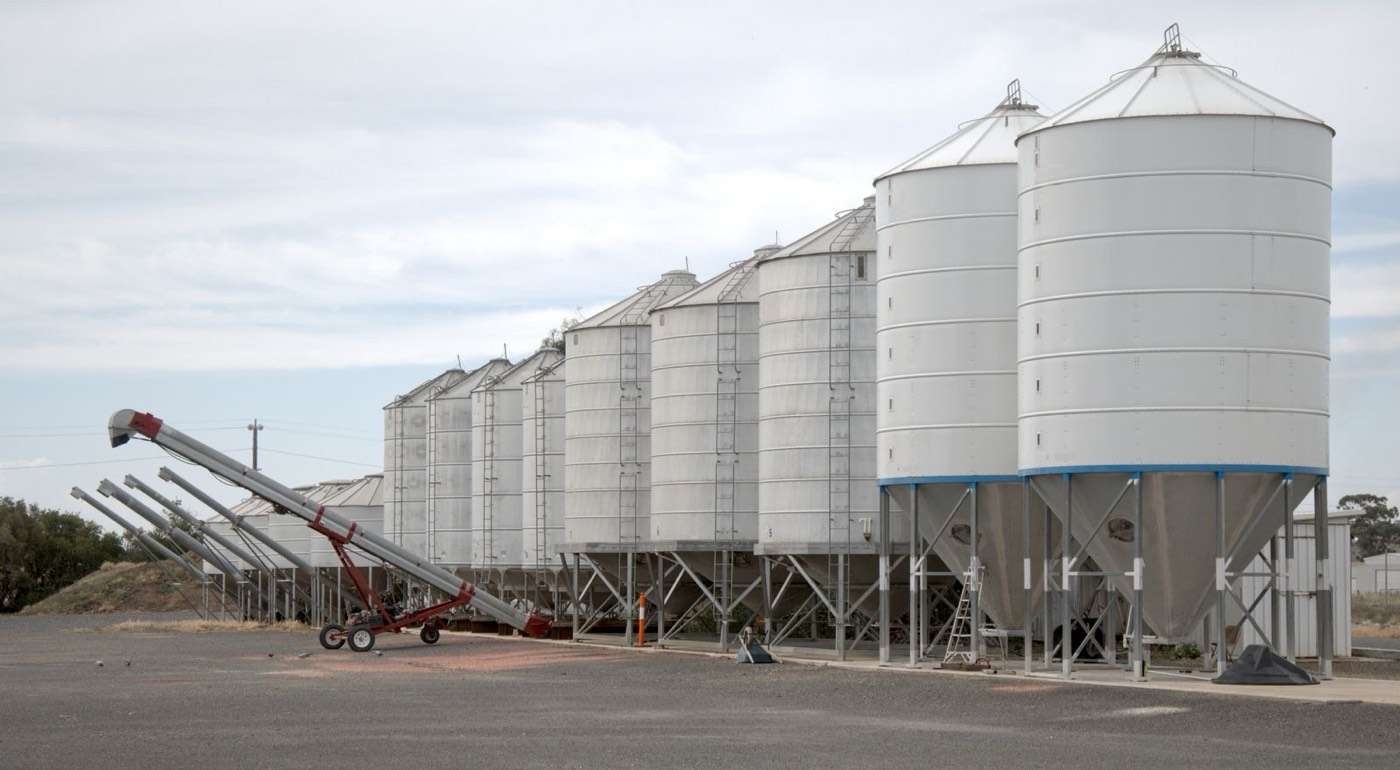
Row of steel grain silos with a grain auger at a country site
Illustrative photo. Photo: Pexels

What silo temperature monitoring costs for a handling site

We fix the price after a short scoping call or a site visit. It depends on silo and cable numbers, distance to the gateway and backhaul. Ongoing support is available as a plan after handover.

Get a quote for silo monitoring

The fixed price covers

  • Cables, roof nodes and sensors
  • Gateway and Starlink or 4G backhaul
  • Installation and electrical work under licence 1513082
  • Alert rosters, set-up and commissioning against a hand probe
  • Training for supervisors and managers, and the record format
  • An ongoing support plan: we keep it running and tune alerts

What this won't do

  • It's not fire detection or suppression. Your fire systems, conveyor protection and emergency plan stay in place.
  • A cable reads grain close to it, so a pocket further away can be missed. Keep the hand probe routine.
  • Readings are indicative. If a contract needs calibrated instruments, we specify them with you.
  • It doesn't replace moisture tests, insect checks, or silo entry and confined space procedures.

One warm silo on a quiet Sunday night

Without monitoring

  1. Sun 9 pmA pocket starts heating in Silo 3.
  2. Sun 2 amThe reader in the crib room shows it. Nobody's looking.
  3. Mon 7 amDay shift finds it on rounds. It's been heating for hours.
  4. MarchThe customer asks how it was held. No trend.

With monitoring

  1. Sun 9 pmA pocket starts heating in Silo 3.
  2. Sun 3 amThe cable shows it. The supervisor's phone buzzes.
  3. Sun 3:30 amNo answer, so the on-call manager gets it.
  4. MarchEvery reading and acknowledgement is on file.

With you every step

We run each stage around a working handling site, so the install fits between intake, loadout and silo turnover.

  1. 1

    Discovery

    We walk the silos, gallery, intake and control room, and agree who gets alerts on each shift.

  2. 2

    Design

    You get a fixed-price proposal with cable layout per silo, node and gateway positions, alert rules and records.

  3. 3

    Build and test

    We build and test the nodes, gateway and alerts off site, and check each cable channel before it goes out.

  4. 4

    Install and commission

    We install under our licence with your silo engineer, then check each sensor against a hand probe.

  5. 5

    Ongoing support

    We train your supervisors and managers, hand over the dashboard and records, and stay on for support and tuning.

Why Holt Systems

We design, install and commission every system ourselves, then look after it with an ongoing support plan. Monitoring supplements the site's own control, protection, fire and safety systems; it does not replace them.

Alerts
SMS to any phone, no app
Based in
Brisbane, QLD
Electrical licence
QLD 1513082
After install
Ongoing support plans
Call
07 2150 3666

Silo temperature monitoring questions

Can the system tell me which silo to look at first?

Yes. Each silo has its own profile, trend and alert state on the dashboard. The alert names the silo and the sensor depth, so you know where to probe or sample.

Who gets the alert when the shift changes?

You nominate the people and we set up the roster in the alert rules. The shift supervisor is alerted first, and an alert nobody acknowledges goes to the on-call manager.

Will the records satisfy a customer audit?

The record shows time-stamped readings, alerts and who acknowledged them, silo by silo. That supports a customer asking how their product was held. If a contract needs calibrated instruments, we specify those.

Can it watch cottonseed at a gin as well as grain?

Yes. The same cables and alerts apply, with rate of rise rules set for cottonseed, which can self-heat from a small wet spot. Moisture still needs a meter or a sample.

Do you work on the silo structure or roof?

No. Your silo engineer or the silo maker approves suspension points and roof loading, and a contractor you engage does any structural work. We do the electrical and instrumentation work.

What if the gateway or a cable stops reporting?

A sensor or gateway that sends nothing for three hours raises an SMS to the site contact, so a silent system isn't mistaken for a healthy one. Cables can fail under grain load, so keep the hand probe routine.

Get a quote for silo monitoring

Tell us what you need to watch and where. We confirm the sensors, gateway location and alert recipients, then give you a fixed price.

Or email hello@holtsystems.com.au

Your details are handled in accordance with our privacy policy.

  1. 1

    Tell us about the site

    A few lines on the assets, distances and what you need to know about.

  2. 2

    A call to scope it

    We confirm the sensors, gateway location and alert recipients, and whether a site visit is needed.

  3. 3

    Fixed price

    You receive a defined scope and a fixed price before any work starts.