
Skip to content
Holt Systems

Grain silo temperature monitoring: hear about a hot pocket in days

We hang temperature cables from the silo roof and text your phone when a pocket of grain starts to heat up.

  • MeasuresGrain temperature top to bottom
  • AlertSMS when a pocket warms
  • Reads every15 to 60 minutes
Grain silo temperature monitoring cross-section Cross-section of a 1,500 tonne flat-bottom steel silo on a Darling Downs farm. Three cables hang from the roof at different distances from the centre: one near the sun-side wall on the left, one in the centre and one about two-thirds of the way to the right wall. Each carries five temperature sensors shown as dots coloured blue for under 23 degrees, orange for above 25 degrees and red for a hot spot. A warm pocket under the roof sheet on the sun side lifts the top two sensors on the sun-side cable. An aeration fan on the left feeds a duct in the silo floor. A LoRaWAN node on the roof sends radio readings to a gateway on the farm shed, which uses 4G or Starlink to send an SMS alert to the farm manager. A legend explains the colours and a box states the hot spot alert rule: 3 degrees above neighbouring sensors on one cable for 12 hours. Grain silo temperature monitoring 1,500 t flat-bottom silo, Darling Downs Sun LoRaWAN node LoRaWAN Gateway 4G or Starlink SMS alert Farm manager Warm pocket under roof, sun side Sensors every 1 to 3 m of grain height Aeration fan and floor duct Sensor colour Under 23 °C Above 25 °C Hot spot Hot spot alert 3 °C above neighbours on one cable for 12 h sends an SMS to the farm manager
Cross-section of a 1,500 t flat-bottom silo: three roof-hung cables with five sensors each, a warm pocket on the sun side, the aeration duct, and the radio path from the roof node to a gateway and your phone.

600 to 2,000 t

GRDC reports that big flat-bottom silos this size are now common, and they're hard to check for pests and grain condition.

Source: GRDC (Qld DAF authors), 2021

Under 23 °C

GRDC says keep stored grain under 23 °C in summer, and under 15 °C in winter.

Source: GRDC, 2024

2 to 4 L/s/t

GRDC gives this much airflow for cooling grain. The temperature profile shows if your fans are doing it.

Source: GRDC, 2024

A hot pocket can grow for weeks between probe checks

Grain holds heat. Insects, mould and the grain itself all give off warmth, and a pocket under the roof sheet or against a sunny wall keeps climbing.

Without grain silo temperature monitoring, most farm silos have no fixed sensors. A monthly probe only samples a tiny bit of 1,500 t.

A pocket can take off in days. A reading on the office computer does nothing at 2 am on a Sunday.

  • Live insects in a load can fail the nil live insects standard at delivery.
  • Warm, damp grain loses quality and can get downgraded.
  • Fumigating by the calendar, with no pest data, feeds phosphine resistance.

How grain silo temperature monitoring works in your silo

  1. 1

    Cables hang from the roof

    Three or more cables carry a sensor every 1 to 3 m of grain height, clear of the fill stream and the outlet.

  2. 2

    A roof node sends the readings

    A LoRaWAN node sits outside the steel shell, reads every 15 to 60 minutes and sends by radio.

  3. 3

    A gateway on the shed passes them on

    It uses Starlink or 4G. No wifi, and no cable run back to the house.

  4. 4

    You get the alert and the profile

    The system checks each sensor against its neighbours and its own trend. You see the profile on your phone.

Silo alerts
  1. Wed 6:10 am

    Silo 2 cable 1 sensor 4 at 29 °C, up 2 °C in 24 h. Urgent: check the roof sheet and run the aeration fan.

  2. Fri 7:40 am

    Silo 2 cable 1 sensor 4 back to 22 °C after 26 h of fan run. Profile is even.

What we put on each silo

We work out cable count and positions at the site visit, then check them with the silo maker or an engineer.

  • Multi-point temperature cables

    Hang from the roof and report a temperature profile right through the grain.

    A sensor every 1 to 3 m

  • Headspace and ambient sensors

    Read the air under the roof and out in the shade, so the system knows when it's worth aerating.

    Sealed, outside the grain

  • LoRaWAN roof node

    Sits outside the steel shell and sends each reading by radio.

    Reads every 15 to 60 min

  • Fan run sensor

    Logs when each aeration fan runs, wired in under our electrical contractor licence.

    Fan run time logged

  • Gateway with Starlink or 4G

    Collects readings from your silo group and sends them to your phone.

    Mains power, battery backup

What lands on your phone when a pocket heats

We start with set alert values, then tune them to each silo and grain.

Silo alerts
  1. Tue 6:10 am

    Silo 2 cable 1 sensor 4 at 27 °C, 3.5 °C above its neighbours for 12 h. Probe the sun side and check the fans.

  2. Wed 6:10 am

    Silo 2 cable 1 sensor 4 at 29 °C, up 2 °C in 24 h. Urgent: check the roof sheet and run the aeration fan.

  3. Fri 7:40 am

    Silo 2 cable 1 sensor 4 back to 22 °C after 26 h of fan run. Profile is even.

Messages go to the people you nominate, by SMS to any phone.

Silo 2, cable 1, sensor 4

Dashboard view

Sensor 4
29 °C
Neighbour sensors
24 °C
Headspace
31 °C
22 25.5 29 Alert at 25 °C SunMon pmTue pmWed pmThu pm °C
Example readings for illustration.

The same warm week, with and without cables

Without monitoring

  1. Day 1A pocket starts warming under the roof sheet.
  2. Day 12Nobody knows. The silo looks fine from the hatch.
  3. Day 30The monthly probe misses the pocket.
  4. Day 45Insects and mould turn up at unloading.

With monitoring

  1. Day 1The pocket starts warming under the roof sheet.
  2. Day 3The cable shows a rise. Your phone buzzes.
  3. Day 4You check the fans and probe that spot.
  4. Day 6Aeration cools it. The profile proves it.

A monthly probe versus a reading every hour

TopicTodayWith monitoring
How oftenAbout once a monthEvery 15 to 60 minutes
What's checkedA tiny part of the grainA profile through the depth
A pocket warmsFound at the next check, if at allAn SMS within days
Aeration workingFans run, result unknownProfile shows if the grain cooled

Grain silo temperature monitoring across your silo group

Winter crops go into the silo hot, and summer crops follow in late summer. The aeration window is short, so we pair the cables with grain aeration fan monitoring.

A steel shell chokes radio signal, so the node sits outside and we test gateway coverage across the whole group. Grain on a pad suits grain bunker temperature probes.

Running a gin, mill or grain handler? Have a look at silo temperature monitoring for sites that hold other people's grain. Feedlots, see grain bin temperature monitoring for feedlot silos.
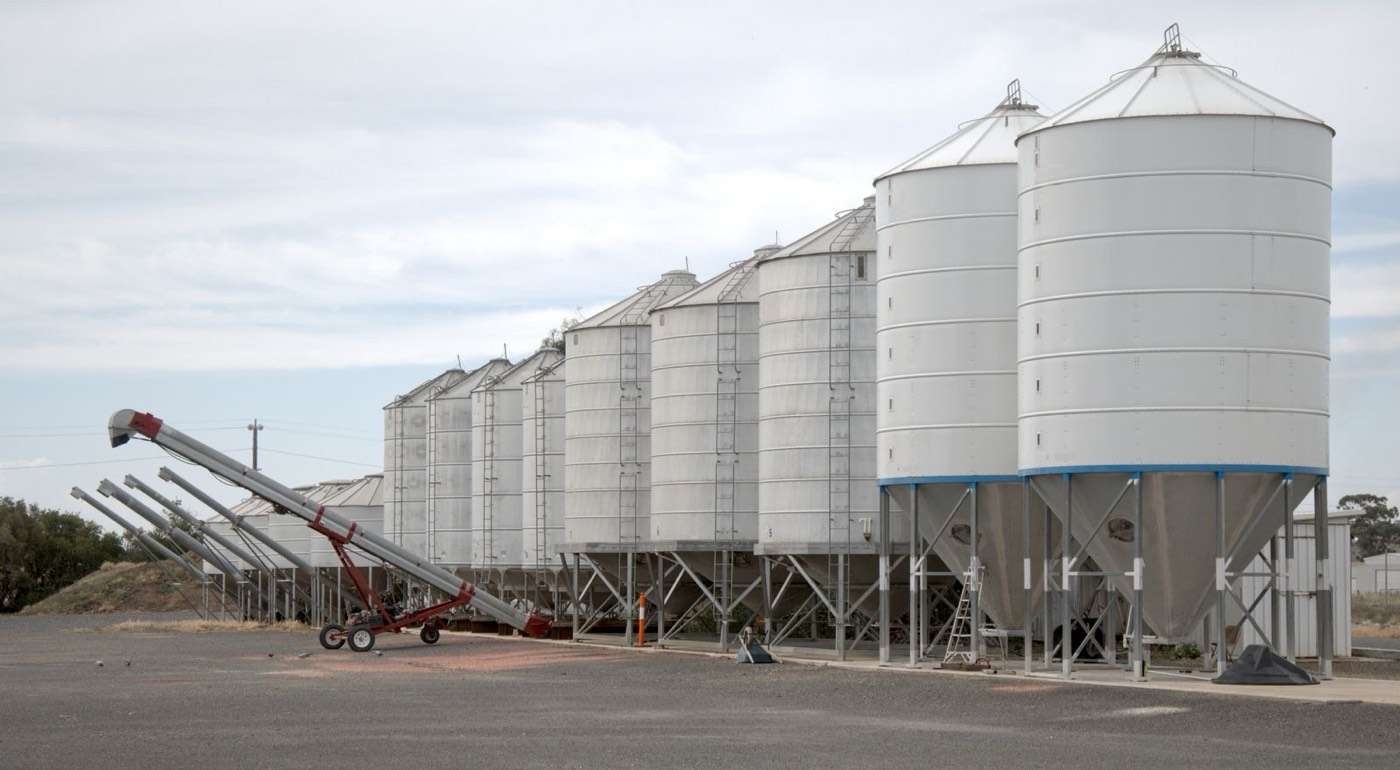
Row of steel grain silos with a grain auger at a country site
Illustrative photo. Photo: Pexels

What grain silo temperature monitoring costs

We fix the price after a short scoping call or a site visit. It depends on silo and cable numbers, gateway distance and backhaul.

Get a quote for silo monitoring

The fixed price covers

  • Cables, nodes and sensors
  • Gateway and Starlink or 4G backhaul
  • Installation and electrical work under licence 1513082
  • Alert set-up and commissioning against a hand probe
  • Support, tuning and cable replacement

What this won't do

  • It's not fire detection or suppression, and not a certified safety system. Whatever you've already got stays in place.
  • It doesn't replace insect checks, fumigation records, or silo entry and phosphine procedures.
  • Readings come every few minutes. You get alerts and trends, but it doesn't run your fans.
  • Sensors give you a good guide. Moisture content still needs a meter or a sample.

With you every step

Every silo is different, so we settle the cable layout at the site visit and check it with the silo's engineer before anything is ordered.

  1. 1

    Discovery

    We walk each silo, fan and roof access, check power at the fans and test gateway coverage across the group.

  2. 2

    Design

    You get a fixed-price proposal with cable count and positions, node and gateway layout, and the alert rules.

  3. 3

    Build and test

    We build and test the nodes, gateway and alerts in the workshop, and check every cable before it leaves.

  4. 4

    Install and commission

    We install under our licence once the silo is empty or low, then check every sensor against a hand probe.

  5. 5

    Ongoing support

    We show you how to read the profile and alerts, and we stay on call for support and tuning.

Why Holt Systems

We design, install and commission every system ourselves, then look after it with an ongoing support plan. Monitoring supplements the site's own control, protection, fire and safety systems; it does not replace them.

Alerts
SMS to any phone, no app
Based in
Brisbane, QLD
Electrical licence
QLD 1513082
After install
Ongoing support plans
Call
07 2150 3666

Grain silo temperature monitoring questions

How many temperature cables does a silo need?

Depends on the diameter and the grain. A cable only reads grain close to it, and overseas research reports a pocket 0.3 to 1 m away can be missed. We set the count at the site visit, usually between the centre and about two-thirds of the radius, plus one near the sun-side wall.

What temperature should stored wheat be kept at?

GRDC guidance is under 23 °C in summer, with a target of 18 to 23 °C, and under 15 °C in winter. Aeration cooling is your main protection. The profile shows whether your fans are actually bringing the grain down.

Will temperature cables survive unloading?

Cables take heavy loads as a silo fills, settles and unloads. Overseas tests report much higher forces when a cable is held fast. The silo maker or an engineer checks the suspension points and roof loading. Cable failure is a real running cost, so we plan for it.

Can I monitor my silo from my phone?

Yes. Readings go by LoRaWAN to a gateway, then by 4G or Starlink to a dashboard you can open on your phone. Alerts reach you by SMS or email, and you choose who gets them. It doesn't replace the monthly probe and insect check.

How much does a grain silo temperature monitoring system cost?

It depends on how many silos you've got, cable lengths, fan inputs and gateway coverage. We don't publish a figure. After the site visit you get a fixed-price proposal for your silos, so the numbers fit your site.

Get a quote for silo monitoring

Tell us what you need to watch and where. We confirm the sensors, gateway location and alert recipients, then give you a fixed price.

Or email hello@holtsystems.com.au

Your details are handled in accordance with our privacy policy.

  1. 1

    Tell us about the site

    A few lines on the assets, distances and what you need to know about.

  2. 2

    A call to scope it

    We confirm the sensors, gateway location and alert recipients, and whether a site visit is needed.

  3. 3

    Fixed price

    You receive a defined scope and a fixed price before any work starts.