
Skip to content
Holt Systems

Cattle heat stress monitoring: a text when the heat won't ease

We fit solar weather nodes at your water points and a gateway on the homestead hill. You get a text when the heat won't ease overnight.

  • MeasuresGlobe temp, humidity, wind
  • You getA text when heat lingers
  • Reads everyAbout 10 min, solar powered

Unshaded trough HLI overnight

Dashboard view

Unshaded trough
81
Shaded trough
74
Wind
6 km/h
72 82 92 Moderate to high boundary 4 pm8 pm12 am4 am HLI
Illustrative chart, not measured. MLA studies treat 77 as the moderate to high boundary. Your trigger levels are set with you.

5.9 points

Shade at water points lifted calf survival by 5.9 percentage points in a three year pilot on 760 heifers.

Source: University of Queensland

about 17%

Average calf loss in that Barkly Tableland pilot, and over 30% for the heifers.

Source: University of Queensland

8 weeks

Bull fertility can take up to eight weeks to recover after even short extreme heat.

Source: FutureBeef Big Heat Ready fact sheet

A hot day, a warm night, and the heifers are 40 km from the house

Cattle heat stress monitoring on a station means measuring the heat where the cattle drink, not reading a town forecast. A feedlot has a plan and a weather station. You've got neither out the back.

The Bureau issues graziers' alerts for sheep but not cattle, and cattle heat maps are still being prototyped (University of Southern Queensland). So a bad afternoon gets seen on the next visit.

Warm nights do the damage. An Australian pasture study reports a chance to cool overnight matters more than peak heat hours.

  • No cattle heat warning from the Bureau.
  • The mob is a long drive from the homestead.

What we fit at the water points and the hill

  • Solar weather node

    Sits at the trough on a solar panel and battery. No cable run out to the water point.

    Reads every 10 min

  • Black globe and humidity

    Measures the heat load the cattle feel, including sun, not just air temperature.

    Cattle height

  • LoRaWAN gateway

    Sits on the homestead hill or roof and picks up every node by radio.

    Survey sets range

  • Starlink backhaul

    Sends readings and texts out where mobile coverage is poor.

    4G where it's good

How cattle heat stress monitoring works at two water points

Cattle heat stress monitoring paddock map Paddock map of a Queensland cattle station, not to scale. A homestead sits on a hill with a LoRaWAN gateway mast and a Starlink dish. Two water points lie down the slope, each with a solar weather node measuring black globe temperature, relative humidity and wind. Water point 1 has a shaded trough and water point 2 an unshaded trough, for comparison. Dashed orange radio lines run from each node to the gateway. Two dashed grey arcs show radio range, which is set by a site survey. Below the map, a day chart of Heat Load Index at each trough shows the unshaded trough staying above the reference line of 86 through the night while the shaded trough falls below it. An arrow from the overnight band leads to an SMS to the owner when heat persists overnight, sent through the gateway and Starlink. LoRaWAN gateway Starlink dish Homestead Range set by site survey Water point 1 Shaded trough Water point 2 Unshaded trough Solar node: globe, RH, wind Dashed arcs: radio range Illustrative HLI at each trough Unshaded Shaded HLI 86 line Overnight 60 80 100 6am 12pm 6pm 12am 6am SMS to the owner when heat persists overnight Sent via the hill gateway and Starlink
Paddock map, not to scale. A gateway and Starlink dish sit on the homestead hill. A solar node at a shaded trough and an unshaded trough sends by radio, and a chart shows the unshaded trough staying above 86 overnight.
  1. 1

    A node at each trough

    A solar node carries a black globe, a shielded humidity sensor and a wind sensor at cattle height. It reads about every 10 minutes.

  2. 2

    Radio up the hill

    Each node sends by LoRaWAN (long range wide area network) radio to the gateway on the homestead hill or roof.

  3. 3

    Starlink or 4G out

    The gateway sends readings out over Starlink or 4G, and the dashboard works out the Heat Load Index (HLI) for each trough.

  4. 4

    A text when heat lingers

    If HLI stays high overnight, a text goes to the people you nominate. A silent node raises an alert too.

What lands on your phone when the heat won't ease

These are examples, with trigger levels set with you by breed, calf age and condition.

Heat alerts
  1. 11:10 pm

    Unshaded trough HLI 81 at 11 pm, shaded 74. Heat not easing. Check water and shade.

  2. 11:20 pm, night 2

    Unshaded trough HLI 80 at 11 pm, second night above 77. Plan to check the mob at first light.

  3. 5:40 am

    Unshaded trough HLI 71, back under 77. Shaded trough 66. Overnight heat has eased.

Messages go to the people you nominate, by SMS to any phone.

Messages go to the people you nominate, by SMS to any phone and by email, with the reading and the time in every alert.

Today versus with cattle heat stress monitoring

TopicTodayWith monitoring
Heat warningA town forecast and a hot feelingA text from your own trough readings
Shade checkGuessing if the shade is helpingShaded and unshaded trough side by side
Warm nightsNot seen until the next visitA text when heat holds overnight

What it costs

We fix the price after a short scoping call or a site visit. It depends on how many water points, how far they are from the gateway, and how it gets out. Ongoing support is available as a plan after handover.

Get a quote for heat alerts

The fixed price covers

  • A solar weather node at each water point you want watched
  • Gateway and Starlink or 4G backhaul
  • Installation and electrical work under QLD Electrical Contractor Licence 1513082
  • Alert set-up, trigger levels and who gets the texts
  • An ongoing support plan after handover

On a station water point

Radio range depends on hills and timber, so we survey from the hill or roof before we quote. A water point out of range may need a relay or a second gateway.

A feedlot version of this is on feedlot heat load index monitoring.

A rain gauge at each paddock fits the same gateway: see wireless rain gauge Australia. To watch the troughs themselves, see bore water salinity and the power outage notification device.
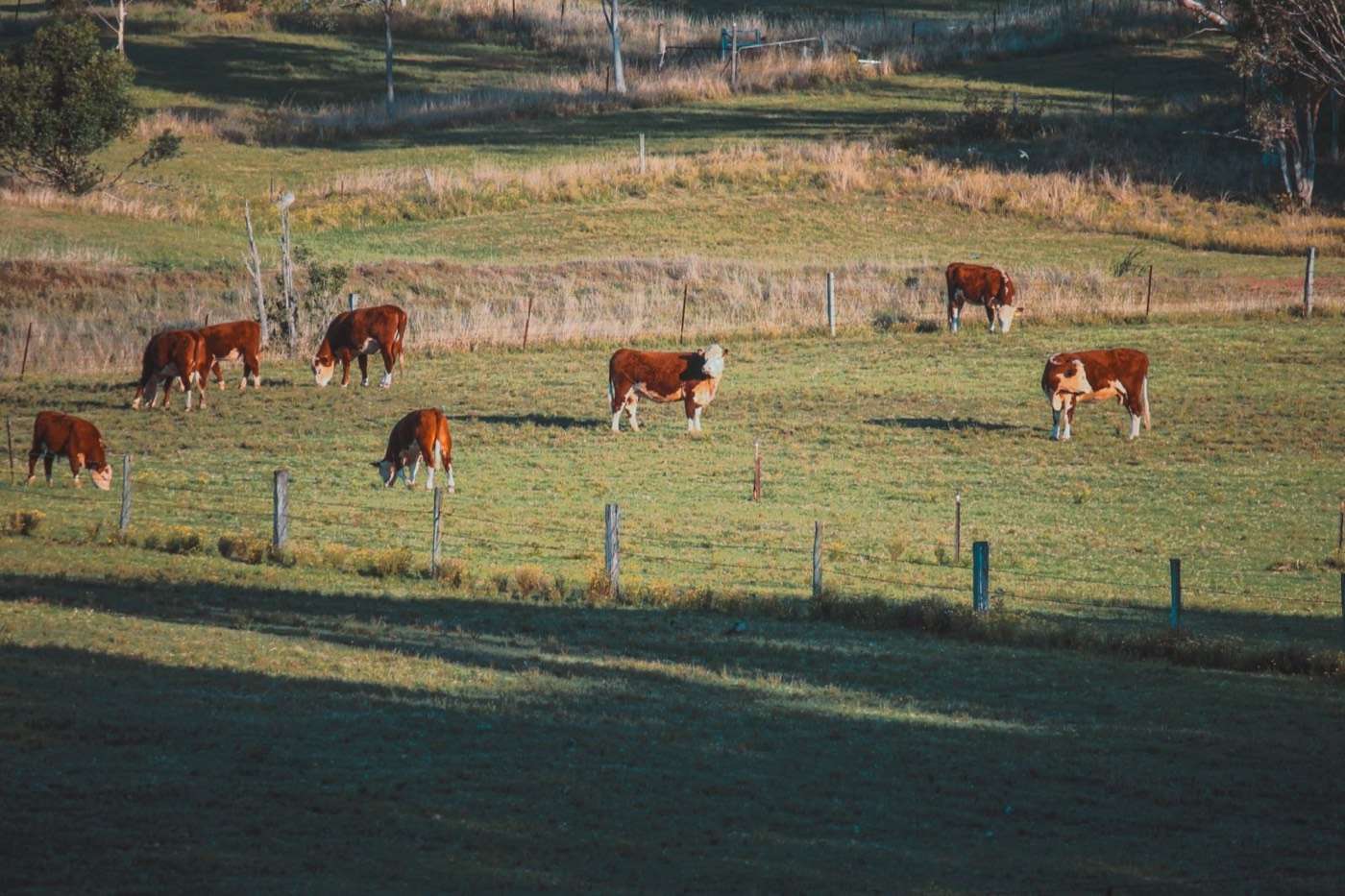
Hereford cattle grazing a green paddock beside a fence line
Illustrative photo. Photo: Pexels

What this won't do

  • Readings are indicative, not certified, and no substitute for looking at the cattle.
  • It won't switch pumps, fill troughs or move stock. It sends readings and texts.
  • Bore, pump and trough checks, mustering and welfare stay as they are. A QBCC-licensed contractor we engage does any plumbing.

With you every step

How the five stages go on a station, with the water points and radio survey settled at the first visit.

  1. 1

    Discovery

    We visit the homestead and water points, pick a shaded and an unshaded trough to compare, and survey the radio paths.

  2. 2

    Design

    You get a written scope: nodes, solar supply, gateway, backhaul, alert levels and who gets the texts.

  3. 3

    Build and test

    We bench test the nodes, gateway and alerts, including a simulated warm night and a node that goes quiet.

  4. 4

    Install and commission

    We do the electrical work under Licence 1513082, mount the nodes and check readings against a hand-held globe.

  5. 5

    Ongoing support

    We confirm who gets the texts, explain the shaded and unshaded readings, and set up ongoing support before the build-up.

Why Holt Systems

We design, install and commission every system ourselves, then look after it with an ongoing support plan. Monitoring supplements the site's own control, protection, fire and safety systems; it does not replace them.

Alerts
SMS to any phone, no app
Based in
Brisbane, QLD
Electrical licence
QLD 1513082
After install
Ongoing support plans
Call
07 2150 3666

Cattle heat stress monitoring questions

Does a station need a heat load management plan?

No. The National Feedlot Accreditation Scheme plan applies to accredited feedlots, not grazing. For stations, heat planning is voluntary good practice. The Big Heat Ready fact sheet advises planning for shade and water, and monitoring gives that plan data from your own water points.

Will a gateway at the homestead reach water points many kilometres away?

It depends on the hills and trees. LoRaWAN range over open country is long but not guaranteed, so we survey from the proposed hill or roof before quoting. A water point out of range needs a second gateway or a relay, which we price separately.

How are the nodes powered?

Each node runs from a solar panel and battery, so there's no cable run out to the water point. The gateway is powered at the homestead or on the hill from mains or solar and battery. We do the electrical work under our licence.

Is a feedlot index valid for cattle in a paddock?

Heat Load Index was developed in Meat & Livestock Australia funded feedlot research, so breed, calf age and condition change where the thresholds sit. We use it as an indicator and compare shaded and unshaded troughs. You set the trigger levels with your adviser or vet.

What happens if there is no mobile coverage?

The gateway sends readings and texts over Starlink or 4G. Starlink is the usual pick where mobile coverage is poor. If the backhaul or power fails, readings stop, and we alert you when a node or gateway has been silent for 30 minutes.

Does this replace checking water and mustering?

No. Bore, pump and trough checks, mustering and welfare stay as they are. The monitoring shows where and when conditions are worsening so you can get there sooner. It doesn't switch pumps, move cattle or fill troughs.

Sources

  1. Mitigating heat stress in heifers to prevent stock losses, University of Queensland
  2. Big Heat Ready: how to plan as a livestock producer, FutureBeef / Farm Business Resilience Program (Future Drought Fund, Queensland Government)
  3. Hot and cold cattle: developing cattle-specific thermal stress forecast products, University of Southern Queensland
  4. The effect of Brahman genes on body temperature plasticity of heifers on pasture under heat stress, PMC (Australian-led pasture study)
  5. A new heat load index for feedlot cattle (Gaughan et al.), University of Nebraska digital commons (MLA-funded Australian work)
  6. b.flt.0337 final report (HLI categories and 10-minute climate logging), Meat & Livestock Australia

Get a quote for heat alerts

Tell us what you need to watch and where. We confirm the sensors, gateway location and alert recipients, then give you a fixed price.

Or email hello@holtsystems.com.au

Your details are handled in accordance with our privacy policy.

  1. 1

    Tell us about the site

    A few lines on the assets, distances and what you need to know about.

  2. 2

    A call to scope it

    We confirm the sensors, gateway location and alert recipients, and whether a site visit is needed.

  3. 3

    Fixed price

    You receive a defined scope and a fixed price before any work starts.