
Skip to content
Holt Systems

Heat load index cattle alerts, pen by pen, day and night

We put weather masts in your pens, work out the index every few minutes and text your phone when a pen crosses your trigger.

  • MeasuresGlobe temp, humidity, wind, sun
  • Works outHLI and AHLU for each pen
  • AlertSMS, with a night escalation

Mast A, pen 4, heat load index

Dashboard view

HLI now
88
Black globe
42 °C
Wind
1.2 m/s
Humidity
62%
70 82.5 95 Reference trigger 86 Fri 6 amFri 2 pmFri 10 pmSat 6 amSat 2 pmSun 4 am HLI
Example readings for illustration. Your triggers come from your plan.

About 320

Cattle died across six Queensland feedlots over the Australia Day long weekend in January 2024, reported by Beef Central.

Source: Beef Central

28 to 30 °C

Overnight temperatures reported over that weekend, so cattle couldn't shake off the day's heat.

Source: Beef Central

81.8%

Queensland feedlot shade access by December 2025, up from 62.3% in June 2020, reported by Queensland Country Life.

Source: Queensland Country Life

The heat load index cattle numbers look fine until the third hot night

Heat load index cattle thresholds don't care about air temperature alone. Black globe temperature, humidity and wind all count, and so does a night that stays warm.

Most yards run a forecast service and one station by the office. That doesn't show you the pen behind the mound where the wind never gets in.

Over the 2024 Australia Day weekend it hit 39 °C with humidity up to 97% at Dalby. Nights sat at 28 to 30 °C, and a forecast email only helps if someone opens it on a long weekend.

What the index says on a 2024 type night

  • The globe temperatures are our assumptions, not measurements from the 2024 event.
  • Reference animal is an unshaded black Bos taurus steer, threshold 86.
Afternoon: globe 45 °C, 60% humidity, wind 2 m/sHLI 101.7
Night: globe 29 °C, 90% humidity, wind 1 m/sHLI 91.3

Even at night the index stays above 86, which is why we add a warm night rule and not just a daytime one.

How heat load index cattle monitoring works across your pens

Heat load index cattle monitoring across a feedlot Plan view of a feedlot, not to scale. Two rows of three pens sit at left. Mast A stands at a pen edge in the lane between the rows. Mast B stands in a shaded pen. Each mast carries a black globe, a humidity shield, an anemometer and a pyranometer. Dashed radio lines run from both masts to a LoRaWAN gateway on the feed mill roof, which connects to a Starlink dish. A callout lists the heat load index formula inputs: black globe temperature, relative humidity and wind speed. Below, a dashboard chart plots heat load index over three days against the 86 reference line, with a rising accumulated heat load units curve and shaded warm night bands. Two nights end above 86 and are marked in red. An arrow from the Starlink dish leads through the dashboard to an SMS to the feed manager and consultant vet. Feedlot plan, not to scale Pens Feed mill Gateway and Starlink A B A Mast at pen edge B Mast in shaded pen HLI formula inputs Each mast: black globe, RH shield, anemometer and pyranometer BGT above 25 C: HLI = 8.62 + 0.38 RH + 1.55 BGT - 0.5 WS + EXP(-WS + 2.4) BGT in C, RH in %, WS in m/s Dashboard: HLI against 86 86 77 Night Night Night HLI, 10 minute readings AHLU, running total HLI 86 reference line Warm night band Night above 86 SMS to feed manager and vet Second night above 86: escalate
Plan view of a feedlot: a weather mast at a pen edge and another in a shaded pen, radio to a gateway on the feed mill roof, Starlink to the cloud, and a chart of heat load index against the 86 line that sends the SMS.
  1. 1

    Masts stand in the pens

    Each mast has a black globe, a humidity shield, an anemometer and a pyranometer, in an unshaded pen and a shaded one.

  2. 2

    Radio to the feed mill

    Readings go every 5 to 10 minutes by LoRaWAN to a gateway on the mill roof. No cable runs through the yard.

  3. 3

    The index is worked out for you

    We calculate HLI and accumulated heat load units (AHLU) from the readings and plot them against your trigger line.

  4. 4

    Your phone gets the text

    The manager and consulting vet get an SMS. A warm night escalates to the on-call phone.

What we put in your pens

  • Pen weather mast

    Carries the black globe, shielded humidity sensor, anemometer and pyranometer. Reports from pen fence height.

    Reads every 5 to 10 min

  • Gateway on the mill roof

    Collects every mast's readings and sends them on. We test radio from the roof before ordering.

    Battery backup

  • Starlink or 4G backhaul

    Gets the readings off the yard to your phone and dashboard.

    No wifi or cable needed

  • HLI and AHLU dashboard

    Plots each pen's index against your trigger line, with a daily log you can keep alongside your records.

    Phone friendly

What lands on your phone when a pen heats up

Pen alerts
  1. Fri 2:45 pm

    Mast A, pen 4 HLI 84 and climbing. Globe 41 °C, wind 1.5 m/s. Plan trigger is 86. Check shade and water.

  2. Sat 12:15 am

    Mast A HLI 82 at midnight, second hot night. Escalated to on-call. Please check pens 3 to 6.

  3. Sun 4:20 am

    Mast A HLI 74 and falling. AHLU easing. Back under plan triggers.

Messages go to the people you nominate, by SMS to any phone.

Messages go to the people you nominate, by SMS to any phone and by email, with the reading and the time in every alert.

One yard station and a forecast, versus a mast in each pen type

TopicTodayWith monitoring
Where it's measuredOne station by the officeUnshaded and shaded pens, at fence height
Measured or forecastRegional forecast emailMeasured HLI every few minutes
Warm nightsSpotted if someone checksRule fires and rings the on-call phone

Heat load index cattle monitoring on a Queensland feedlot

Most of the state's cattle on feed are on the Darling Downs, Western Downs, South Burnett and Maranoa, where summer nights stay warm. Queensland held about 57.6% in June 2017, reported by Beef Central.

Feed bins matter too, so see feedlot silo level monitoring and feedlot water trough monitoring.

Heavy rain is the other summer worry. Your ponds are covered by feedlot effluent pond monitoring. Running cattle on a station? See cattle heat stress monitoring at station water points.
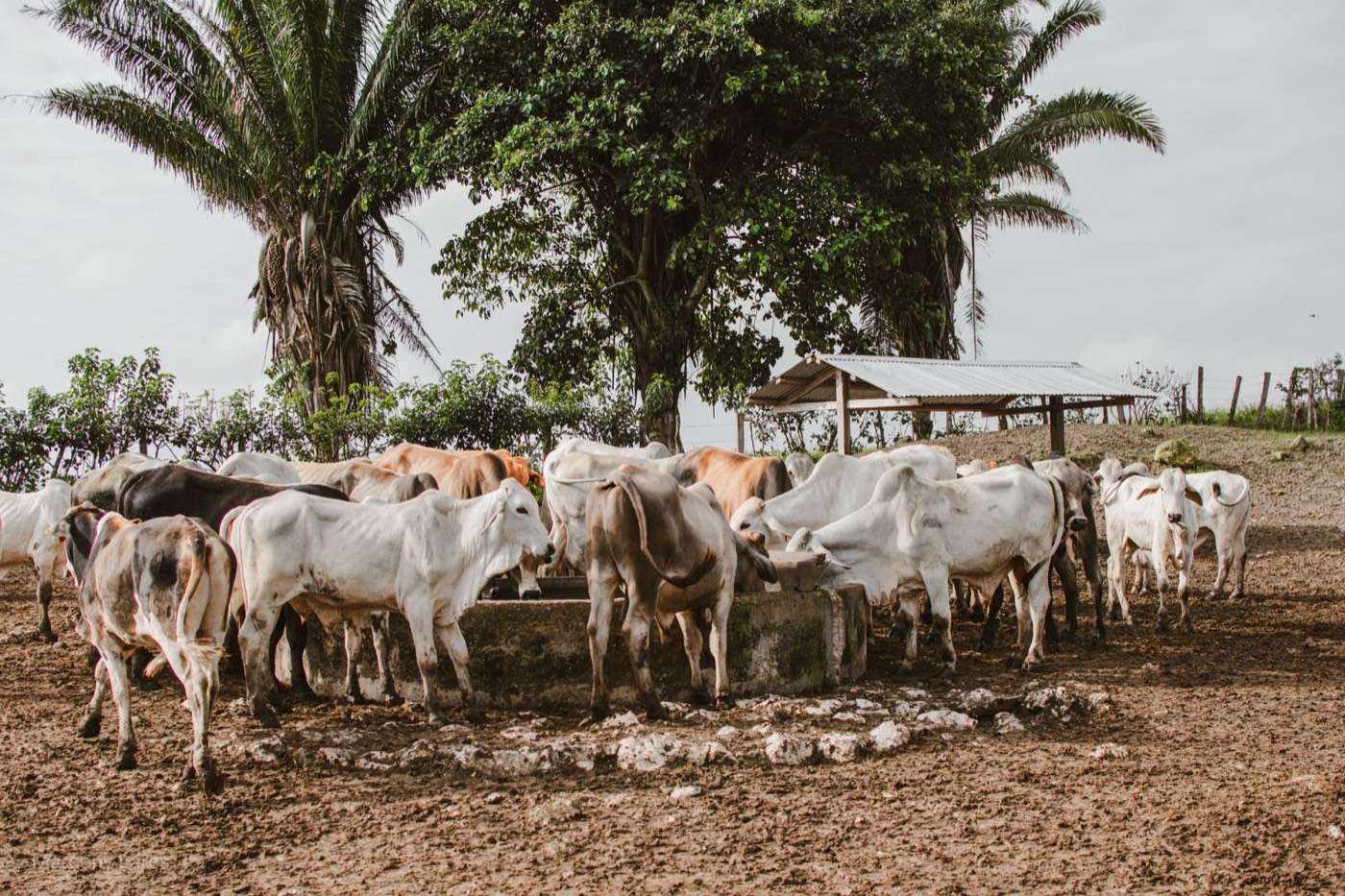
Zebu cattle crowding a concrete water trough in a dry, dusty yard
Illustrative photo. Photo: Pexels

What heat load index cattle monitoring costs

We fix the price after a short scoping call or a yard walk. It depends on the number of masts, distance to the gateway and backhaul. Ongoing support is available as a plan after handover.

Price pen-level heat load alerts

The fixed price covers

  • Masts, black globes and sensors
  • Gateway and Starlink or 4G backhaul, with backup power
  • Installation and electrical work under licence 1513082
  • Alert set-up, commissioning against a hand-held globe, and training
  • Ongoing support plan: cleaning checks, sensor replacement and alert tuning

What this won't do

  • Readings are indicative. Your NFAS record station, forecast service and your vet's judgement stay the reference.
  • It's not a certified safety system, and pen checks on hot days and nights still happen.
  • One mast doesn't describe every pen, and black globes need regular cleaning.
  • Readings stop if power or backhaul fails. A silent mast alerts you after 30 minutes.

With you every step

Every yard is laid out differently, so we settle mast positions on a walk with you and your vet before anything is ordered.

  1. 1

    Discovery

    We walk the yard with you and your vet, pick mast pens, check power at the mill and test radio from the roof.

  2. 2

    Design

    You get a written fixed-price scope covering masts, gateway, backhaul, backup power, triggers per cattle class and alert contacts.

  3. 3

    Build and test

    We build and bench test the masts and gateway, and check the HLI against hand figures.

  4. 4

    Install and commission

    We install under licence 1513082, mount the masts and commission against a hand-held globe reading.

  5. 5

    Ongoing support

    We confirm night escalation, show your team the readings and set up ongoing support.

Why Holt Systems

We design, install and commission every system ourselves, then look after it with an ongoing support plan. Monitoring supplements the site's own control, protection, fire and safety systems; it does not replace them.

Alerts
SMS to any phone, no app
Based in
Brisbane, QLD
Electrical licence
QLD 1513082
After install
Ongoing support plans
Call
07 2150 3666

Heat load index questions

What is the heat load index for cattle?

The heat load index (HLI) combines black globe temperature, humidity and wind speed into one number. The reference animal is an unshaded black Bos taurus steer with a threshold of 86. Thresholds rise for Bos indicus cattle, shaded cattle and other adjustments in your plan.

How do you calculate the heat load index?

It uses globe temperature, humidity and wind speed, with one formula above 25 °C and another below. Gaughan and colleagues published it with MLA funding. We run the calculation for you every few minutes.

Do you replace our forecast service or weather station?

No. A forecast plans the days ahead and your station stays your reference record. We add pen-level readings and alerts on measured conditions, including overnight.

Why a black globe and not an air temperature sensor?

Air temperature leaves out sun and radiant heat, which is much of what the animal carries. The HLI is built on black globe temperature, so we use a standard globe and check it against a hand-held reading.

Can the gateway reach the whole yard?

Often, from the feed mill roof, but steel, silos and cattle weaken the signal. We test from the proposed spot and add a second gateway if a pen block is out of range.

Do you work on sprinklers or shade structures?

No. We install masts, gateway, backhaul and alert rules. Sprinkler, plumbing or structural changes are done by your own contractors, or by QBCC-licensed contractors we engage and manage.

Price pen-level heat load alerts

Tell us what you need to watch and where. We confirm the sensors, gateway location and alert recipients, then give you a fixed price.

Or email hello@holtsystems.com.au

Your details are handled in accordance with our privacy policy.

  1. 1

    Tell us about the site

    A few lines on the assets, distances and what you need to know about.

  2. 2

    A call to scope it

    We confirm the sensors, gateway location and alert recipients, and whether a site visit is needed.

  3. 3

    Fixed price

    You receive a defined scope and a fixed price before any work starts.