
Skip to content
Holt Systems

Leaf wetness sensor price: what it takes to time mildew sprays

We install leaf wetness sensors, a rain gauge and a gateway, do the wet-hours sums for each block and text you when mildew risk builds.

  • MeasuresLeaf wetness, rain, temperature
  • CountsDegree-hours to the 45 line
  • AlertSMS to the people you pick

Block 3, degree-hours of wetness

Dashboard view

Wet hours
2.4 h
Degree-hours
46
Canopy temp
18 °C
0 58 116 Infection line at 45 8 pm10 pm11 pm1 am3 am °C-hours
Example readings for illustration. Thresholds are rules of thumb.

30%

of surveyed growers made 10 or more downy mildew sprays in the wet 2010-11 season. In a normal season, 68% made 1 to 6.

Source: Wine Australia

About 5 days

is how long after an infection event a post-infection spray is reported to work, in warm weather and on a dry canopy.

Source: AWRI eBulletin, Oct 2022

2 days

is how long you have to record each chemical application in Queensland, weather included.

Source: Business Queensland

A leaf wetness sensor price tells you nothing about when to spray

You can buy a leaf wetness sensor price list's worth of gear and still not know when to spray. The sensor says wet or dry. Somebody still has to turn wet hours and temperature into a decision.

Downy mildew needs leaves wet for about 45 degree-hours (temperature in °C times wet hours). A rain gauge can't see dew, fog or sprinkler wetting, and a canopy stays wet long after the rain stops.

So most blocks get sprayed by the calendar, or after the infection has already happened. In the wet 2010-11 season, 30% of surveyed growers made 10 or more downy sprays (Wine Australia).

  • A post-infection spray is reported to work only within about 5 days, on a dry canopy.
  • A weather station console needs someone to look at it and do the sums.

How leaf wetness sensor monitoring works on your block

Leaf wetness sensor price: what the sensors feed Side view of a Granite Belt vineyard row. A leaf wetness sensor sits in the canopy on the shaded side, a rain gauge stands in the open, and a pole-mounted LoRaWAN gateway carries a Starlink or 4G dish. Dashed radio lines run from the sensor and rain gauge to the gateway. Below is a 24-hour timeline with rain bars, a temperature line and shading for the wet hours. The wet hours feed a degree-hours gauge that fills to the 45 degree-hour line. When it is reached an SMS alert is sent and a 5-day post-infection spray window opens, with spraying on a dry canopy. Granite Belt vineyard row, side view Canopy LoRaWAN radio Rain gauge open site Leaf wetness sensor shaded side Gateway pole Starlink or 4G 24 hours of rain, temperature, wet hours Leaves wet Temperature Rain 0 h 12 h 24 h Degree-hours gauge 45 °C-hour line SMS alert 45 reached 5-day spray window Day 1 to 5, dry canopy
A Granite Belt vineyard row in side view: a leaf wetness sensor in the canopy, a rain gauge in the open, a pole-mounted gateway with Starlink or 4G, and a 24-hour timeline where wet hours fill a gauge to the 45 degree-hour line and trigger an SMS.
  1. 1

    Sensors sit in the canopy

    Two leaf wetness sensors per representative block, on the shaded side, angled so water runs off, plus a temperature and humidity sensor.

  2. 2

    A rain gauge sits in the open

    A tipping-bucket gauge near the block counts rain, so we can check the 10:10:24 rule of thumb.

  3. 3

    The gateway sends it on

    A LoRaWAN gateway on a pole or shed roof reads every 10 to 15 minutes and sends it by Starlink or 4G.

  4. 4

    We count the hours for you

    The system adds up wet hours times temperature and texts you when the count reaches your set line.

What we put on your block

We settle sensor count and positions on a walk with your viticulturist, then test radio coverage over the canopy.

  • Leaf wetness sensors

    Sit in the canopy on the shaded side and report wet or dry every few minutes.

    Two per block

  • Canopy temperature and humidity

    Gives the temperature for the degree-hours sum and the humidity for the night-time check.

    In a radiation shield

  • Tipping-bucket rain gauge

    Counts rain in the open near the block, for the 10:10:24 check.

    Logs every tip

  • LoRaWAN gateway

    Collects every sensor over the block and sends it to your phone.

    Reads every 10 to 15 min

  • Starlink or 4G link

    Gets the readings out where there's no fixed line.

    Solar or mains powered

What lands on your phone when mildew conditions build

We set the alert lines with your viticulturist or agronomist, then tune them to each block.

Block alerts
  1. Tue 7:15 pm

    Block 3: 12 mm rain in 24 h at 14 °C. Possible primary infection. Check protectant cover.

  2. Tue 10:25 pm

    Block 3 wet 2.4 h, count at 46 degree-hours. Infection likely. Call your agronomist about the spray window.

  3. Thu 9:40 am

    Block 3 canopy dry since 7 am. Day 2 of the 5 day window. Dry canopy for spraying.

Messages go to the people you nominate, by SMS to any phone.

Messages go to the people you nominate, by SMS to any phone and by email, with the reading and the time in every alert.

A rain gauge and a calendar versus counting wet hours

TopicTodayWith monitoring
Dew and fogA rain gauge can't see themSensors read every wet hour
The sumsYou do them, if you rememberDone for you, block by block
WarningNext morning's scoutingAn SMS when the count crosses
Spray recordsWeather from memoryWetness and rain history stored

Leaf wetness monitoring across your vineyard or orchard

Early season is the costly one, from 15 to 20 cm shoots through flowering to pea-size berries. We pair the wetness sensors with a vineyard rain gauge for the 10:10:24 check on each block.

Spray day needs calm air too. See temperature inversion spray drift alerts for your vine block, and the orchard frost alarm for the cold nights.

Growing tomatoes at Bowen, or mango and macadamia? The same hardware works, but your agronomist sets the thresholds for each crop. A chill portions calculator runs on the same weather data.
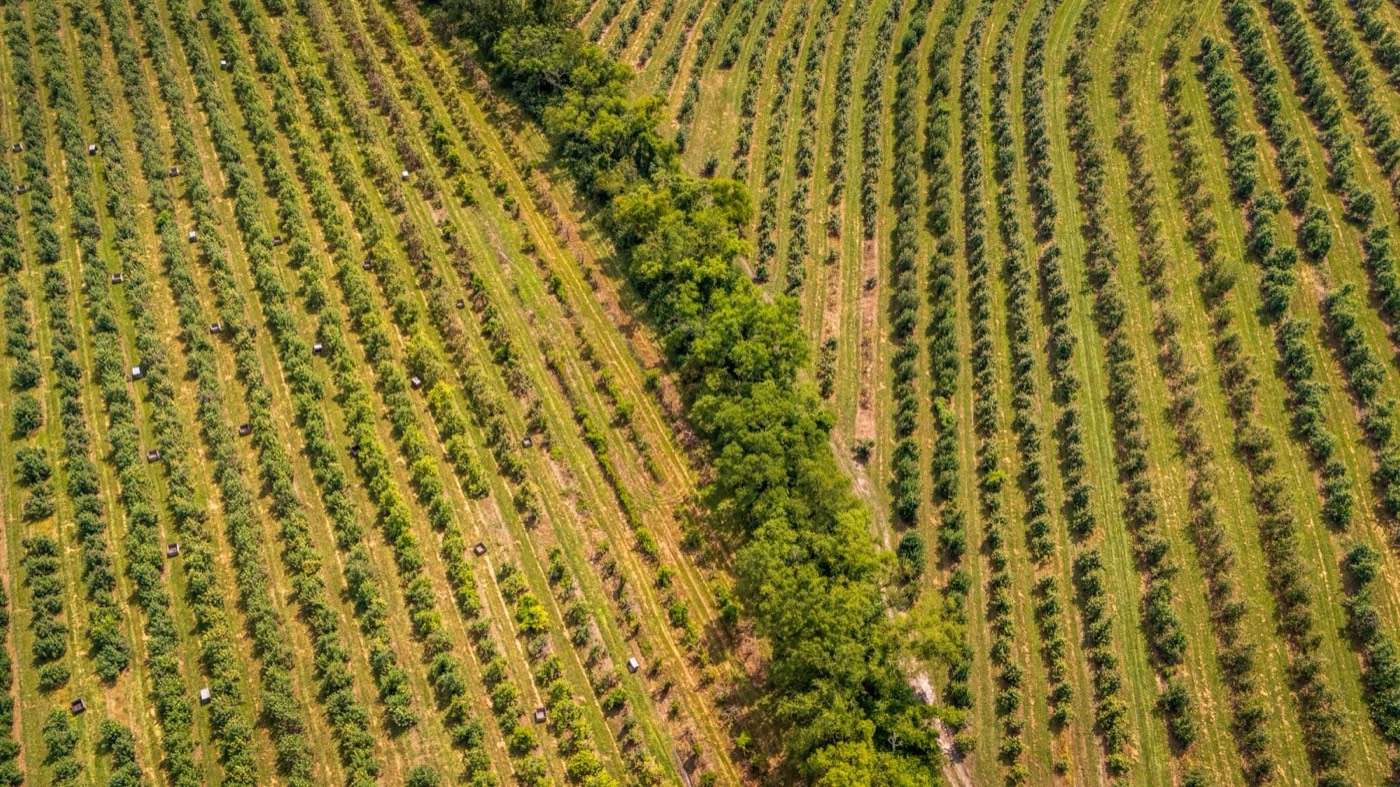
Aerial view of vineyard rows
Illustrative photo. Photo: Pexels

What leaf wetness monitoring costs

The sensor is a small part of it. We set a fixed price after a short scoping call or site visit. It depends on block and sensor numbers, gateway distance and backhaul. Ongoing support is available as a plan after handover.

Price leaf wetness monitoring

The fixed price covers

  • Leaf wetness, temperature and humidity sensors, and a rain gauge
  • Gateway and Starlink or 4G backhaul
  • Installation and electrical work under licence 1513082
  • Degree-hours count, alert set-up and commissioning against real dew and rain
  • A support plan: cleaning checks through the season, sensor replacement and alert tuning

What this won't do

  • A leaf wetness sensor is an index of wetness, not a leaf. Placement, angle and fouling change the hours it reads.
  • 10:10:24 and 45 degree-hours are rules of thumb, not guarantees.
  • It doesn't choose products or set spray timing. That follows the label and your agronomist.
  • Readings stop outside gateway range or if power fails. Alerts only, no control of your sprayer.

With you every step

Each stage is done with your viticulturist or agronomist, who confirms the thresholds and spray decision rules for each block.

  1. 1

    Discovery

    We walk the blocks with your viticulturist, pick representative rows and sensor spots, and test radio coverage over the canopy.

  2. 2

    Design

    You get a fixed-price proposal covering sensors, gateway, power, backhaul, the count and the alert rules.

  3. 3

    Build and test

    We build and test the sensors, the degree-hours count and the alerts before anything goes in the field.

  4. 4

    Install and commission

    We mount the sensors and gateway, do the electrical work, and set wet and dry lines against real dew and rain.

  5. 5

    Ongoing support

    We hand over the dashboard and alert list, then support the system, including sensor cleaning checks through the season.

Why Holt Systems

We design, install and commission every system ourselves, then look after it with an ongoing support plan. Monitoring supplements the site's own control, protection, fire and safety systems; it does not replace them.

Alerts
SMS to any phone, no app
Based in
Brisbane, QLD
Electrical licence
QLD 1513082
After install
Ongoing support plans
Call
07 2150 3666

Leaf wetness sensor questions

How much does a leaf wetness sensor cost in Australia?

A wired station sensor and a LoRaWAN sensor are listed at very different amounts. The sensor is a small part of a working system, which also needs a gateway, power, backhaul, installation and alert rules. We set a fixed price after a site visit.

How many sensors does a block need?

We plan two per representative block, because single sensors disagree with each other. We set the spots on the walk with your viticulturist: shaded side of the canopy, angled so water runs off, clear of sprinklers.

Does the system tell me when and what to spray?

No. Product, rate, timing and withholding periods follow the approved label and your agronomist. The alert tells you a line has been crossed and gives you the weather record. We don't recommend products.

Does it help with my spray records?

It supplies the weather data. Queensland requires each application to be recorded within 2 days, including weather before, during and after. The stored wetness, temperature and rain history can be attached to your record.

What if the gateway or internet link fails?

Readings stop reaching the dashboard, and a sensor with no uplink for 2 hours raises a maintenance alert. We design the power supply and surge protection, and Starlink or 4G gives a link where there's no fixed line.

Price leaf wetness monitoring

Tell us what you need to watch and where. We confirm the sensors, gateway location and alert recipients, then give you a fixed price.

Or email hello@holtsystems.com.au

Your details are handled in accordance with our privacy policy.

  1. 1

    Tell us about the site

    A few lines on the assets, distances and what you need to know about.

  2. 2

    A call to scope it

    We confirm the sensors, gateway location and alert recipients, and whether a site visit is needed.

  3. 3

    Fixed price

    You receive a defined scope and a fixed price before any work starts.