
Skip to content
Holt Systems

Crushing plant control system upgrade for relay and DeviceNet plants

When a crushing plant depends on relay panels, an unsupported network or one person who understands the wiring, every fault is a production risk. A planned upgrade removes it.

Request a site assessment
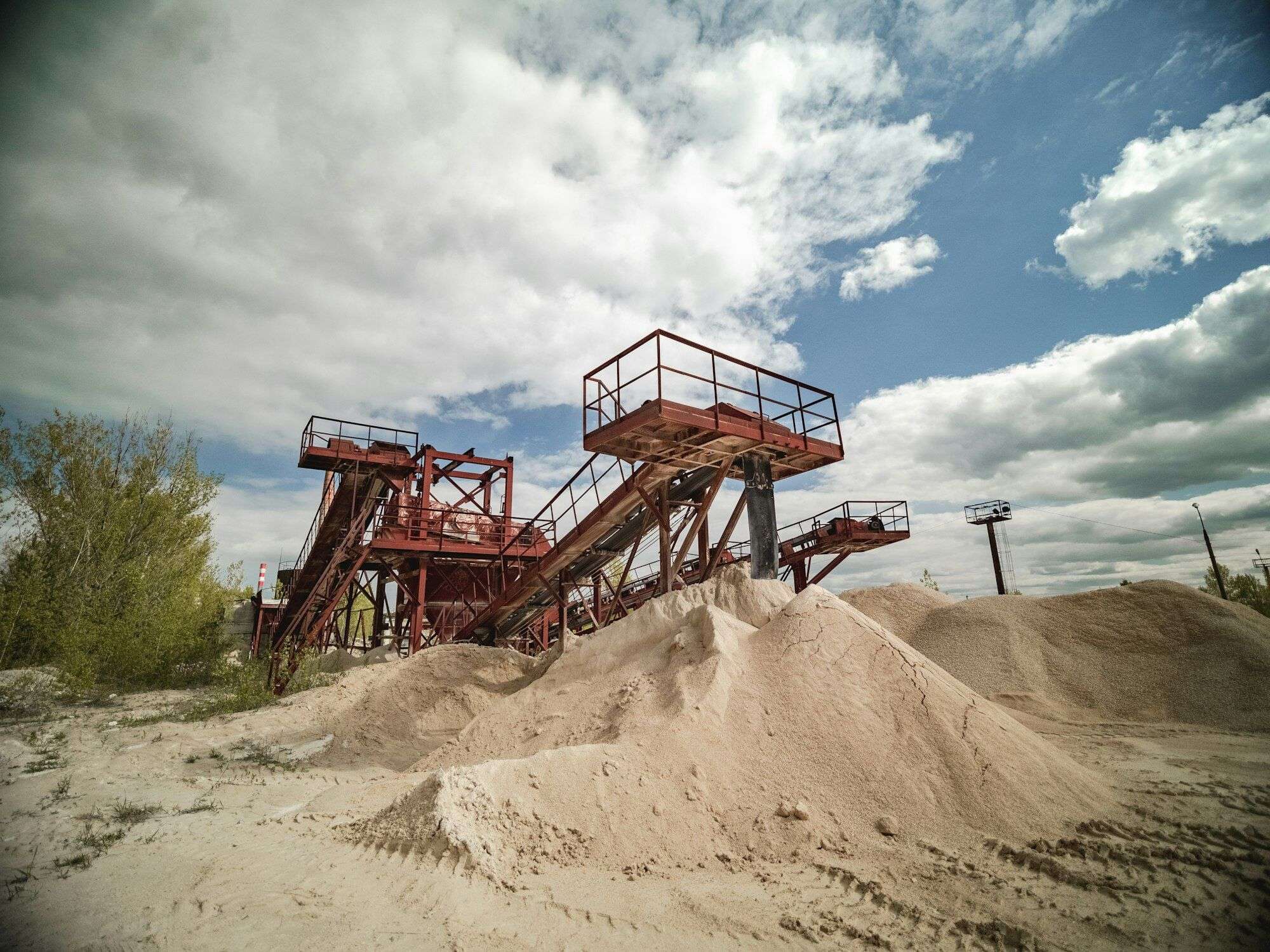
Older steel crushing and screening plant with inclined conveyors above stockpiles of crushed sand

A crushing plant control system upgrade replaces the relay logic, ageing programmable logic controllers (PLCs) and unsupported networks that many quarries and recyclers still rely on to start, stop and protect their plant. These systems have often been modified many times, are poorly documented, and depend on spares and expertise that are increasingly difficult to obtain.

When the control system becomes the risk

The warning signs develop gradually:

  • Faults take hours to find. Without accurate drawings, tracing a fault through a relay panel or a field network depends on whoever installed or last modified it.
  • The plant is started by hand. Conveyors and crushers are started individually from local stations because the automatic sequence no longer works reliably.
  • Interlocks have been bypassed. Links and jumpers added to keep the plant running remove the protection the interlocks were installed to provide.
  • No visibility. The supervisor learns about a stoppage by radio, and there is no record of what tripped or why.

None of these stops production on its own. Together they mean that a single component failure can cause an extended outage. An ABB survey found that unplanned downtime costs a typical Australian industrial business about $349,000 per hour, and that 69% of businesses experience unplanned outages at least monthly. A quarry’s figure will differ, but the direction is the same.

Why older crushing plant controls fail

Relay logic was the standard for crushing plants for decades, and many relay panels have been extended far beyond their original design. Later plants used early fieldbus networks such as DeviceNet to connect motor starters and drives. These networks work well when maintained, but they rely on specific interface cards and configuration tools that are no longer widely supported, and a single failed device can take down an entire network segment.

Control Global describes a United States crushing operation that ran its plant manually for about seven years after its DeviceNet-based control system became too difficult to operate and support, before upgrading to a modern PLC system. The circumstances are specific, but the pattern of working around a control system instead of replacing it is common.

What a crushing plant control system upgrade includes

The upgrade replaces the control layer while retaining sound plant equipment. A typical scope includes:

  • A new PLC and input/output (I/O) system in a purpose-built panel, or panels distributed around the plant
  • A start sequence that brings the plant up from the stockpile conveyors back to the primary crusher, and a stop sequence that clears material before each machine stops
  • Conveyor interlocks, zero-speed (belt slip) monitoring, chute blockage detection and pull-wire monitoring
  • An operator interface showing plant status, running hours and the first-out alarm for every trip
  • Secure remote access for authorised supervisors and support staff
Crushing plant control system upgrade: sequencing and interlocks Field devices Zero-speed, pull-wire, blockedchute and level switches PLC Start and stop sequence and plantinterlocks Starters and drives Retained or replaced as required Crushers and conveyors Started and stopped in order Running status and faults returned to the PLC
Crushing plant control system upgrade: sequencing and interlocks

How the start and stop sequence works

  1. 1

    Check permissives

    Before starting, the PLC confirms emergency stops are healthy, guards are closed and no chute is blocked.

  2. 2

    Start downstream first

    Stockpile and screen conveyors start first, then secondary crushers, then the primary, so material always has somewhere to go.

  3. 3

    Monitor while running

    Zero-speed and blocked chute signals stop the affected section and everything feeding it, recording which device tripped first.

  4. 4

    Stop in order

    A controlled stop halts feed first and lets each conveyor clear before it stops, leaving the plant empty and ready to restart.

What the upgrade is worth

The value lies in shorter fault-finding, fewer nuisance trips, restarts without manual intervention and a plant that no longer depends on one person’s knowledge. A first-out alarm alone can reduce the time to identify a trip from many minutes to seconds.

Alternatives to a full upgrade

  • Keep repairing the existing system. Lowest immediate cost, but spares and expertise continue to decline and the risk of a long outage grows.
  • Replace failed parts with used spares. Buys time, but used parts carry unknown history and do not address documentation or interlock problems.
  • Like-for-like replacement of the network. Restores function but keeps the same limitations.
  • A large systems integrator. Well suited to greenfield plants. For an existing quarry plant, a scoped upgrade avoids the overheads of a large integrator.

How a project runs

Every project follows the same five stages. For a full crushing plant, the cutover is planned in sections so that production is interrupted as little as possible.

  1. 1

    Site assessment

    We trace the existing control circuits, network and field devices, review drawings and fault history, and agree the start, stop and interlock philosophy with your team.

  2. 2

    Proposal

    A defined scope, staged cutover plan, fixed price and program, with the projected reduction in downtime and the documentation you will receive.

  3. 3

    Off-site build and test

    Panels are built and the full start and stop sequence is tested off-site against a simulation of every motor, switch and interlock on the plant.

  4. 4

    Installation and commissioning

    Cutover is completed in planned sections during shutdowns, with the existing controls retained where practical until each section is proven.

  5. 5

    Handover and support

    Operators and maintenance staff are shown the new system, and you receive as-built drawings, I/O lists, program backups and local support.

Why Holt Systems

A crushing plant control upgrade replaces a single point of failure with a system your maintenance team can understand, support and extend.

Electrical, instrumentation and controls work is carried out under QLD Electrical Contractor Licence 1513082. Installations are completed to AS/NZS 3000 (the Wiring Rules), machine safety functions are designed with reference to AS/NZS 4024, and PLC programs are written in IEC 61131-3 languages and fully documented.

Manufacturer independent
We work across Siemens, Allen-Bradley (Rockwell Automation), Schneider Electric and Omron, and specify hardware on technical merit and local support availability.
Scoped to the requirement
Work is scoped to the specific machine, line or plant area, without the overheads of a large integrator, and quoted at a fixed price.
Reduced shutdown duration
Off-site build and testing means shutdown time is spent on installation and commissioning rather than fault-finding.
Single point of accountability
One accountable lead from site assessment through design, installation and handover.

Crushing plant control upgrade questions

Can the upgrade be done without a long shutdown?

Yes, in most cases. The plant is divided into sections, such as primary, secondary and screening, and each is cut over during a planned shutdown. New panels are tested off-site first, so on-site time is spent on terminations and commissioning.

Do we have to replace all the motor starters?

Not necessarily. Existing contactors and starters in good condition can often be retained and controlled from the new PLC. Drives and starters are only replaced where they are unreliable or unsupported, which is assessed at the site visit.

What remote access do you provide, and is it secure?

Remote access is provided through an industrial router with encrypted connections and user authentication, so authorised staff can view plant status and alarms. Remote control functions are limited to what your site procedures allow.

Which PLC platform do you use?

We are manufacturer independent. The platform is chosen with you based on local support, spares availability and what your maintenance team already knows, including Siemens, Allen-Bradley, Schneider Electric and Omron.

How are pull-wire and emergency stop circuits handled?

Emergency stops and conveyor pull-wire switches are wired into dedicated safety circuits designed with reference to AS/NZS 4024, independent of the PLC program. The PLC monitors them for indication and sequencing.

Can crusher feed control be added at the same time?

Yes. Automatic feed control is often included in a plant upgrade, as the PLC, drives and network are already being installed.

Request a site assessment

Provide a brief outline of your site and requirements, and we will contact you to discuss the scope and arrange a site visit.

Or email hello@holtsystems.com.au

Your details are handled in accordance with our privacy policy.