
Skip to content
Holt Systems

Dewatering pump VSD control for pits and wash plants

Pumps that run flat out against a throttled valve, or slam on and off with a float switch, waste energy and wear out early. A VSD runs them at the speed the water level needs.

Request a site assessment
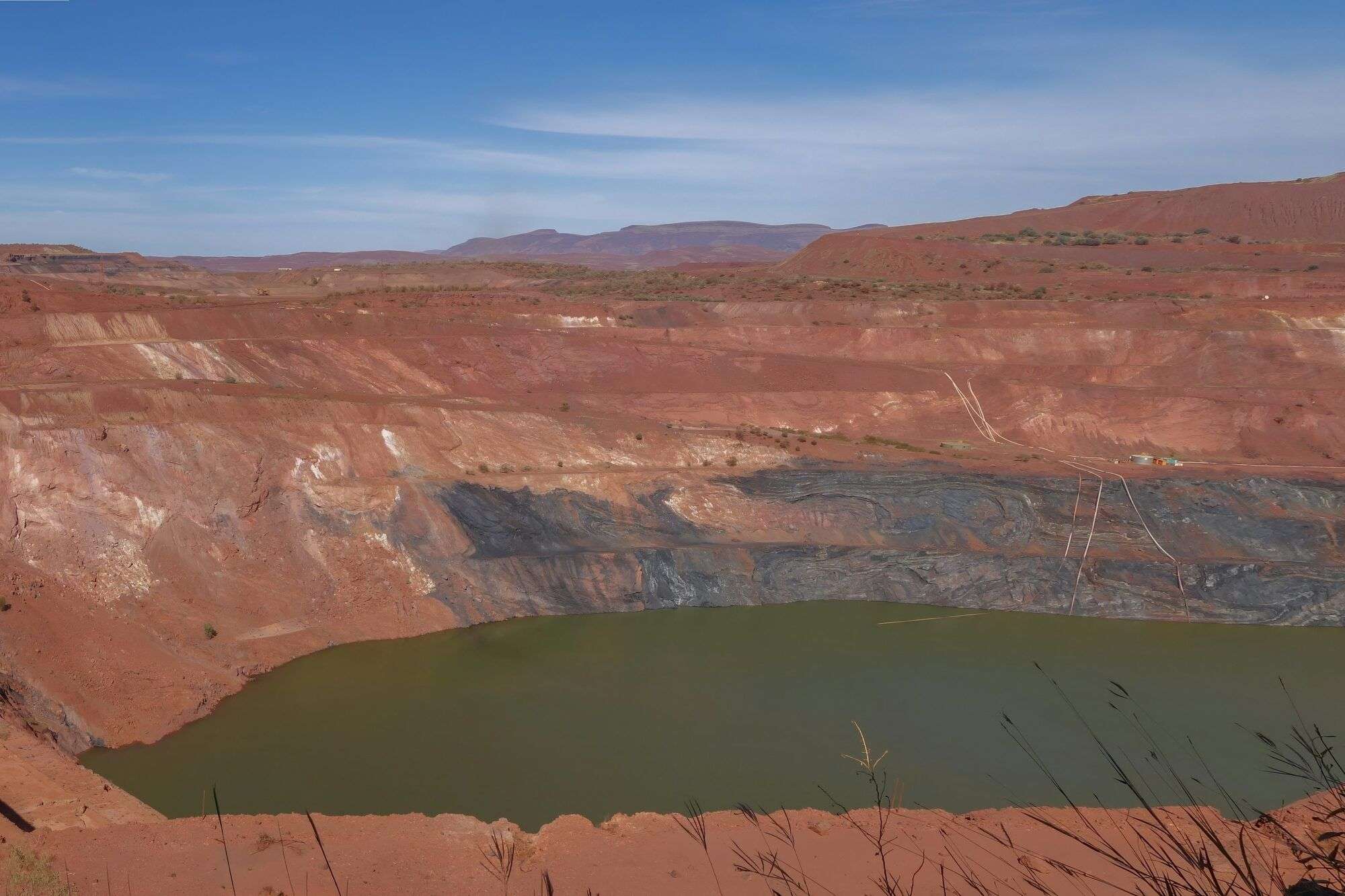
Water collected in the floor of an open pit, the type of inflow a dewatering pump removes

A dewatering pump VSD (variable speed drive, which runs the motor at the speed the process needs rather than flat out) matches pumping rate to the water actually entering the pit or tank. Most quarry pumps are instead controlled in one of two ways: switched on and off by a float, or run continuously with a valve throttled to limit flow. Both waste energy, and both shorten the life of pumps, motors and pipework.

The problem with float and valve control

On a float-controlled pit pump, the pump starts at full speed when the level reaches the high float and runs until the low float, then stops. In wet weather it may cycle many times an hour. Every start draws a high current, applies a mechanical shock to the pump and coupling, and sends a pressure surge through the delivery line.

Wash plant pumps face the opposite problem. They are sized for maximum demand and run continuously, with a valve partly closed to reduce flow when less water is needed. The motor still works against the closed valve, converting electrical energy into pressure that is then wasted across it.

Typical symptoms include:

  • High numbers of starts per hour in wet periods, with frequent motor and starter failures
  • Pressure surges and water hammer causing pipe and joint failures
  • Throttled valves that wear and need regular replacement
  • Electricity costs for pumping that are higher than the duty requires

Why speed control saves so much energy

Centrifugal pumps follow the affinity laws: flow is proportional to speed, pressure to the square of speed, and power to the cube of speed. The Australian Government’s energy guidance notes that for pumps and fans, reducing motor speed by 20% can reduce the power required by 50%. Running a pump slightly slower for longer therefore uses far less energy than running it at full speed and stopping, or throttling it with a valve.

The saving is smaller where a pump must lift water a large fixed height, because that static head must be overcome at any speed. This is assessed for each pump before projecting a benefit.

Dewatering pump VSD control: the system

The pump motor is supplied from a VSD, and a controller adjusts speed to hold the water level, or the delivery pressure, at a setpoint.

Dewatering pump VSD control on sump level Level sensor Measures sump or pit levelcontinuously Controller Calculates pump speed to holdlevel VSD Runs the motor at the requiredspeed Pump Discharges at the rate waterarrives Water level measured continuously
Dewatering pump VSD control on sump level

How it works

  1. 1

    Measure

    A submersible pressure or radar level sensor measures the sump level. For wash plant supply, a pressure transmitter measures delivery pressure.

  2. 2

    Control

    The controller increases pump speed as level rises and reduces it as level falls, holding a steady level instead of cycling.

  3. 3

    Protect

    Minimum speed, dry-run detection and soft starting protect the pump, motor and pipework.

  4. 4

    Sequence

    Where there are several pumps, duty and standby pumps are rotated and added as inflow increases.

What variable speed control is worth

The benefit combines energy, maintenance and reliability. Energy is the most predictable to estimate, provided the pump’s current operation is known.

Alternatives to a VSD

  • Retain float control. No cost, but starts, surges and energy use continue.
  • Soft starters. Reduce starting current and shock, but the pump still runs at full speed whenever it runs.
  • A smaller pump. Can suit a steady duty, but quarries rarely have one, and wet weather inflows still need capacity.
  • Pump supplier drive packages. Can be effective for a single pump. Integration with level control, other pumps and plant interlocks is where an independent control design adds value.

The same principles apply to food plant transfer and process pumps, covered in process pump VSD control.

How a project runs

Every project follows the same five stages. For pit and wash plant pumps, the schedule allows for weather, pit levels and production demand for water.

  1. 1

    Site assessment

    We review each pump, motor, starter, pipework layout and level arrangement, and log current operation and power where practical.

  2. 2

    Proposal

    A defined scope covering drives, instruments and control, a fixed price, a program and the projected energy and maintenance benefit.

  3. 3

    Off-site build and test

    Drive panels and control logic are built and tested off-site, including level control and pump protection functions.

  4. 4

    Installation and commissioning

    Installation is completed during a planned stop with the existing starter retained as a fallback until variable speed control is proven.

  5. 5

    Handover and support

    Level and pressure setpoints are tuned in operation, and you receive documentation, program backups and local support.

Why Holt Systems

Variable speed pump control is part of our energy controls service, engineered around your pumps, pit and water circuit.

Electrical, instrumentation and controls work is carried out under QLD Electrical Contractor Licence 1513082. Installations are completed to AS/NZS 3000 (the Wiring Rules), machine safety functions are designed with reference to AS/NZS 4024, and PLC programs are written in IEC 61131-3 languages and fully documented.

Manufacturer independent
We work across Siemens, Allen-Bradley (Rockwell Automation), Schneider Electric and Omron, and specify hardware on technical merit and local support availability.
Scoped to the requirement
Work is scoped to the specific machine, line or plant area, without the overheads of a large integrator, and quoted at a fixed price.
Reduced shutdown duration
Off-site build and testing means shutdown time is spent on installation and commissioning rather than fault-finding.
Single point of accountability
One accountable lead from site assessment through design, installation and handover.

Dewatering pump VSD questions

Are pumps in a remote pit a problem for control?

Not usually. Level signals can be brought back by cable or by industrial radio where cabling is impractical. The drive itself is normally installed in a protected enclosure at a powered location, close enough to the pump to manage cable length.

Will a VSD suit our existing pump motor?

Most standard induction motors operate well on a VSD. Older motors, long cable runs and submersible pumps need specific checks, such as insulation condition and output filtering, which are covered at the site assessment.

What about solids in the water?

Slurry and dirty water pumps have a minimum speed below which solids settle in the line. The control system enforces a minimum speed and can run periodic flushing cycles to keep the line clear.

Does a VSD protect the pump?

It can. The drive and controller provide soft starting, dry-run protection based on level or current, and alarms for blocked or failing pumps, in addition to the usual motor protection.

Can several pumps share the duty?

Yes. Multiple pumps in a pit or tank can be sequenced on level, with duty rotation so wear is shared and a standby pump starts automatically if the duty pump fails.

Is the energy saving guaranteed?

No. Savings depend on how the pump currently runs and the system it pumps into. The proposal sets out the projected benefit based on measured or estimated duty, with the assumptions stated.

Request a site assessment

Provide a brief outline of your site and requirements, and we will contact you to discuss the scope and arrange a site visit.

Or email hello@holtsystems.com.au

Your details are handled in accordance with our privacy policy.