
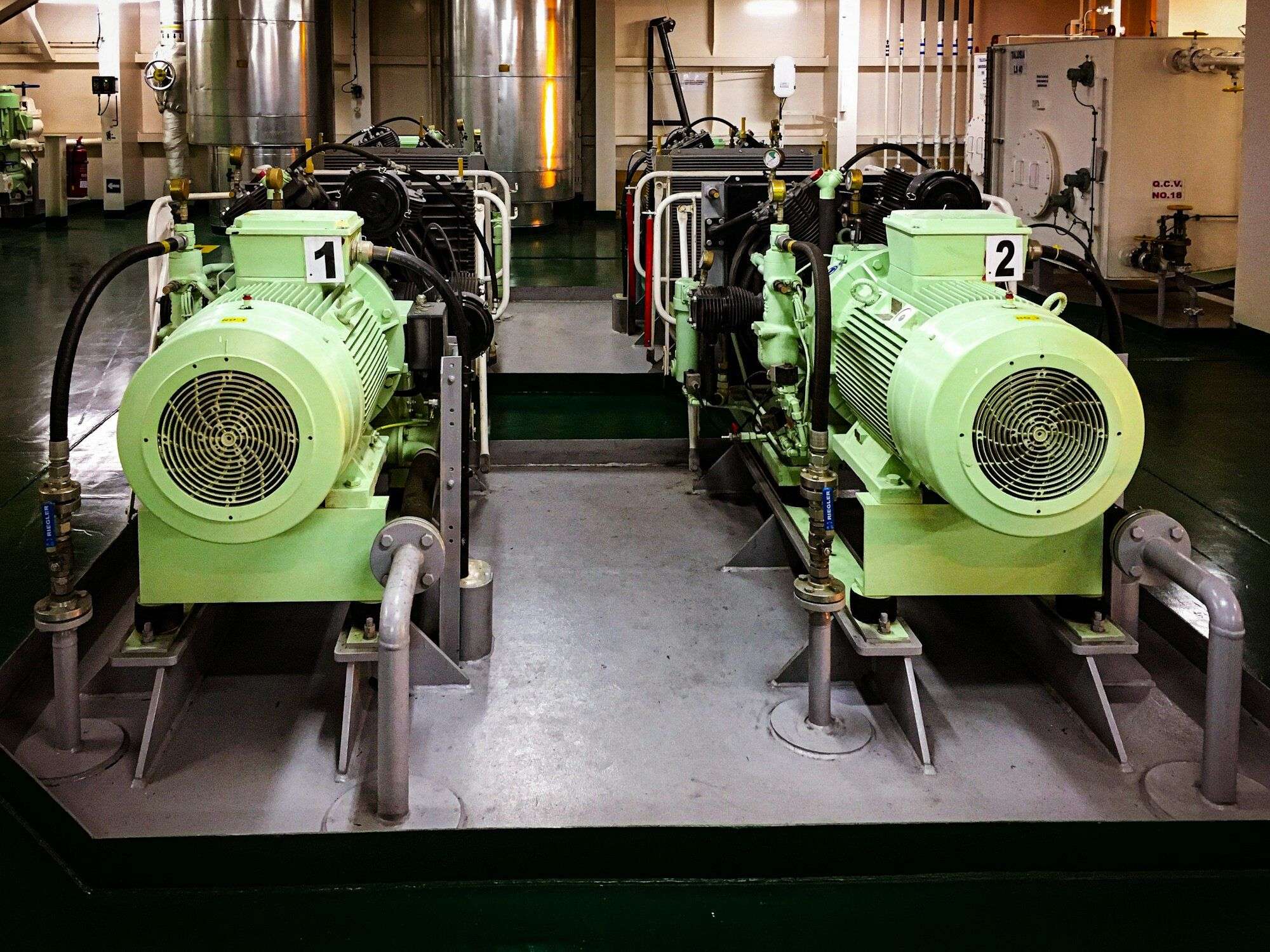
Compressed air energy savings are among the most accessible energy savings in manufacturing and food plants, because compressed air is one of the most expensive forms of energy on site and most systems are not controlled as a whole. Where a site has two or more compressors, each typically runs on its own pressure switch, set slightly differently from the others. The result is compressors idling, several running part-loaded at the same time, and system pressure held higher than the plant needs.
How compressed air systems waste energy
The Australian Government’s compressed air guide notes that compressed air systems can consume up to 30% of a site’s electricity use, and that even in new systems, half of this energy can be lost through leaks. On multi-compressor sites, typical sources of waste include:
- Idling compressors. A compressor running unloaded still draws a substantial share of its full-load power.
- Overlapping operation. Two or more compressors running part-loaded at the same time, each less efficient than one fully loaded unit.
- Excess pressure. A cascade of pressure switch settings pushes system pressure well above what equipment needs, increasing both compressor energy and leakage.
- The wrong compressor trimming. A fixed-speed compressor modulating while a variable speed unit runs at full load.
Why individual pressure switches cannot coordinate
Each compressor’s controller only knows its own discharge pressure. To avoid all compressors starting and stopping together, their pressure bands are staggered, which means the system as a whole operates over a wide pressure band. No compressor knows what the others are doing, so none can decide that it is not needed.
Delivering compressed air energy savings with sequencing
A sequencer measures system pressure at one point and decides which compressors should run, which should be loaded and which should stop, holding pressure in a single narrow band.
How it works
- 1
Measure
A single pressure transmitter measures system pressure where it matters, rather than at each compressor discharge.
- 2
Base load
Fixed-speed compressors run fully loaded to supply the base demand, in a rotated order so running hours are shared.
- 3
Trim
The most efficient part-load compressor, ideally variable speed, follows changes in demand.
- 4
Stop and record
Compressors that are not needed are stopped rather than left idling. Demand, pressure and running hours are logged.
The same guide reports that optimal sequencing of compressor units can save up to a third of compressed air system demand, and recommends using the most efficient part-load compressor for trimming and switching off idling compressors where feasible. Our scope covers compressor control. Air treatment equipment such as dryers and filters is outside it.
What it is worth
Compressors are also large contributors to a site’s peak electrical demand. Sequencing that avoids unnecessary starts can complement peak demand control.
Alternatives
- Adjust the pressure switches. A useful first step, but switches still cannot coordinate compressors with each other.
- The compressor manufacturer’s sequencer. A good choice where all compressors are from one manufacturer. Mixed fleets are where independent sequencing is most useful.
- A new variable speed compressor. Often worthwhile, but without sequencing it can end up running alongside idling fixed-speed units.
- A leak program alone. Always worthwhile, and complementary. It does not address idling, overlap or excess pressure.