
Skip to content
Holt Systems

Sub metering: see what each line and each tonne costs in power

We fit meters on your main feeders and text you when a line idles hot, demand nears the peak or kWh per tonne drifts.

  • MeasureskWh, kW and power factor
  • Reads every1 to 5 minutes
  • Works outkWh per tonne, per line

Ovens feeder, Saturday night

Dashboard view

Ovens now
31 kW
Quiet baseline
24 kW
Site demand
93%
24 27.5 31 Alert at 29 kW 8 pm12 am2 am4 am kW
Example readings for illustration.

100 MWh

Ergon puts large business customers, 100 MWh a year or more, on demand tariffs. The demand charge follows the highest 30 minutes.

Source: Ergon Energy

30 to 60%

NSW Government guidance reports peak demand charges can be this share of a site's bill. It's NSW based, so check your own bill.

Source: NSW Department of Climate Change, Energy, the Environment and Water

up to 10%

A federal report on a foundry reports savings of up to 10% or more once people can see their loads.

Source: Department of the Environment and Energy

One power bill, and nobody knows which line ran it up

Without sub metering, the plant gets one bill for the whole site. Nobody can say what Line 2, the ovens or the compressor house cost last month.

On a demand tariff, one half-hour sets the demand charge for the month. A coincident start-up on a Monday can cost you until the next bill.

Ovens held at temperature and compressors left unloaded add kWh every hour, all year. They hide inside the total.

  • The retailer data stops at the site boundary.
  • An energy audit is a snapshot of one week.
  • Handheld clamp readings go stale the day after.
  • No energy cost per tonne, so quotes are a guess.

Worked example: what idle load costs out of hours

  • 3,000 non-production hours a year
  • 18 kW of avoidable idle load found
  • Energy cost of $0.22 per kWh
  • Illustrative only
Idle energy18 kW x 3,000 h = 54,000 kWh a year
Cost of that energy54,000 kWh x $0.22 = $11,880 a year

About $11,900 a year of idle load, before any demand charge saving. We can't promise it until we've surveyed your site.

How sub metering works on your switchboard

Sub metering of a factory main switchboard Single-line diagram. The retailer meter sits at the top of the main switchboard. A busbar feeds six sub-meter points: Line 1, Line 2, compressors, ovens, air handling and extraction. Each sub-meter sends readings by LoRaWAN uplink to one gateway, which sends them by 4G or Starlink to a dashboard with SMS and email alerts. Below, a stacked bar shows main meter kWh equals the sum of the six sub-meters plus an unmetered remainder. A kWh per tonne tile divides the energy by a production count from the PLC. Factory main switchboard Retailer meter Line 1 Line 2 Compressors Ovens Air handling Extraction Gateway LoRaWAN 4G or Starlink Dashboard SMS, email Dashed: sub-meter uplink Main kWh = subs + remainder Sum of six sub-meters Unmetered remainder kWh per tonne line kWh / tonnes PLC count tonnes per line
Single-line diagram of a factory main switchboard: the retailer meter on top, six sub-meters on Line 1, Line 2, compressors, ovens, air handling and extraction, one gateway, and the kWh per tonne tile.
  1. 1

    Meters go on each main feeder

    Three-phase meters with current transformers sit on each line, oven and compressor feeder, and read kWh, kW and power factor.

  2. 2

    Radio sends the readings

    Each meter reports every 1 to 5 minutes by LoRaWAN. The meter keeps its kWh count, so a missed message loses nothing.

  3. 3

    One gateway passes them on

    The gateway sits outside the switchroom, so the steel cabinet doesn't block the signal. It uses site Ethernet, 4G or Starlink.

  4. 4

    You see the balance and the tonnes

    Main kWh less the sub-meters shows what's unmetered. A PLC or weighbridge count turns it into kWh per tonne.

What we put in your switchboard

We pick five to 10 feeders at the site visit, covering most of the load.

  • Three-phase energy meters

    Read kWh, kW and power factor on each main feeder, with current transformers.

    Reports every 1 to 5 min

  • Split-core CT nodes

    Cover a feeder where a meter won't fit. Indicative only, not billing grade.

    Reads every 5 to 15 min

  • Pulse counters

    Read the pulse output on a meter you already have.

    5 min count

  • LoRaWAN gateway

    Sits outside the switchroom and collects every meter's readings.

    Antenna outside the cabinet

  • 4G, Ethernet or Starlink link

    Carries the readings to your phone and dashboard.

    Uses your site network or 4G

What lands on your phone when a line starts wasting power

We set the alert values from two to four weeks of your own readings.

Plant energy alerts
  1. Sat 2:10 am

    Ovens feeder at 31 kW, 20% above its quiet baseline for 30 min. Check ovens and fans left on.

  2. Mon 5:50 am

    Site demand at 93% of this month's peak. Stagger the compressor and Line 1 start-up.

  3. Sat 4:30 am

    Ovens feeder back to 24 kW after a supervisor shut them down. Baseline restored.

Messages go to the people you nominate, by SMS to any phone.

Messages go to the people you nominate, by SMS to any phone and by email, with the reading and the time in every alert.

A monthly bill versus a reading every few minutes

TopicTodayWith monitoring
Cost per lineOne bill for the whole plantkWh and kW on each main feeder
Idle loadFound in a one-off audit, if at allSMS when night load steps up
Demand peakSeen on the bill, weeks laterWarning as the half-hour nears the peak
Cost per tonneA rough estimatekWh divided by tonnes, every shift

Sub metering in a Queensland plant

If your drives or relays already hold energy data, we use that first.

Idle baseload and peaks often trace back to the air system and the power factor. See compressed air leak monitoring, kVA demand charge warnings and power factor correction unit failure alerts.

We isolate and prove dead before we fit any meter or CT. Running a gin or mill? See cotton gin energy monitoring. If you on-charge a tenant, tell us at the site visit.
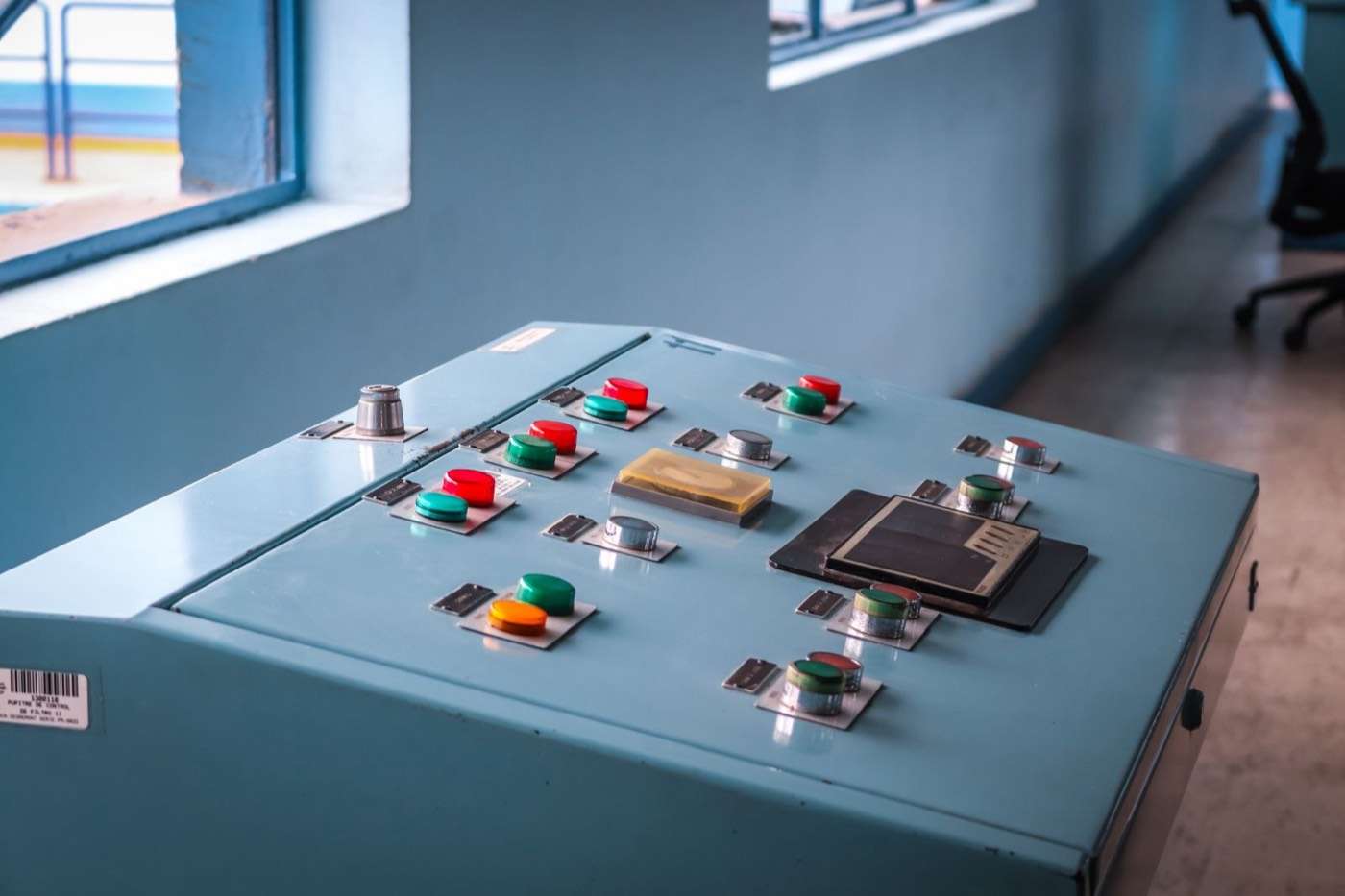
Control desk with push buttons and indicator lights
Illustrative photo. Photo: Fernando Narvaez on Pexels

What sub metering costs

We fix the price after a short scoping call or a site visit. It depends on the number of meter points, the distance to the gateway and the backhaul. Ongoing support is available as a plan after handover.

Get a quote for sub metering

The fixed price covers

  • Meters, current transformers and nodes
  • Gateway and backhaul
  • Installation and electrical work under licence 1513082
  • Alert set-up, baselines and commissioning against your main meter
  • Training on the dashboard and alerts
  • An ongoing support plan after handover

What this won't do

  • It isn't billing grade. Your retailer meter is the authority on your bill.
  • Meters used to bill others need pattern approval and verification under the National Measurement Act.
  • Readings come every few minutes. They suit trends and alerts, not control or protection.
  • It doesn't replace your retailer meter, protection relays, RCDs or safety systems.
  • Metering doesn't save power by itself. Someone has to act on the alerts.

With you every step

We meter only the feeders that carry most of your load, and check the sum against your main meter before handover.

  1. 1

    Discovery

    We walk the single-line diagram with you, pick five to 10 feeders, and check radio conditions at the switchroom.

  2. 2

    Design

    You get a fixed-price scope with each meter point, the production count source, gateway location and alert rules.

  3. 3

    Build and test

    We build, configure and test the meters, CTs and gateway in the workshop before anything comes to site.

  4. 4

    Install and commission

    Licensed electricians isolate and prove dead, fit the meters, then we compare the sub-meter sum with the main for a week.

  5. 5

    Ongoing support

    We set baselines over two to four weeks, switch alerts on, and keep supporting and tuning the system.

Why Holt Systems

We design, install and commission every system ourselves, then look after it with an ongoing support plan. Monitoring supplements the site's own control, protection, fire and safety systems; it does not replace them.

Alerts
SMS to any phone, no app
Based in
Brisbane, QLD
Electrical licence
QLD 1513082
After install
Ongoing support plans
Call
07 2150 3666

Sub metering questions

How is a sub-meter different from a smart meter?

A smart meter is the retailer's meter at the site boundary and records the whole site. A sub-meter sits on a feeder inside your switchboard and records one line, oven or compressor house. The retailer meter stays the authority for your bill.

Can CT clamps alone measure kWh accurately?

A split-core CT with an assumed voltage and power factor only gives an indicative estimate. For kW, power factor and kWh we fit meters with current transformers. Even then, accuracy drops at low load and low power factor.

Do sub-meters need pattern approval?

The National Measurement Institute says meters used to bill for usage must be pattern approved and verified. Watching your own lines is different from billing a tenant. If you on-charge another business, tell us at the site visit.

How many meters does a factory need?

Usually five to 10 points cover most of the load. The rest is the main kWh minus the sub-meters, so small loads don't each need a meter. We choose the points with you at the site visit.

Can you reduce our maximum demand charge?

Metering shows which load was running in the half-hour that set the peak. It warns your supervisor as demand nears the month's maximum, and a person staggers the next start-up. We don't control your loads.

Sources

  1. Use metering to manage peak demand costs in manufacturing, NSW Department of Climate Change, Energy, the Environment and Water
  2. Large business tariffs, Ergon Energy
  3. Dobbie Dico electricity monitoring, Department of the Environment and Energy (energy.gov.au)
  4. Bulla Dairy Foods metering and monitoring, Northmore Gordon
  5. Utility meters, Department of Industry, Science and Resources (National Measurement Institute)
  6. Electrical work on or near energised electrical equipment, WorkSafe Queensland

Get a quote for sub metering

Tell us what you need to watch and where. We confirm the sensors, gateway location and alert recipients, then give you a fixed price.

Or email hello@holtsystems.com.au

Your details are handled in accordance with our privacy policy.

  1. 1

    Tell us about the site

    A few lines on the assets, distances and what you need to know about.

  2. 2

    A call to scope it

    We confirm the sensors, gateway location and alert recipients, and whether a site visit is needed.

  3. 3

    Fixed price

    You receive a defined scope and a fixed price before any work starts.