
A dead capacitor step doesn't trip anything. It just costs you.
When a power factor correction unit loses a step, nothing alarms and production keeps running. Your power factor drops and the kVA figure behind your demand charge climbs.
A fuse blows, a contactor sticks or burns, a capacitor wears out from heat, or someone leaves the controller in manual. From the door the panel looks fine.
You find out when the invoice lands, and that month is already paid.
- The controller can show a good power factor at light load while the bank has lost the capacity you need at peak.
Two of eight steps lost for three months
- A factory peaks at 400 kW.
- Power factor is 0.95 with a healthy bank.
- Two steps fail and power factor falls to 0.80 (assumed).
- The $20 per kVA per month rate is illustrative. Use the rate in your tariff.
| Healthy: 400 kW / 0.95 | 421 kVA |
|---|---|
| Failed: 400 kW / 0.80 | 500 kVA |
| Extra kVA at the monthly peak | 79 kVA |
| Extra cost per month | about $1,580 |
About $4,700 over three months, for a fault that tripped nothing.
What we put in the PFC panel
-
Split-core current sensors
Clip on one phase of each capacitor step output and report the current that step is drawing.
Read every 1 to 5 min
-
Controller alarm input
Picks up the dry contact on the controller's fault relay.
Alarm after 10 min
-
Panel temperature probe
Sits near the enclosure fans and warns you when the panel runs well above its usual temperature.
Indicative only
-
Incomer meter (optional)
Reads kW, kVA and power factor at the main switchboard,.
kW, kVA, power factor
-
Gateway with Starlink or 4G
Collects readings from the panel and sends them to your phone.
Mains power, tested before closing
How a power factor correction unit alert works on your panel
- 1
A sensor on every step
A split-core current sensor clips onto one phase of each step output. We also wire in the controller's alarm contact.
- 2
We log what each step should draw
A 25 kvar step at 415 V pulls about 35 A. That becomes the baseline.
- 3
A gateway sends it out
Metal panels block radio, so the antenna sits outside the enclosure. Starlink or 4G does the rest, no site network needed.
- 4
You get the step number
A step commanded on but drawing under about half its expected current raises an SMS and email.
What your phone shows when a step dies
-
Tue 10:42 am
PFC step 6 commanded on but drawing 0 A, expected 35 A. Check the fuse and contactor.
-
Tue 11:12 am
PFC steps 6 and 8 both at 0 A. Power factor 0.84 at the incomer. Urgent: maintenance please check.
-
Wed 1:30 pm
PFC all 8 steps drawing current. Power factor 0.95. Back to normal.
Messages go to the people you nominate, by SMS to any phone and by email, with the reading and the time in every alert.
A glance at the controller versus a reading every few minutes
| Topic | Today | With monitoring |
|---|---|---|
| Dead step found | At the next shutdown or invoice | Same day, by SMS |
| Which step | Open the panel and test each one | The alert names the step number |
| Controller alarm | Often wired to nothing | Wired in, SMS after 10 minutes |
What power factor correction monitoring costs
We set a fixed price after a short scoping call or site visit. It depends on step count, distance to the gateway and backhaul. Ongoing support is available as a plan after handover.
Price a PFC panel alertThe fixed price covers
- Current sensors, alarm input and panel temperature probe
- Gateway and Starlink or 4G backhaul
- Installation and electrical work under licence 1513082
- Alert set-up, baseline readings and two weeks of tuning
- An ongoing support plan: we keep it running, tune alerts and replace sensors
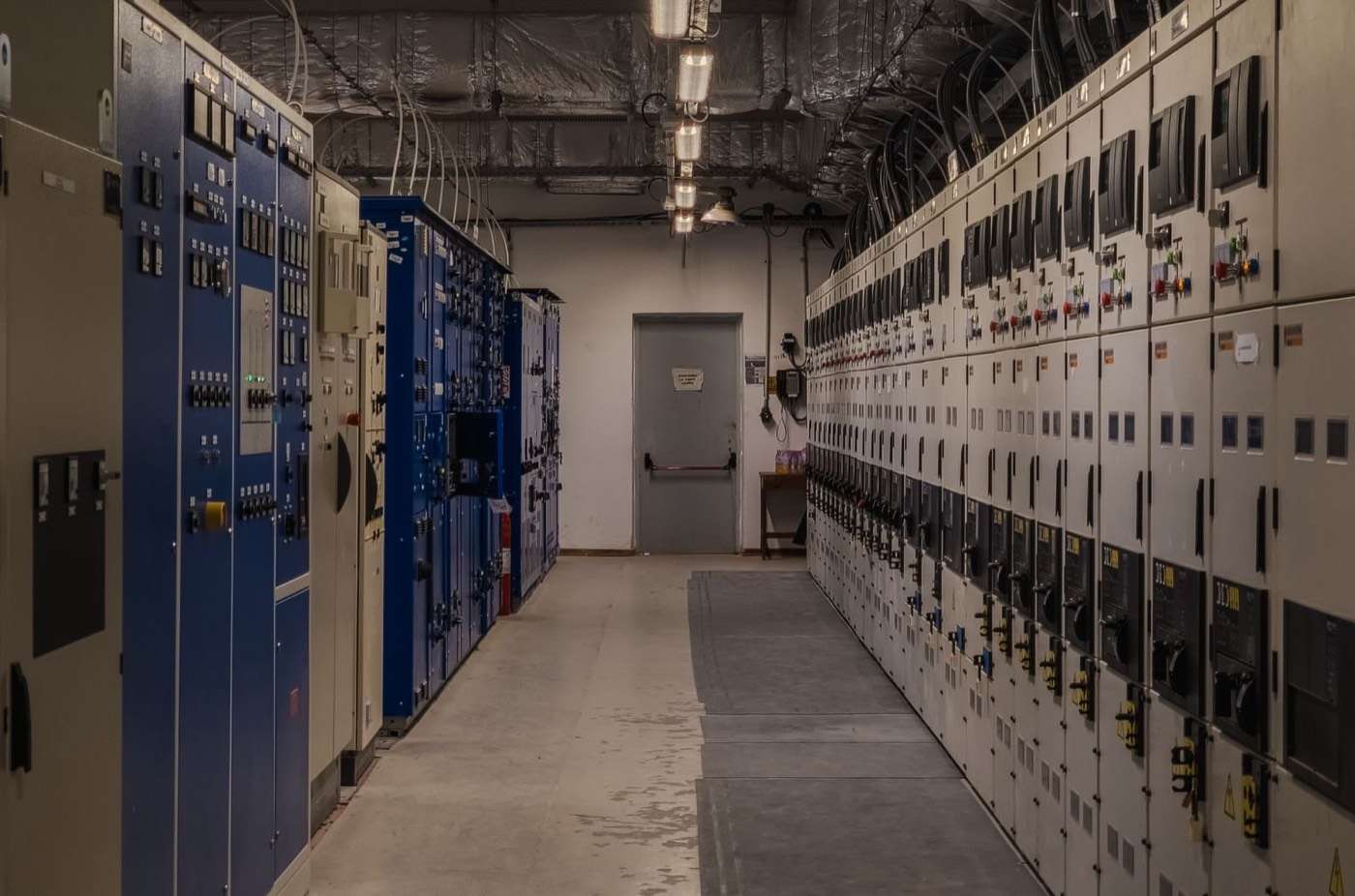
Power factor correction on a factory switchboard
Ergon covers regional Queensland and Energex covers the south east. Both bill large sites on kVA, so a dead step shows up in the peak month. We pair this with a kVA demand charge peak warning so you see the peak coming.
Hot, humid summers and a poorly ventilated panel shorten capacitor life. Sites that run seasonally, like gins, mills and grain handlers, often find an off-season failure on the first big invoice.
Running crushers and screens? See quarry power factor correction alerts. To see where the energy goes line by line, look at energy sub metering.
What this won't do
- It doesn't switch or control steps. It reads current and sends an alert.
- Current on one phase can miss a capacitor that has partly failed but still draws current.
- It doesn't replace thermal imaging, capacitor protection, isolation procedures or a harmonic check where drives are fitted. High voltage banks need a separate assessment.