
Skip to content
Holt Systems

Pump station power failure alarm: know before the wet well fills

We fit a battery-backed sensor and gateway at the switchboard. When the supply drops, your operators get a text within minutes, beside your telemetry.

  • WatchesSupply at the switchboard incomer
  • You getSMS and email to your operators
  • Keeps going onIts own battery, Starlink or 4G
Pump stn 7 alerts
  1. 9:42 pm

    PS7 supply lost for 2 min. Duty and standby pumps stopped. Check supply and generator plug.

  2. 9:47 pm

    PS7 no generator running signal 5 min after loss. Sent to all nominated people.

  3. 11:15 pm

    PS7 supply restored after 1 h 35 min. Pumps starting. Check well level.

Example alerts from this system

about 200 kL

Southern Downs Regional Council reports about 200 kL overflowed at Killarney in February 2021 after a switchboard failure.

Source: Southern Downs Regional Council

about 1,900

qldwater reports about 1,900 Queensland sewage pump stations are over 40 kL per hour.

Source: qldwater

up to 12 hours

Telstra reported lifting battery reserves at 341 remote mobile sites from three hours to up to 12.

Source: Telstra

The switchboard fails on a Saturday night and both pumps stop

A pump station power failure alarm has one job: tell your people the supply is gone while there's still room in the wet well. Duty and standby pumps on one switchboard stop together.

At Killarney in February 2021 the stations weren't on the control system yet. No remote alarm went out over the weekend, and the overflow was found on Monday morning.

  • A standby pump covers a pump fault, not a dead supply.
  • Alarms that run off the supply they report go quiet with it.

How a pump station power failure alarm watches the incomer

Pump station power failure alarm: sewage pump station cross-section and timeline Cross-section of a sewage pump station during a power failure, with a timeline beneath. Above ground, the mains supply to the switchboard is cut, shown with a red cross. Inside the switchboard an orange mains-loss sensor with its own battery sits at the incomer, and a generator plug is fitted for a mobile generator. The sensor reports by LoRaWAN radio to a battery-backed gateway on a pole beside the switchboard. The gateway sends alerts over Starlink or 4G to SMS and email for the nominated operators. Below ground, an inflow main enters a wet well within the emergency storage zone. Level markers from the top are overflow, the emergency storage zone, the high level and the normal level. The water sits at the normal level and a red arrow shows it rising, because the duty pump and the standby pump, both fed by one feeder from the switchboard, have stopped. A rising main leaves from the pump outlets. The timeline uses an example wet weather inflow. Mains is lost at time zero. The SMS arrives at about 5 minutes, a design target. A crew arrives at 60 minutes, an example. The wet well reaches overflow at 90 minutes. The three hour notification clock under condition 11 of the ERA 63(2) conditions starts when the council becomes aware of a release, shown here starting at the overflow at 90 minutes and running to 4.5 hours. The axis marks hours from 0 to 4. SMS and email Starlink or 4G Gateway on battery LoRaWAN Switchboard Mains-loss sensor Generator plug Mains lost Overflow High level Normal level Emergency storage Level rises Inflow main Feeder to both pumps Rising main Duty Standby Example timeline, wet weather inflow SMS in about 5 minutes (target) Crew on site, example 60 minutes Overflow at 90 minutes example wet weather inflow Three hour notification clock, condition 11 starts when you become aware Mains lost 1 h 2 h 3 h 4 h
Cross-section of a sewage pump station during a supply failure, with a timeline beneath. A mains-loss sensor and battery gateway sit beside the switchboard and send alerts by Starlink or 4G, while the wet well fills toward overflow.
  1. 1

    A sensor at the incomer

    A battery-backed sensor sits upstream of the pump breakers and keeps sending after the supply drops.

  2. 2

    Radio to the gateway

    LoRaWAN (long range wide area network) radio carries the reading to a gateway on its own battery.

  3. 3

    Starlink or 4G sends the text

    The gateway texts and emails at least two nominated people, and logs every alert.

  4. 4

    Gone quiet? That's an alert too

    If the gateway stops checking in, you get a site silent alert after about 50 minutes.

Today versus with a pump station power failure alarm

TopicTodayWith monitoring
Finding outThe next site visit or a call from the publicA text within minutes of the supply dropping
Alarm powerSome alarms die with the supply they watchSensor and gateway run on their own batteries
GeneratorFound not running when a crew arrivesNo run signal alerts everyone on the list

What we fit at the pump station

  • Mains loss sensor

    Sits at the incomer and keeps sending on its own battery after the supply drops.

    Alert after 1 to 2 min

  • Generator run input

    Reads a contact so we know if the generator started.

    Escalates after 5 min

  • Battery gateway

    Picks up every sensor by radio and keeps running through the outage.

    Heartbeat checked every 10 min

  • Starlink or 4G

    Sends the text out where the mobile signal is weak.

    Needs a clear view of the sky

  • Operator alerts

    SMS and email to your nominated people, with a weekly test message.

    Two recipients minimum

What lands on your phone when the supply goes

Rules are set per station. These are the design values we start from.

PS7 wet well fill after supply loss (wet weather)

Dashboard view

Supply
Lost
Generator run
Not running
Gateway battery
OK
0 27 54 Overflow 0 min20406080 kL
Example only: 54 kL to overflow, 36 kL an hour wet weather inflow, no pumping. Not a real station's data.

On a council pump station

Under the ERA 63(2) code, councils need standby pumping and alarms that run long enough for notification and response. Check your own authority and the current code.

Condition 11 sets notification within three hours of becoming aware of a notifiable release. An alert shortens the time to awareness, and the log shows when it went out.

We run beside your telemetry, not instead of it. For generator starts see pump station generator alarms and pump station run hours. Add pump station surge protection status or a sewage pump station alarm from motor current.
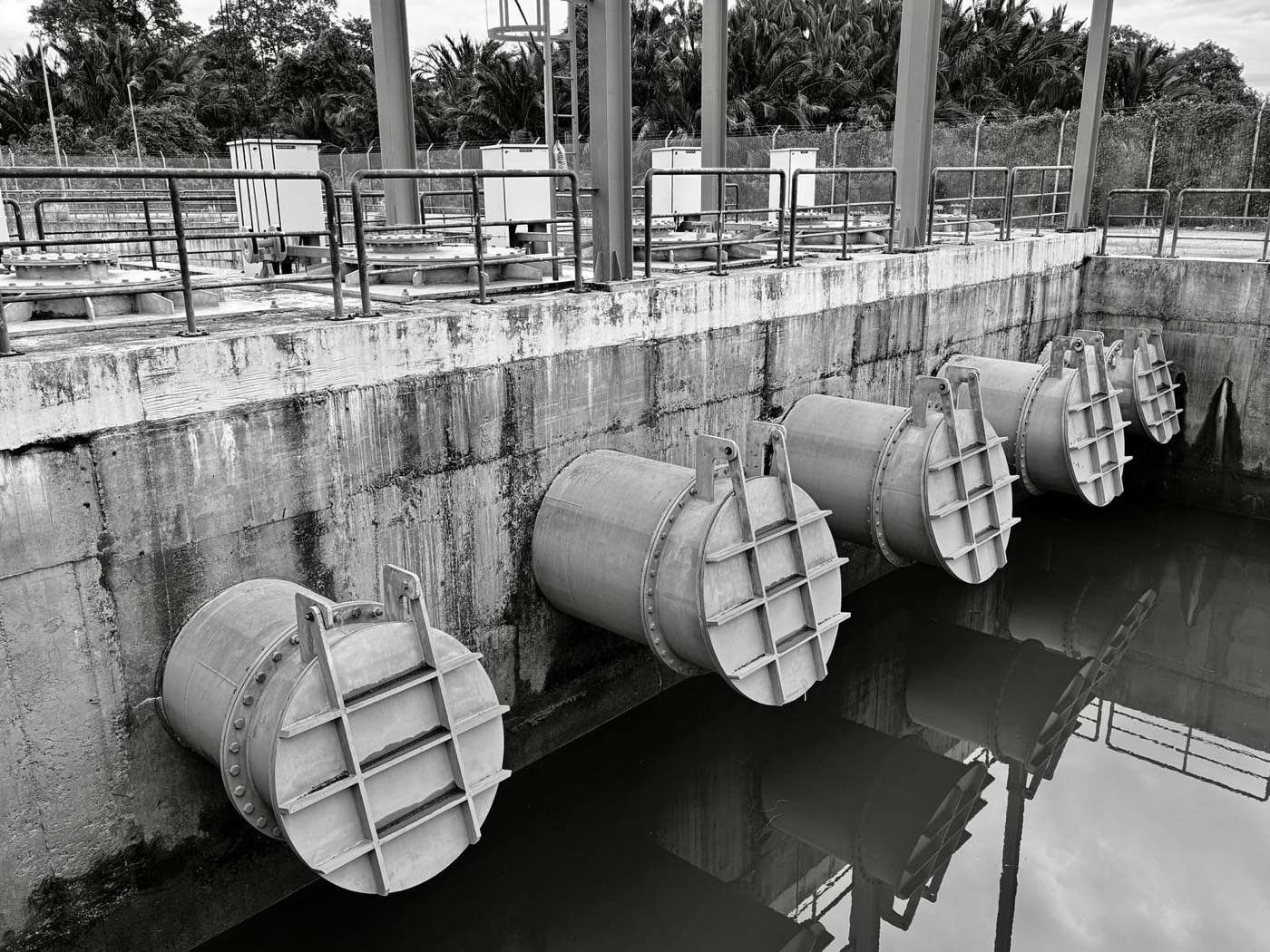
Concrete channel with flap gates at a water pump station, in black and white
Illustrative photo. Photo: Pexels

What it costs

We fix the price after a short scoping call or a site visit. It depends on how many sensors, how far the cabinet is from the gateway, and how the alerts get out. Ongoing support is available as a plan after handover.

Get a quote for pump station alerts

The fixed price covers

  • Sensors at the switchboard incomer, plus phase and generator inputs where needed
  • Battery gateway and Starlink or 4G backhaul
  • Installation and electrical work under QLD Electrical Contractor Licence 1513082
  • Alert set-up, recipients, escalation order and weekly test log
  • Commissioning against a simulated supply loss, and operator training
  • An ongoing support plan: batteries, faults, alert tuning and extra sensors

What this alert won't do

  • It tells your people the supply is gone. It won't start a generator or run a pump.
  • Your SCADA, level alarms, standby pumping and contingency plan stay in place. This runs beside them.
  • LoRaWAN suits alerts and records, not control, and it isn't a certified safety system.
  • Texts reach only phones with coverage. Two recipients and email cut that risk.

The same storm, with and without a text

Without monitoring

  1. 0 minStorm takes the supply. Both pumps stop.
  2. 60 minNobody knows. The well keeps filling.
  3. 90 minWet well reaches overflow in wet weather.

With monitoring

  1. 0 minSupply lost. Sensor keeps sending on battery.
  2. 5 minText hits your operator's phone.
  3. 60 minCrew on site with 30 minutes to connect a generator.

With you every step

How the five stages go on a council pump station.

  1. 1

    Discovery

    We walk the switchboard and any generator plug, then test radio at the wet well and cabinet and signal at the gateway.

  2. 2

    Design

    You get a written scope and fixed price: sensors, gateway, backhaul, alert rules, recipients and escalation. Your SCADA stays as it is.

  3. 3

    Build and test

    We bench test the sensor, gateway battery and alert rules, including a run on battery alone and a missed heartbeat.

  4. 4

    Install and commission

    Our electricians fit it under Licence 1513082. We simulate a supply loss under safe isolation and time the text on your phones.

  5. 5

    Ongoing support

    We hand over the alert list, escalation order and weekly test log, and set up ongoing support. Operators confirm the test message.

Why Holt Systems

We design, install and commission every system ourselves, then look after it with an ongoing support plan. Monitoring supplements the site's own control, protection, fire and safety systems; it does not replace them.

Alerts
SMS to any phone, no app
Based in
Brisbane, QLD
Electrical licence
QLD 1513082
After install
Ongoing support plans
Call
07 2150 3666

Pump station power failure alarm questions

Does a standby pump protect the station when the supply fails?

No. Where duty and standby pumps share a switchboard, a lost supply or phase can stop both. A standby pump covers a pump fault. A generator plug or auto-start set covers the supply, and the alarm tells your people it's needed.

Does this replace our SCADA or level alarms?

No. Telemetry, level alarms and standby pumping stay in place. This is a separate battery-backed path that reports supply loss, a generator that hasn't started and its own health, so one failure doesn't silence both. It also suits stations not yet on telemetry.

When does the three hour notification clock start?

Condition 11 says no later than three hours after becoming aware of a notifiable release. It runs from awareness of the release, not the power failure. An alert shortens the time to awareness. Whether a release is notifiable is for the council and the regulator.

Will it work at a station with no mobile coverage?

Yes, with Starlink and a clear view of the sky. LoRaWAN carries readings to the gateway and Starlink carries them out. We test radio and signal first, because metal cabinets and wet well lids can cut signal.

How long does the gateway keep running in a long outage?

It depends on the battery and backhaul. As an example only, a 12.8 V, 100 Ah battery with 80 per cent usable runs a 4G gateway drawing about 8 W for about five days. Satellite draws more, so we size the battery per station.

Get a quote for pump station alerts

Tell us what you need to watch and where. We confirm the sensors, gateway location and alert recipients, then give you a fixed price.

Or email hello@holtsystems.com.au

Your details are handled in accordance with our privacy policy.

  1. 1

    Tell us about the site

    A few lines on the assets, distances and what you need to know about.

  2. 2

    A call to scope it

    We confirm the sensors, gateway location and alert recipients, and whether a site visit is needed.

  3. 3

    Fixed price

    You receive a defined scope and a fixed price before any work starts.