
Skip to content
Holt Systems

Irrigation demand charges: get a text before pump two sets the peak

We fit a power meter on your pump board. When the half hour is heading for a new peak, your phone gets a text.

  • WatcheskW, kVA and power factor
  • You getA text before the peak sets
  • Sends byStarlink or 4G from the board
Pump stn alerts
  1. 3:38 pm

    Pump stn 2 bores + river due. Half hour projected 91% of kVA target, 14 min left. Hold river pump.

  2. 3:44 pm

    Pump stn projected 101% of target. Hold the river pump now or stagger the start.

  3. 4:05 pm

    Pump stn half hour closed at 87% of target. River pump started. Back to normal.

Example alerts from this system

at least 136%

Irrigation tariffs rose by at least 136% in a decade, against 24% CPI, the QFF reported in 2018.

Source: Queensland Farmers' Federation

228%

An Ergon forecast had the Eton pump station paying 228% of its old bill on a demand tariff.

Source: Queensland Farmers' Federation

30 min

Ergon's demand charge is set on the highest half-hourly demand, a 30-minute average.

Source: Ergon Energy Network

One half hour with two pumps on sets the month

Irrigation demand charges come down to one half hour. Ergon bills the highest 30-minute average at your connection, so a second pump starting at the wrong time costs you all month.

You'll only see it on the bill, weeks later.

A pump station can use little energy and still carry a big bill. Cotton Australia reported St George growers moving some pumps to diesel.

  • A second bore pump starts while the first is running.
  • Pumps all restart together after a power blip.
  • Poor power factor lifts kVA while kW looks normal.

Today versus with kVA alerts

TopicTodayWith monitoring
Finding the peakOn the bill, weeks after the half hourA text while the half hour is still open
Pump start orderTimer or whoever's in the uteYou hold or delay the next pump
Which pumps overlappedA guess from the interval dataPump run times beside the kVA readings
Power factorNoticed when the bill jumpsA text when it drops

What we fit at the pump board

  • Three-phase power meter

    Reads kW, kVA and power factor on the incoming supply.

    Reads every 1 to 5 min

  • Pump current clamps

    Shows which pumps are running, so you can see who overlapped.

    One per pump you want

  • Gateway at the board

    Picks up the meter readings by radio.

    Weatherproof enclosure

  • Starlink backhaul

    Sends the text out where there's no mobile signal.

    4G where signal is good

  • SMS alerts

    Texts the irrigator and anyone else you nominate.

    Warn at about 90%

How irrigation demand charges get caught at the pump board

Irrigation demand charges: kVA spike when a second pump starts An irrigation pump station on one main board with a power meter on the three-phase supply and three bore pumps and a river pump, labelled with a staggered start order from first to fourth. Below, a bar chart of kVA in six 30-minute intervals: two intervals with one pump, one red interval above the target line where a second pump started together with another, and three lower intervals where starts are staggered. At the bottom, the alert path runs from the power meter and node to the site gateway, to Starlink or 4G, to an SMS to the irrigator at the paddock, warning at about 90% of the target. Pump station main board Three-phase supply Power meter on supply Bore 1 Start 1st Bore 2 Start 2nd Bore 3 Start 3rd River Start 4th One pump per step, not together kVA in each 30-minute interval kVA Target Staggered starts Peak set Intervals run left to right Second pump starts: new peak Target kVA for the month Alert path Power meter and node Site gateway Starlink or 4G SMS to irrigator At about 90% of target: hold Bore 3 until the next interval
An irrigation pump station on one main board with a power meter on the three-phase supply, three bore pumps and a river pump with a staggered start order. A chart of kVA in six half hours shows one interval above target where two pumps started together. Below, the alert path from the meter and node to the gateway, Starlink or 4G, and an SMS to the irrigator at about 90% of target.
  1. 1

    A meter on the board

    A three-phase power meter sits on the incoming supply, after the utility meter. It reads kW, kVA and power factor.

  2. 2

    Radio to the gateway

    The node sends each reading by LoRaWAN (long range radio) every 1 to 5 minutes to a gateway at the board.

  3. 3

    We work out the half hour

    From those readings we project the half-hour kVA. At about 90% of your target, an alert goes out.

  4. 4

    A text to you

    The gateway sends out by Starlink or 4G. You hold the next pump or start it in your agreed order.

The same afternoon, with and without a text

Without monitoring

  1. 3:30 pmTwo bores are running. The timer starts a third.
  2. 3:45 pmThe river pump starts too. Nobody's watching.
  3. 4:00 pmThe half hour closes at a new monthly peak.

With monitoring

  1. 3:30 pmTwo bores are running. kVA is under target.
  2. 3:38 pmProjection hits 90% of target. Your phone buzzes.
  3. 3:40 pmYou hold the river pump until the half hour turns.
  4. 4:05 pmPump starts in order. The peak stays down.

The text that lands before the peak does

Pump stn projected kVA, 30 min interval

Dashboard view

Pumps running
2 bores
Projected kVA
101% of target
Power factor
0.93
150 165.5 181 Your kVA target 3:303:343:383:423:46 kVA
Example site only. Your target and pump sizes will differ.

On an irrigation pump station

Irrigators with big pumps feel this most, because demand is high and use is low. We match the alerts to the order your pumps normally start.

Want to see which pump is working hardest? Add irrigation pump monitoring. If your tariff has a 5pm to 8pm window, see irrigation pump peak tariff alerts.

A failed bore pump still needs catching early, so there's irrigation bore pump failure alerts as well.
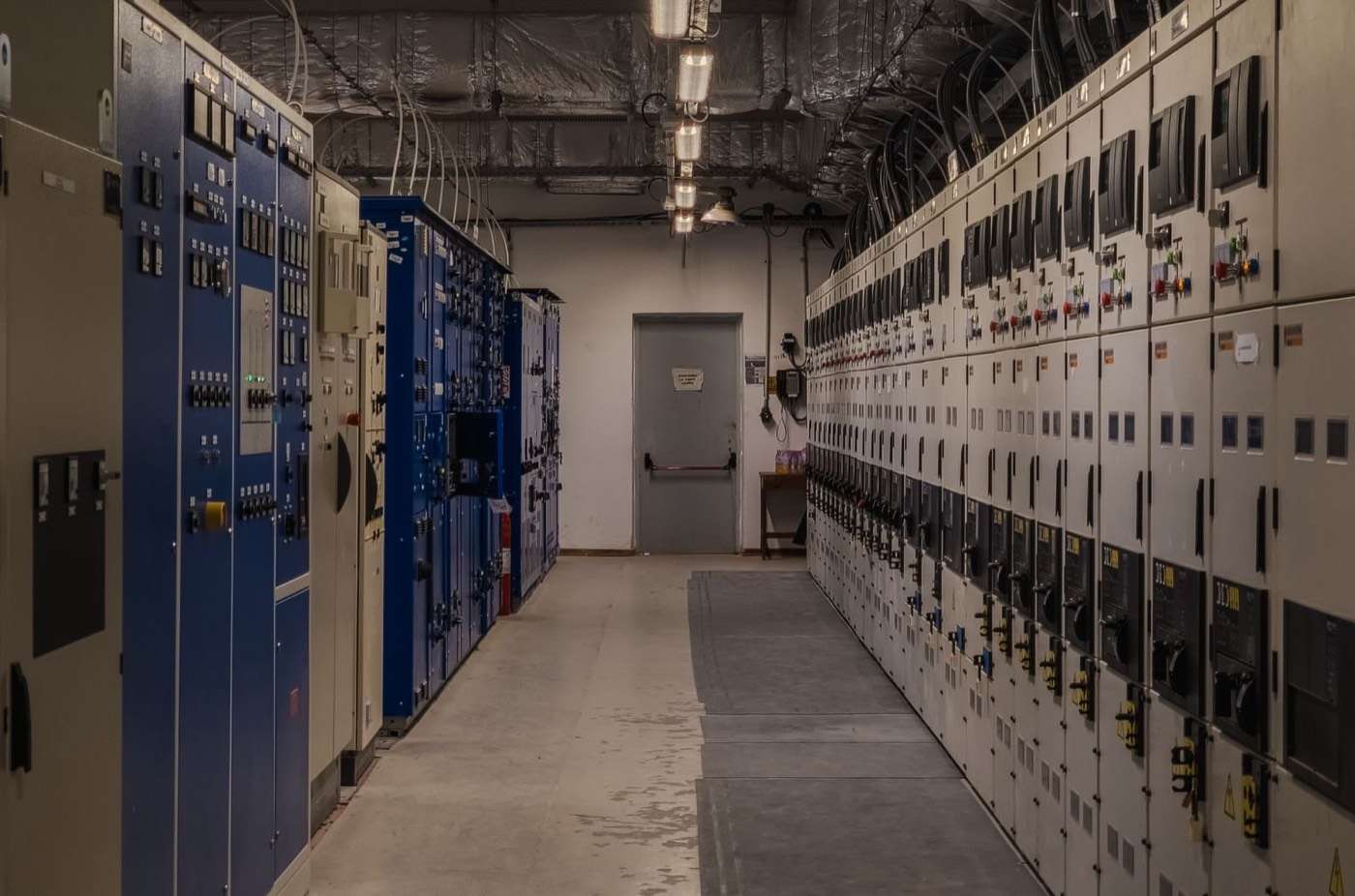
Long switchroom lined with motor control and switchgear panels
Illustrative photo. Photo: Vjanodic WERSOV on Pexels

What it costs

We set a fixed price after a short scoping call or a site visit. It depends on how many pumps you want watched, how far the board is from the gateway, and how it gets out. After handover, ongoing support is available as a plan.

Get a quote for pump kVA alerts

The fixed price covers

  • Power meter, current transformers and any pump clamps
  • Gateway, surge protection and Starlink or 4G backhaul
  • Installation and electrical work under QLD Electrical Contractor Licence 1513082
  • Alert set-up, your kVA target and who gets the text
  • Commissioning on real pump starts, and training
  • An ongoing support plan after handover

What this won't do

  • It doesn't start, stop or protect pumps. Your starters, drives and motor protection stay as they are.
  • Readings come every few minutes, so the warning is a projection, not a live feed. It can't catch a direct-on-line start inside one minute.
  • Our meter is indicative. The bill follows the utility meter.
  • Readings stop if the gateway or backhaul is out.

With you every step

How the five stages go on your pump station.

  1. 1

    Discovery

    We look at the main board and supply, and go through your tariff and interval data to see when pumps set the peak.

  2. 2

    Design

    You get a fixed-price scope: metering, gateway, backhaul and alert rules, with your kVA target and start order agreed.

  3. 3

    Build and test

    We build and test the meter, gateway and alert rules off site, so the text path works before we drive to the paddock.

  4. 4

    Install and commission

    We fit the current transformers and gateway under our licence, set up Starlink or 4G, and test the alerts on real pump starts.

  5. 5

    Ongoing support

    We hand over the dashboard and alert list, then support you through the season.

Why Holt Systems

We design, install and commission every system ourselves, then look after it with an ongoing support plan. Monitoring supplements the site's own control, protection, fire and safety systems; it does not replace them.

Alerts
SMS to any phone, no app
Based in
Brisbane, QLD
Electrical licence
QLD 1513082
After install
Ongoing support plans
Call
07 2150 3666

Irrigation demand charges questions

Does a short start current set the demand charge?

Not on its own. Ergon bases the charge on the highest 30-minute average. A start current lasting seconds gets averaged out. What sets the peak is how many pumps run together for most of that half hour.

Can the system start or stop my pumps?

No. It measures and texts you. LoRaWAN readings arrive every few minutes, so they're not suited to control. Your starters, drives and protection stay in place, and you decide which pump to hold or delay.

Will it work on a remote bore with no mobile coverage?

Yes, if the gateway has a way out. We use Starlink where mobile is poor, or 4G where it's reliable. Readings stop if the gateway or backhaul is out.

Is this accurate enough to dispute a bill?

No. Our meter is an indicative sub-meter, and the bill follows the utility meter. The readings show which pumps overlapped and when, so you can compare against your interval data.

Can it help me decide between electric and diesel pumps?

It gives you measured kVA, kW and run times for each pump station, to put against a diesel quote. We don't give tariff or financial advice.

Do you work on single-phase supply and solar pumps?

We can meter single-phase and three-phase supplies at the main board. Solar pump sites are looked at one by one, because the metering point decides what the reading means.

Get a quote for pump kVA alerts

Tell us what you need to watch and where. We confirm the sensors, gateway location and alert recipients, then give you a fixed price.

Or email hello@holtsystems.com.au

Your details are handled in accordance with our privacy policy.

  1. 1

    Tell us about the site

    A few lines on the assets, distances and what you need to know about.

  2. 2

    A call to scope it

    We confirm the sensors, gateway location and alert recipients, and whether a site visit is needed.

  3. 3

    Fixed price

    You receive a defined scope and a fixed price before any work starts.