
Skip to content
Holt Systems

Cotton gin demand charges: stop Monday's start setting the month

We fit a kVA meter on your gin main board and text the shift lead when a start-up is heading for a new monthly peak.

  • MeasureskW, kVA and power factor
  • AlertSMS before the half hour peaks
  • Reads every1 to 5 minutes

Gin main board, projected half hour

Dashboard view

Projected
1,760 kVA
Target
1,800 kVA
Power factor
0.93
400 1080 1760 Warn at 90% of target 5:556:056:156:25 kVA
Example readings for illustration.

30 to 60%

NSW Government guidance says peak demand charges can be this share of a large site's electricity bill, often from short spikes.

Source: NSW DCCEEW

228%

A 2018 Ergon forecast, shown by the Queensland Farmers' Federation, had an Eton pump station paying this much of its old bill on a demand tariff.

Source: Queensland Farmers' Federation

5pm to 8pm

Ergon's large business tariff has its peak demand window here on weekdays. That's shift change.

Source: Ergon Energy Network

One bad half hour on Monday morning sets the whole month

Cotton gin demand charges come from a single interval. Ergon's tariff guide bills the highest 30-minute average kVA at your connection in the month.

Cleaners, stands, press and fans all come up together after a weekend. That half hour sets the charge, and you find out when the bill lands weeks later.

A gin only runs four to six months, but Queensland Country Life reported in 2017 that high-demand gins pay a large amount for every month they operate, even for one day.

  • Starts stacked on top of each other add up their starting currents.
  • A poor power factor lifts kVA without lifting kWh.

What one bad Monday can cost across a season

  • An illustrative $20 per kVA per month. Check your own price list.
  • Without a stagger, the monthly worst half hour is 1,900 kVA.
  • Staggered starts hold it to 1,700 kVA over five months.
Extra demand set by the bad start200 kVA
200 kVA × $20 × 5 months$20,000

About $20,000 a season on these assumptions. Your real figure depends on your tariff, authorised capacity and how the season runs.

What we put on the gin main board

We assume an independent power meter, because using the billing meter's pulse output needs written agreement from the retailer or network.

  • Three-phase power meter

    Reads kW, kVA and power factor on the main incoming supply, downstream of the billing meter.

    Reads every 1 to 5 min

  • Current transformers

    Fitted on the incoming phases by our electricians with fusing, working under isolation.

    Sized to your main board

  • LoRaWAN node

    Sends the meter readings by radio to the gateway.

    No wifi needed

  • Gateway

    Sits near the switchboard and passes readings to the dashboard and SMS.

    Starlink or 4G backhaul

How cotton gin demand charges get a warning at the main board

Cotton gin demand charges across a season Top: a bar chart of weekly peak kVA at a cotton gin main board across a 20 week season from April to August, with a dashed month target line. Two weeks rise above the target and are shown in red. Middle: a Monday start-up sequence with cleaners, gin stands, press and fans started about five minutes apart, each with an orange start-up surge block, and a dashed warning line before the first start. Bottom: the alert path from the power meter and current transformers to the gateway, to Starlink or 4G, to an SMS to the shift lead. Weekly peak kVA, one gin season Month target Apr May Jun Jul Aug Weeks over the target (illustrative) Monday start-up, staggered Cleaners Stands Press Fans 0 5 min 10 min 15 min Dashed line: warning at the first big start Alert path Power meter and CTs Gateway Starlink or 4G SMS to shift lead
A season of weekly peak kVA at the gin main board with a monthly target line, a Monday start-up sequence with a warning before the first start, and the path from meter to gateway to Starlink or 4G to an SMS.
  1. 1

    A meter reads the main board

    A three-phase power meter with current transformers reads kW, kVA and power factor every 1 to 5 minutes.

  2. 2

    A node sends it by radio

    A LoRaWAN node passes the readings to a gateway near the switchboard. No wifi needed on the plant.

  3. 3

    The system projects the half hour

    It works out where the current half hour will finish. This is our own calculation, not a utility method.

  4. 4

    The shift lead gets the text

    At about 90% of your target, an SMS goes out. At 100%, an urgent one goes to the gin manager too.

What lands on the shift lead's phone on a Monday start

We set the target from your bills and interval data, then tune it as the season shows how the gin runs.

Gin alerts
  1. Mon 6:15 am

    Gin main board projected 1,680 kVA this half hour, 93% of the 1,800 target. Hold the next start.

  2. Mon 6:20 am

    Urgent: projected 1,760 kVA, 98% of target. Press and fans still to come. Space them out.

  3. Mon 6:31 am

    Half hour closed at 1,690 kVA, under target. Back to normal.

Messages go to the people you nominate, by SMS to any phone.

Messages go to the people you nominate, by SMS to any phone and by email, with the reading and the time in every alert.

The monthly bill versus a warning at 6:15 am

TopicTodayWith monitoring
When you see itOn the bill, weeks laterPartway through the half hour
Retailer portalInterval data a day or more behindA reading every 1 to 5 minutes
Who knowsThe office, after the factThe shift lead, on their phone

What gin demand monitoring costs

We fix the price after a short scoping call or a site visit. It depends on meter points, gateway distance and backhaul. Ongoing support is available as a plan after handover.

Price a demand warning for the gin

The fixed price covers

  • Power meter, current transformers, node and gateway
  • Starlink or 4G backhaul set-up
  • Installation and electrical work under licence 1513082
  • Alert set-up and a few days checked against retailer interval data
  • An ongoing support plan: faults fixed, batteries and sensors replaced, targets tuned

Cotton gin demand charges across a short, heavy season

A gin runs from about April to August, so the charge starts in the first month. We install before the first bale.

The same meter shows what each motor group costs you. See gin energy monitoring for every motor group on the MCC. If kVA climbs without kWh, check gin power factor correction monitoring.

Running a mill or a receival site? Same method, different load list: mill drives, or aeration fans and conveyors. Have a look at gin compressed air monitoring, or the general warning before kVA demand charges are set.
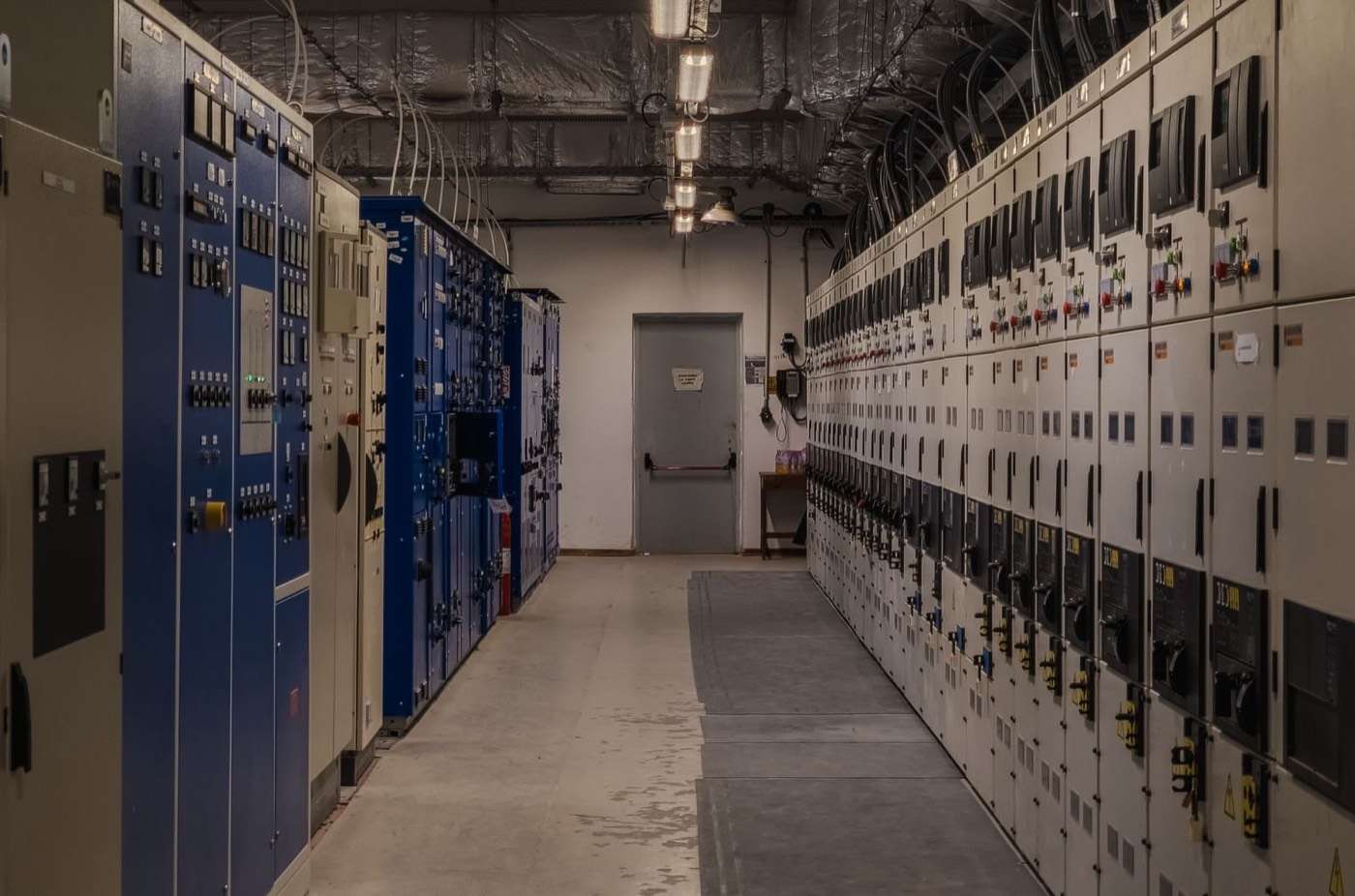
Long switchroom lined with motor control and switchgear panels
Illustrative photo. Photo: Vjanodic WERSOV on Pexels

What this won't do

  • It doesn't switch load. A person acts on every warning, or we quote a controls change separately.
  • It can't see a spike inside one minute, like a big motor starting direct-on-line.
  • Readings are indicative. The billing meter is the reference for charges.
  • It doesn't change authorised capacity, agreed demand or your tariff. Those are reviewed with your retailer.

With you every step

We time the five stages to finish before the first bale, because a gin pays for demand from its first month.

  1. 1

    Discovery

    We review the tariff, authorised capacity, main switchboard and usual start-up order, then agree meter, gateway and backhaul spots.

  2. 2

    Design

    You get a written, fixed-price proposal with meter points, alert targets and who receives each SMS or email.

  3. 3

    Build and test

    We build and bench test the meter interface, node and gateway, and set up the dashboard and alert rules before site.

  4. 4

    Install and commission

    Our electricians fit the CTs and meter under licence 1513082, then compare monitored kVA with retailer data for several days.

  5. 5

    Ongoing support

    We show shift leads what each alert means, then tune targets as the season shows how the gin runs.

Why Holt Systems

We design, install and commission every system ourselves, then look after it with an ongoing support plan. Monitoring supplements the site's own control, protection, fire and safety systems; it does not replace them.

Alerts
SMS to any phone, no app
Based in
Brisbane, QLD
Electrical licence
QLD 1513082
After install
Ongoing support plans
Call
07 2150 3666

Gin demand charge questions

What sets the demand charge on a gin's electricity bill?

Ergon's network tariff guide describes demand as the highest 30-minute average kVA at the connection point in a month, so one half hour sets the charge. Larger connections on capacity tariffs also pay a monthly $/kVA capacity charge, which monitoring doesn't change.

Can the monitoring stop the gin starting too many things at once?

No. It warns people and records what happened. LoRaWAN is for alerts, trends and records, not control. Your operators stagger the starts, or we quote a controls change as its own piece of work, designed and signed off separately.

Will the readings match the retailer's bill?

Not exactly. Our readings are indicative, and the interval must line up with the meter clock. At commissioning we compare monitored kVA with retailer interval data for several days. The billing meter stays the reference for charges.

Does the gin need mobile coverage or wifi?

No wifi is needed. The gateway reaches the dashboard by the site network, Starlink or 4G. If backhaul drops, readings queue but alerts stop until it returns.

Does this suit sugar mills and grain receival sites?

Yes, with a different load list: mill drives, or aeration fans and conveyors. The method is the same. The site assessment confirms your connection, the tariff that applies and which starts to watch.

Price a demand warning for the gin

Tell us what you need to watch and where. We confirm the sensors, gateway location and alert recipients, then give you a fixed price.

Or email hello@holtsystems.com.au

Your details are handled in accordance with our privacy policy.

  1. 1

    Tell us about the site

    A few lines on the assets, distances and what you need to know about.

  2. 2

    A call to scope it

    We confirm the sensors, gateway location and alert recipients, and whether a site visit is needed.

  3. 3

    Fixed price

    You receive a defined scope and a fixed price before any work starts.