
Skip to content
Holt Systems

Poultry farm demand charge: a text before the half hour closes

We fit a kVA meter on your main board. It texts you while there's still time to stagger the next fan stage, pump or feed start.

  • MeasuresFarm kVA at the main board
  • You getA text before the peak sets
  • Won't doSwitch fans or milking off
Farm kVA alerts
  1. 4:09 pm

    Farm main board: projected half hour 147 kVA, 90% of 160 target. Delay feed augers and cool cell pumps.

  2. 4:21 pm

    Farm main board: projected 130 kVA, on track.

  3. 4:30 pm

    Half hour closed at 122 kVA. Month's high so far 139 kVA. Loads logged.

Example alerts from this system

30 min

Ergon bills demand on the highest 30-minute average at your connection, not the instant spike.

Source: Ergon Energy Network Tariff Guide 2026-27

5pm to 8pm

On the large time-of-use tariff the peak demand window runs on weekdays, just when the sheds are hottest.

Source: Ergon Energy Network Tariff Guide 2026-27

One hot half hour sets your poultry farm demand charge

Your poultry farm demand charge comes from a single half hour. Ergon bills the highest 30-minute average of the month, in dollars per kVA, and you see it weeks later.

On a hot afternoon the fan stages step on together. Then the cool cell pumps and feed augers kick in, and the month's peak is locked in.

A University of Arkansas audit (overseas) reported fans as most of a broiler farm's demand, with summer demand well above winter.

  • Dairies stack milking vacuum, wash and water pumps twice a day.
  • Low power factor lifts kVA even when the kWh stay the same.

How we warn you of a poultry farm demand charge peak

Poultry farm demand charge: fan stages, stagger plan and kVA alert A tunnel ventilated broiler shed with a bank of four fans that step on in stages as shed temperature rises. Below it, a half-hour timetable from 3:30pm to 6:30pm shows feed augers starting at 3:30, fan stages 3 and 4 at 4:00 and cool cell pumps at 4:30, each in its own half hour, with the 5pm weekday peak demand window shaded. At the bottom, a kVA node on the farm main board sends readings to a site gateway on 4G or Starlink, which sends an SMS to the shift lead at 90 percent of the target. A bar chart of half-hour kVA shows the current half hour projected to cross the target line. Broiler shed row, one supply Tunnel fan bank, 4 stages Stages step on as the shed warms up 1 2 3 4 Stagger plan by half hour 3:30 4:00 4:30 5:00 5:30 6:00 Feed augers Fan stages 3, 4 Cool cell pumps Shaded: peak demand from 5pm Each load starts in its own half hour Main board kVA node Site gateway 4G or Starlink SMS to lead warn at 90% Readings every 1 to 5 minutes Farm kVA, 30-minute bars Target Projected Earlier half hours Now
Broiler shed row on one supply. Four fan stages step on as the shed heats up. A half-hour timetable from 3:30 pm shows feed augers, fan stages 3 and 4 and cool cell pumps each in their own half hour, with the 5 pm weekday window shaded. A kVA node on the main board sends readings to the gateway, which texts the shift lead at 90% of target.
  1. 1

    A meter on the main board

    One three-phase power meter sits downstream of the utility meter and reads kW, kVA and power factor.

  2. 2

    The node does the sums

    Every one to five minutes it projects the current half hour: energy so far plus the present load for the time left.

  3. 3

    The gateway sends it out

    The gateway sits near the board and sends by your farm network, 4G or Starlink.

  4. 4

    You get the text

    At about 90% of your target the shift lead gets a text, with time to delay a start.

What lands on your phone on a hot afternoon

Projected half-hour kVA, 4 pm to 4:30 pm

Dashboard view

Projected half hour
147 kVA
Target
160 kVA
Power factor
0.94
118 139 160 Farm target 4:004:064:124:184:244:30 kVA
Example shed row. Readings are indicative and won't match your billing meter exactly.

What we fit at the main board

  • Three-phase power meter

    Reads kW, kVA and power factor on the main incoming supply.

    Reports every 1 to 5 min

  • Fan bank current clamp

    Optional. Shows what the heaviest fan bank is pulling.

    Where run feedback is missing

  • kVA node

    Works out the projected half hour and sends the alert rules.

    Alert at about 90% of target

  • Gateway at the board

    Collects the readings in the shed or a weatherproof box with surge protection.

    Indoor or enclosure

  • 4G or Starlink backhaul

    Gets the text out. If it drops, alerts stop until it's back.

    Farm LAN, 4G or Starlink

The same hot afternoon, with and without a warning

Without monitoring

  1. 3:50 pmShed temperature climbs. Fan stages 3 and 4 step on.
  2. 4:10 pmCool cell pumps and feed augers start in the same half hour.
  3. 4:30 pmThe half hour closes at a new monthly high.
  4. Next monthThe bill shows the charge. Nobody knows which half hour.

With monitoring

  1. 3:50 pmFan stages step on. The meter projects the half hour.
  2. 4:09 pmText: projected kVA is at 90% of target.
  3. 4:12 pmYou hold the feed augers and cool cell pumps.
  4. 4:30 pmThe half hour closes under target.

Today versus with kVA alerts

TopicTodayWith monitoring
Finding the peakThe bill, weeks after the half hourA text while the half hour is still open
Which loads did itA guess from the shed rowTime and loads running are logged
5pm windowSomeone remembers, or doesn'tA reminder 15 minutes before 5pm on weekdays

On a poultry, pig or dairy farm

The alert never switches fans off. Ventilation, cooling and milking protect the animals, so it asks you to delay feed augers, wash-down pumps and cool cell pumps. Your ventilation controller stays in charge.

We write a stagger plan with you: feed augers first, extra fan stages next, cool cell pumps in the following half hour, all clear of 5pm on weekdays. A dairy peaks around milking, so we set targets around those times.

Pair it with a shed breaker trip alert and a poultry shed generator alarm. Watch the board itself with poultry shed switchboard overheating alerts.
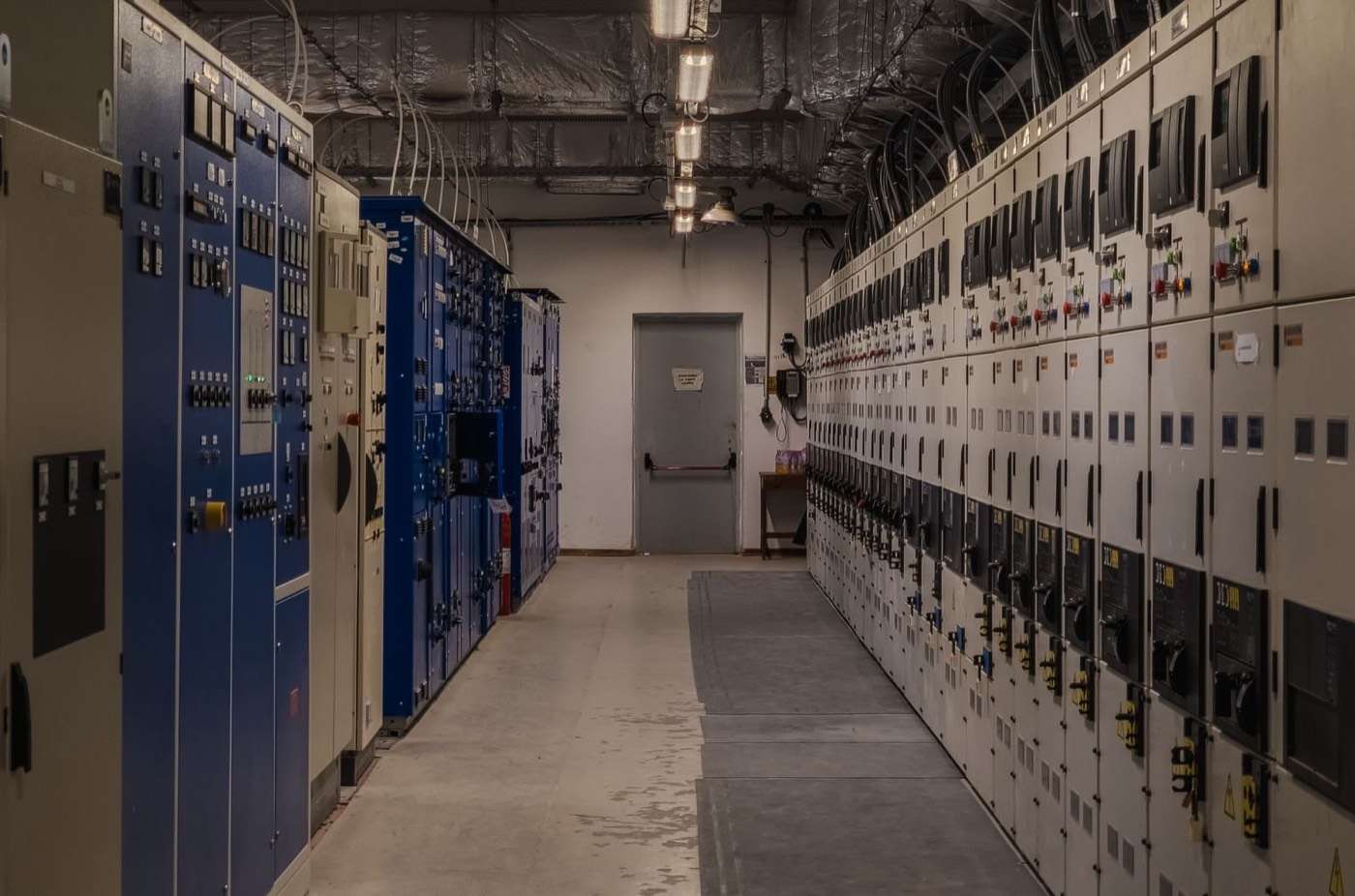
Long switchroom lined with motor control and switchgear panels
Illustrative photo. Photo: Vjanodic WERSOV on Pexels

What it costs

We set a fixed price after a short scoping call or a site visit. It depends on the number of sensors, the distance to the gateway and the backhaul. Ongoing support is available as a plan after handover.

Get a quote for kVA alerts

The fixed price covers

  • Power meter, current transformers and node at your main board
  • Gateway and farm LAN, 4G or Starlink backhaul
  • Installation and electrical work under QLD Electrical Contractor Licence 1513082
  • Alert set-up, your stagger plan and who gets each text
  • Commissioning against your interval data, and training for your shift leads
  • An ongoing support plan: we keep it running and tune your targets

What this alert won't do

  • It warns you. It won't shed load or stop a start by itself. Automatic action is designed separately.
  • Readings are indicative and don't replace the utility billing meter.
  • It can't catch a single direct-on-line motor start inside one minute.
  • It supplements your ventilation controller, high-temperature alarm and generator changeover. It doesn't replace them.

With you every step

How the five stages go on a poultry, pig or dairy farm.

  1. 1

    Discovery

    We walk the shed row and main board, note fan banks, pumps and feed motors, and look at recent bills and interval data.

  2. 2

    Design

    You get a fixed-price scope with the meter location, alert targets and a draft stagger plan for your sheds or dairy.

  3. 3

    Build and test

    We build and test the kVA node, gateway and alert rules off site before anything goes to the farm.

  4. 4

    Install and commission

    Our licensed electricians fit the meter at the board, set up the backhaul and check readings against your interval data.

  5. 5

    Ongoing support

    We train your shift leads on each alert, tune targets after the first month and stay on for ongoing support.

Why Holt Systems

We design, install and commission every system ourselves, then look after it with an ongoing support plan. Monitoring supplements the site's own control, protection, fire and safety systems; it does not replace them.

Alerts
SMS to any phone, no app
Based in
Brisbane, QLD
Electrical licence
QLD 1513082
After install
Ongoing support plans
Call
07 2150 3666

Poultry farm demand charge questions

Will an alert switch fans off?

No. Ventilation, cooling and milking protect your animals. The alert only asks a person to delay feed augers or wash-down pumps, and your ventilation controller keeps control of every fan.

Is the charge based on kW or kVA?

Ergon's tariff guide describes the demand charge in dollars per kVA per month for most customers, and kW for some. We confirm which applies from your bill, then measure kVA so poor power factor shows up as well as kW.

Can you use the pulse output on my revenue meter?

Not normally. The network or retailer has to agree to it, and a pulse count gives kW rather than kVA. We fit an independent three-phase power meter on your main board, downstream of the utility meter.

Will the readings match my bill?

They're indicative and won't match the billing meter exactly. We compare the monitored kVA with your retailer's interval data for several days before we set alert targets.

How fast does a warning arrive?

The node reports every one to five minutes and the projected figure updates each time. That's enough to act on a half hour heading over target, but not a single motor start inside a minute.

Does this suit pig and dairy farms?

Yes. The same main-board meter covers piggery fans and feed motors, or milking vacuum pumps, wash pumps and water pumps. We set targets and the stagger plan per site, because a dairy peaks around milking, not summer afternoons.

Get a quote for kVA alerts

Tell us what you need to watch and where. We confirm the sensors, gateway location and alert recipients, then give you a fixed price.

Or email hello@holtsystems.com.au

Your details are handled in accordance with our privacy policy.

  1. 1

    Tell us about the site

    A few lines on the assets, distances and what you need to know about.

  2. 2

    A call to scope it

    We confirm the sensors, gateway location and alert recipients, and whether a site visit is needed.

  3. 3

    Fixed price

    You receive a defined scope and a fixed price before any work starts.